
- Email yeldocollegesmd@gmail.com
- CALL +91 98461 10506 +91 98468 77776
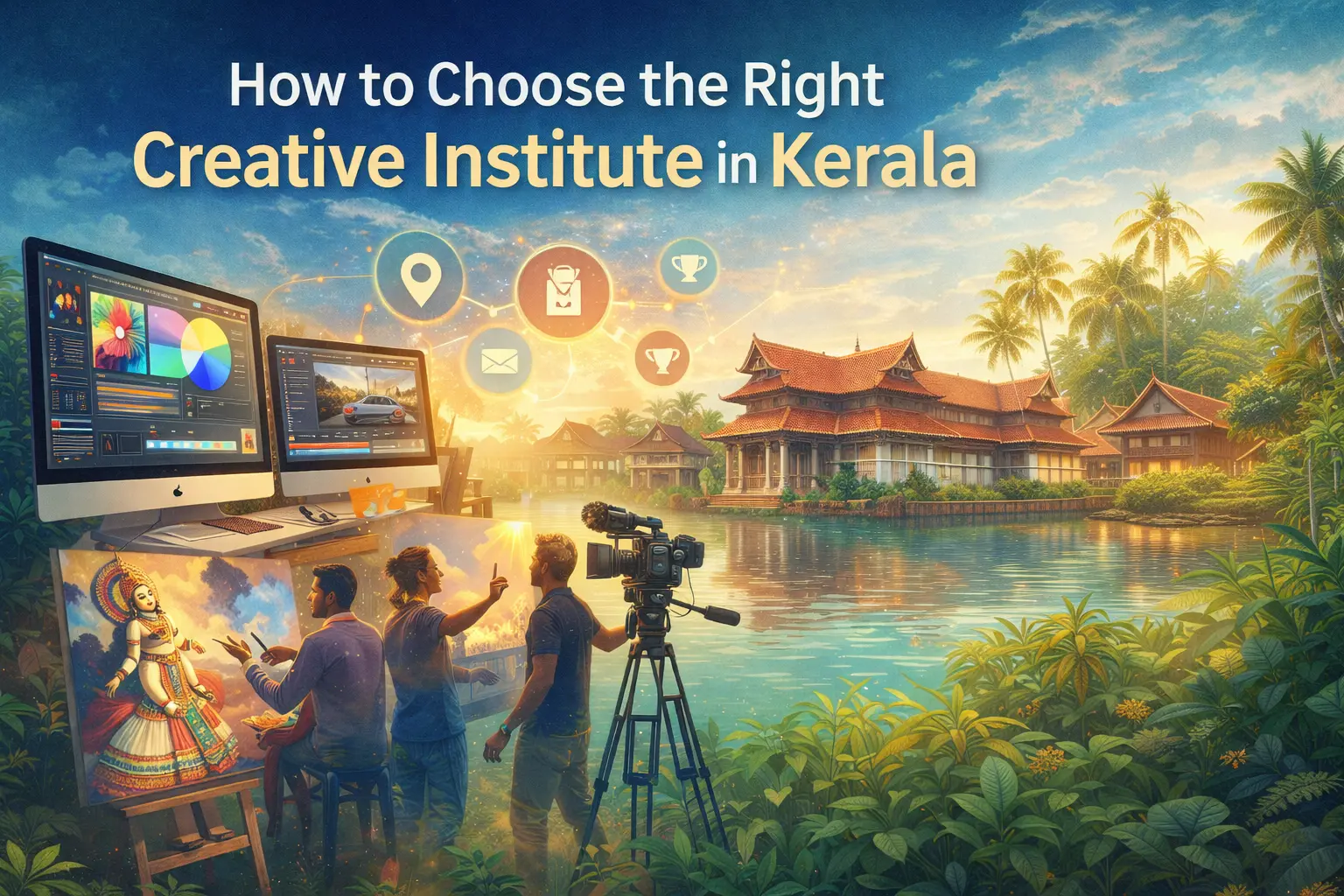
Creative careers have always had space for imagination, originality and individuals who think beyond conventional paths. Today, Kerala is witnessing a clear shift toward these careers, driven by the expanding influence of animation, visual effects, design and digital media across films, OTT platforms, advertising and gaming. What was once seen as a niche interest has evolved into a structured career landscape, where creative skills now shape digital communication and media at scale. This expanding creative ecosystem reflects a clear shift in the industry. Demand is no longer driven by talent alone but by professionally trained individuals with strong technical skills and creative depth. As opportunities grow, choosing the right creative institute becomes more critical. With many institutes making similar claims, students often struggle to judge course quality, industry relevance and credibility. This guide helps Kerala students make informed choices that support sustainable creative career growth.
The choice of a creative institute has a direct and lasting impact on skill development, portfolio strength and overall career readiness. Creative education extends far beyond certificates or course completion. It determines how effectively students translate talent into industry relevant capability. Institutes that emphasise real-world production workflows, structured skill progression and critical thinking equip students to meet professional standards from the outset. This foundation enables graduates to adapt to evolving industry demands, sustain long-term growth and build resilient careers within the creative industry rather than facing uncertainty after graduation.
Before selecting an institute, students should clarify their career planning goals. Whether the interest lies in an animation career, a VFX career, design or media studies, clarity is essential. Each path demands different skills and learning depth. Aligning goals with the right course avoids mismatches later. Students must also decide between degree and diploma programs based on academic aspirations, time commitment and career direction. A clear goal simplifies every other decision.
Faculty quality defines learning outcomes. Institutes guided by industry professionals and experienced academic faculty offer stronger mentorship. Exposure to real production environments matters more than purely theoretical teaching. Project based learning ensures students learn by doing, which is critical for creative confidence and portfolio strength.
Creative education demands strong infrastructure. Modern animation labs, VFX studios, licensed creative software and high performance computers are essential. Equally important is the creative environment itself. Peer learning, collaboration and a culture of experimentation play a major role in student growth.
Good institutes support students through internships, portfolio development and career guidance. Connections with creative agencies, production studios and media companies help students transition smoothly into professional roles. Avoid institutes that promise guaranteed placements. Instead, look for transparent placement support and industry exposure.
University affiliation and recognition from accreditation bodies add long term value. Recognised degrees from credible higher education institutions support career mobility, higher studies and professional credibility. This becomes increasingly important as creative careers expand across industries and geographies.
Genuine student testimonials and alumni networks offer real insight into outcomes. Look for consistent feedback patterns rather than isolated praise. Alumni success stories, without exaggeration, indicate whether an institute truly supports career growth.
Course fees should be evaluated as an education investment, not just a cost. Compare learning outcomes, faculty access, infrastructure and industry exposure against fees. The real return on investment comes from employable skills and sustainable career opportunities, not low pricing alone.
Campus location affects daily student life. Accessibility, transportation, accommodation and proximity to creative hubs all matter. A well connected campus within Kerala supports exposure, networking and a balanced campus experience.
Many students choose institutes based only on misleading advertising or unrealistic promises. Others ignore syllabus depth, faculty expertise or infrastructure quality. Some expect instant success without effort, which creative careers rarely offer. A little research now saves a lot of regret later.
How do I choose the best creative institute in Kerala?
Focus on curriculum quality, faculty experience, infrastructure and industry exposure.
Is a degree better than a diploma in creative fields?
Degrees offer academic depth and flexibility, while diplomas are skill focused and shorter.
What career options are available after animation courses?
Opportunities exist in animation studios, visual effects, gaming, advertising and digital media.
How important is placement support?
Placement support matters, but strong skills and portfolios matter more.
Conclusion
Choosing the best graphic design college in kerala requires clarity, research and goal based thinking. Students should evaluate curriculum depth, faculty expertise, infrastructure, industry exposure and long-term credibility before deciding. Quality creative education builds adaptable skills, not shortcuts. Institutions like Yeldo Mar Baselios College, the BA Animation and Graphic Design College in Ernakulam offers career oriented creative education in Kerala that balances academic structure with industry relevance, helping students move confidently toward animation and visual effects degrees aligned with real world creative careers.
Tags: graphic design courses in kerala
September 22, 2026
September 22, 2026
September 22, 2026
September 22, 2026
September 21, 2026

September 21, 2026

September 21, 2026

September 21, 2026
September 07, 2026
September 07, 2026
August 29, 2026
August 29, 2026
August 28, 2026

August 28, 2026
August 28, 2026
August 28, 2026
July 27, 2026
July 27, 2026
July 27, 2026
July 27, 2026
July 25, 2026
July 25, 2026
July 25, 2026
July 25, 2026
June 27, 2026
June 27, 2026
June 27, 2026
June 27, 2026
June 27, 2026
June 26, 2026