
- Email yeldocollegesmd@gmail.com
- CALL +91 98461 10506 +91 98468 77776
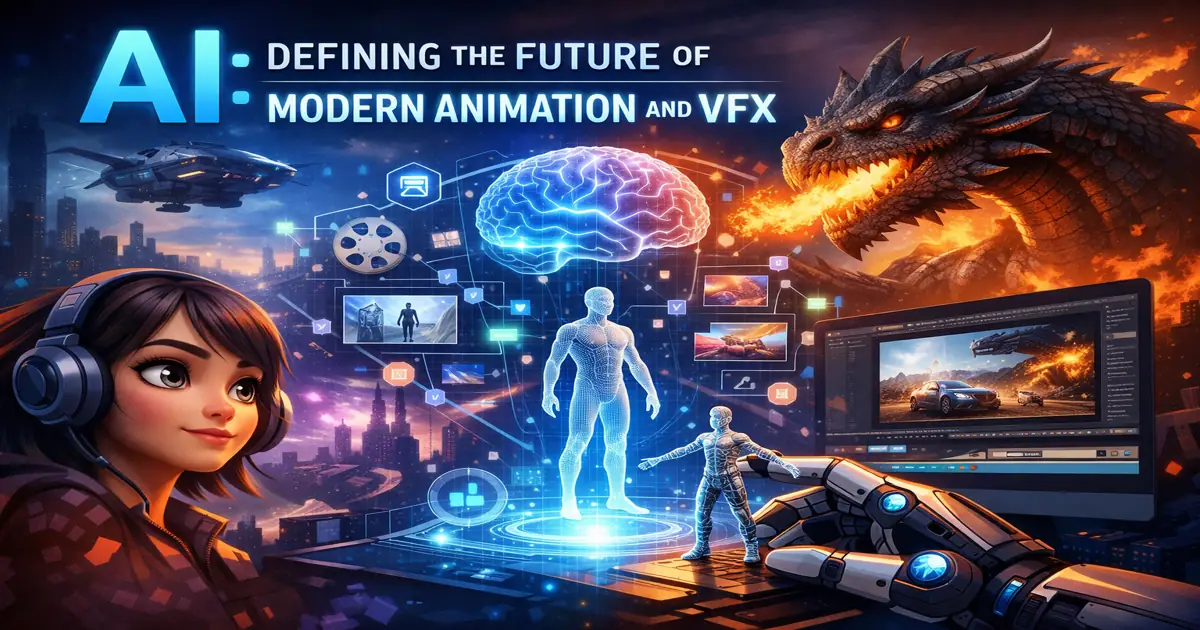
What if lifelike characters, hyper real environments and cinematic visual effects could be created in a fraction of the traditional production time? Today, AI is reshaping how stories are visualised, produced and delivered across animation, VFX and CGI pipelines with speed and precision that were previously impossible. From emotionally rich characters seen in studios like Pixar to real-time cinematic worlds powered by Unreal Engine, AI is quietly reshaping the creative backbone of the industry. At its best, AI enhances storytelling. It removes technical friction, accelerates workflows and allows artists to focus on narrative, emotion and visual impact rather than repetitive production tasks. Let’s check the role of AI in the modern animation industry.
Behind the scenes of animation and VFX studios, Artificial intelligence works like an invisible accelerator. It quietly takes over repetitive, time heavy processes, from frame clean up to simulation support and asset refinement, allowing production pipelines to move faster and smoother than ever before. What once required weeks of manual effort can now be achieved in days, with greater consistency across complex, large scale projects. Studios across the Animation Industry are adopting artificial Intelligence not to replace artists, but to amplify them. With audience expectations rising and delivery timelines shrinking, AI enables teams in Visual Effects to maintain creative control while scaling output efficiently. The result is sharper visuals, faster turnarounds and ways for innovative storytelling without compromising artistic integrity.
In simple terms, AI in animation and VFX refers to systems that learn from data and assist artists through automation and intelligent decision making. Machine learning models analyse patterns in movement, lighting, textures and performance to support production tasks. AI does not replace creativity. It acts as a supporting layer over traditional workflows. Earlier, every frame demanded manual intervention. In AI assisted pipelines, artists guide the process while intelligent tools handle repetition and refinement.
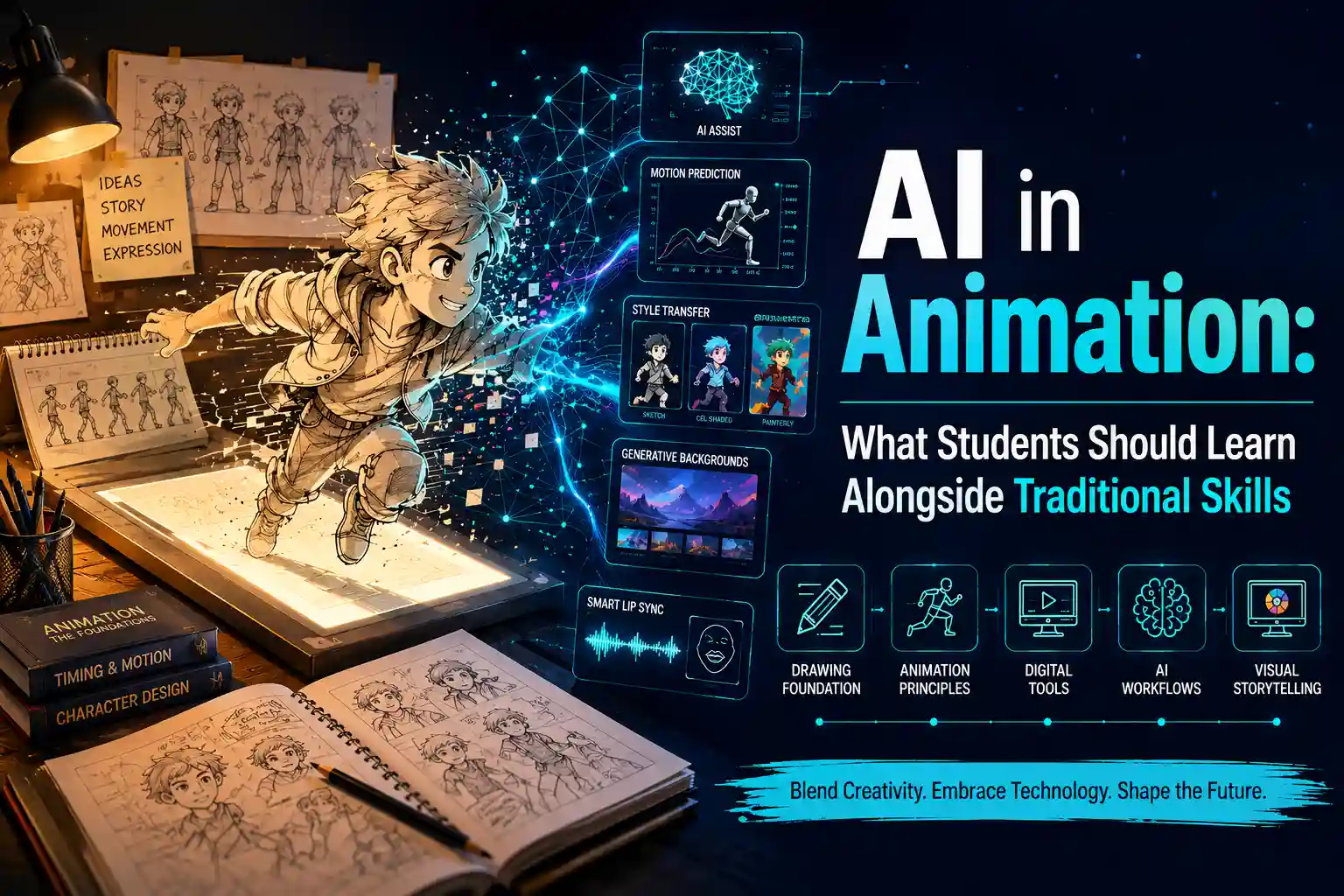
AI supports both 2D animation and 3D animation across multiple production stages. Character rigs benefit from intelligent motion prediction, while AI driven systems assist with secondary movements such as hair, cloth and physics based actions. Facial expressions and lip sync have seen major advances. AI analyses voice data to generate accurate mouth movements and emotional cues. Rendering and asset creation are also accelerated, reducing compute time while maintaining visual fidelity.
In VFX production, AI has become indispensable. Rotoscoping and clean up, once highly manual tasks, are now largely automated with precision. Object tracking benefits from AI’s ability to understand motion and depth across frames. Real-time compositing allows directors and artists to preview complex CGI integrations instantly. Students enrolled in a vfx animation course in Kerala increasingly learn these AI-supported techniques as part of industry aligned training.
Leading studios rely on AI-enabled tools embedded within industry standard software. Platforms like Adobe Sensei introduce intelligent automation across creative tasks. Tools such as Autodesk Maya and Blender now integrate AI-assisted modelling, rigging and simulation features. Real-time engines like Unreal Engine are redefining virtual production workflows. These tools are highly relevant in academic environments, as they mirror real studio pipelines used by companies such as Pixar.
Successful careers in AI driven animation demand a balance of creative and technical skills. Strong fundamentals in drawing, animation principles, lighting and composition remain non negotiable. Technology enhances these skills, it does not replace them. Students must also develop technical literacy, including software proficiency and basic understanding of AI-driven workflows. Portfolio development through project based learning is critical. Many students in a vfx course in Kerala build competitive portfolios by working on real-world simulations and production briefs.
Kerala’s creative education ecosystem is evolving rapidly, with growing demand from media, gaming and digital production sectors. Studios now expect graduates to be familiar with AI supported pipelines from day one.Learning AI improves career readiness. Colleges play a strategic role by aligning curricula with emerging industry needs and exposing students to production grade tools early in their academic journey.
This concern is common but misplaced. AI handles automation, not imagination. It cannot replace human creativity, storytelling judgment or artistic vision. In practice, AI functions as an assistant. It reduces workload, increases accuracy and frees artists to focus on creative decisions. Career roles are evolving, not disappearing.
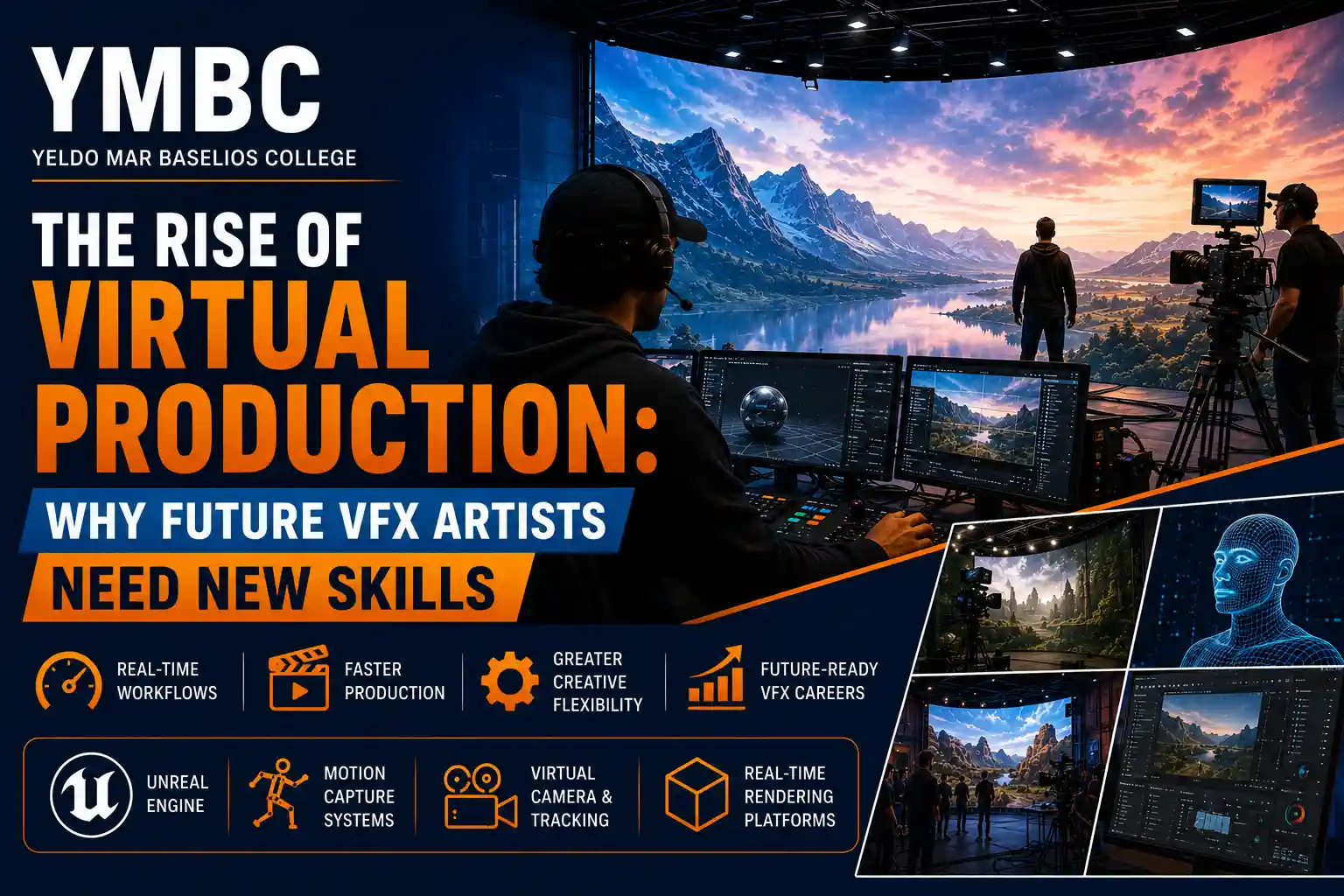
The future points toward virtual production, real-time rendering and extended reality experiences. AI will play a central role in XR environments, blending AR and VR with cinematic storytelling. Skills that combine artistic depth with technological adaptability will remain valuable long term. Professionals who evolve with these tools will enjoy stronger career longevity and mobility.
Forward looking colleges design structured curriculum that integrate AI concepts with core animation and VFX fundamentals. Industry aligned training ensures students understand both creative theory and production execution.Exposure to real studio workflows, live projects and advanced software builds confidence and professional readiness. Skill based education now defines quality higher education in creative fields.
AI is redefining animation and VFX studios, but it is not diminishing the role of artists. Instead, it is enhancing creative potential through smarter workflows and faster execution. The right education bridges creativity and technology with confidence. Institutions like Yeldo Mar Baselios College play a vital role in shaping future-ready professionals by combining strong fundamentals with AI-driven production exposure. With the right training and mindset, students can build sustainable and high-impact careers in modern animation and VFX.
Tags: AI in animation, AI in VFX, future of animation, modern VFX, animation technology, VFX technology,
September 22, 2026
September 22, 2026
September 22, 2026
September 22, 2026
September 21, 2026

September 21, 2026
September 21, 2026
September 21, 2026
September 07, 2026
September 07, 2026
August 29, 2026
August 29, 2026
August 28, 2026
August 28, 2026
August 28, 2026
August 28, 2026
July 27, 2026
July 27, 2026
July 27, 2026
July 27, 2026
July 25, 2026
July 25, 2026
July 25, 2026
July 25, 2026
June 27, 2026

June 27, 2026
June 27, 2026

June 27, 2026
June 27, 2026
June 26, 2026