
- Email yeldocollegesmd@gmail.com
- CALL +91 98461 10506 +91 98468 77776

Dream of crafting epic worlds like in Avengers or The Last of Us? Becoming a 3D animator lets your wildest ideas come alive by sculpting characters and adding digital bones for movement. This high demand profession offers strong earning potential for 3D animators across film, gaming, advertising and immersive technologies. Whether you are a beginner or switching careers, this guide walks you through how to become a 3D animator, essential skills, software mastery, portfolio building and the right direction makes all the difference.
3D animation is the process of designing and animating objects or characters inside a 3D digital environment. Artists build characters, objects and environments, then bring them to life through motion, lighting and rendering.
3D animation is widely used across multiple industries, making it a versatile and in-demand skill. In film and OTT productions on platforms like Netflix and Amazon Prime Video, it brings characters, visual effects, and immersive worlds to life. Gaming studios such as Ubisoft rely on 3D animation to create realistic gameplay, characters, and environments. Advertising agencies, including global firms like Ogilvy, use it to produce eye-catching commercials and product visualizations that engage audiences. In architecture visualization, professionals use advanced tools like Autodesk 3ds Max to present lifelike building designs, walkthroughs, and interior concepts before construction begins.
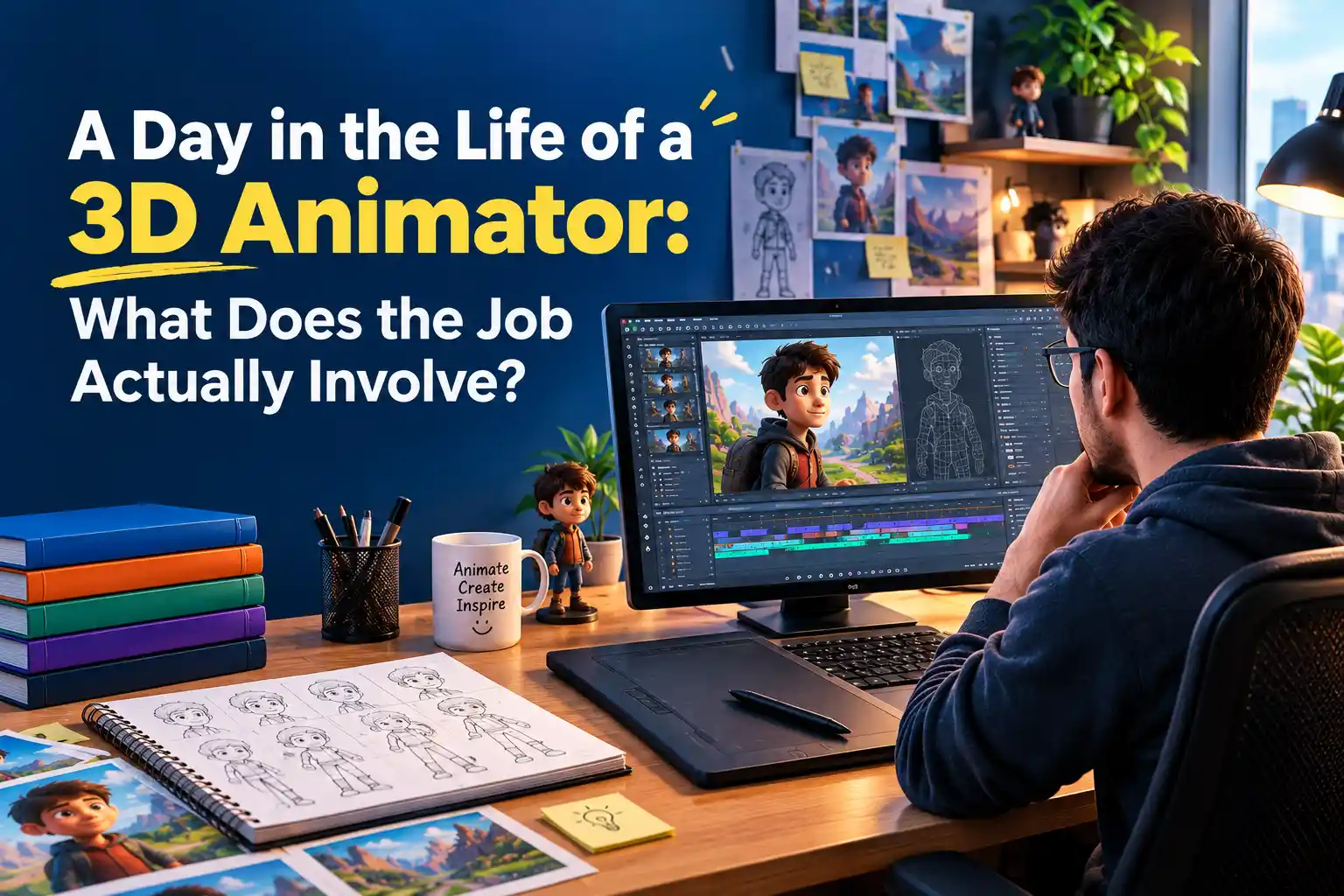
A 3D animator’s daily workflow includes:
● Creating keyframes and motion sequences
● Refining character expressions and body mechanics
● Working with rigged models
● Collaborating with modelers, lighting artists and VFX teams
● Rendering and polishing final output
● Character Animation – Bringing digital characters to life
● Motion Graphics – Animated graphics for ads and branding
● Visual Effects (VFX) – Explosions, simulations, cinematic effects
● Technical Animation – Rigging, scripting, simulation setups
A successful 3D animation career requires both artistic vision and technical precision.
1. Formal Education
Degrees in animation, computer graphics or fine arts provide structured learning and industry exposure.
2. Self-Taught Route
Online tutorials, youtube learning and independent practice can build strong skills at a lower cost.
3. Bootcamps and Certificates
Short-term and skill focused training programs offer intensive learning.
Each path has pros and cons. Choose based on budget, learning style and career goals.
To learn 3D animation effectively, focus on:
● Animation principles like timing, weight and squash and stretch
● Drawing fundamentals
● Anatomy and body mechanics
● Storytelling and cinematography basics
● Problem solving and technical adaptability
Software Skills
Industry standard 3D animation software includes:
● Autodesk Maya
● Blender
● Cinema 4D
● Houdini
Beginners often start with Blender because it is free and powerful.
Beginner to Advanced Roadmap
● Start with Blender fundamentals
● Move to Maya for industry exposure
● Learn render engines like Arnold or Redshift
● Understand production pipelines
Hardware Requirements
● Minimum 16GB RAM
● Dedicated GPU
● High performance processor
● SSD storage
Your hardware significantly impacts rendering speed and workflow efficiency.
Your portfolio determines whether you get hired.
Include:
● A strong demo reel under 2 minutes
● High-quality shots
● Clear breakdown of your contribution
● Personal creative projects
Platforms like ArtStation and LinkedIn help build your professional visibility.
Quality matters more than quantity.
Start with:
● Internships in animation studios
● Entry level junior animator roles
● Freelance projects on Upwork or Fiverr
● Animation challenges like 11 Second Club
Consistent project work strengthens your 3D animator job prospects.
Search on LinkedIn, ArtStation, Indeed and studio websites. Networking matters. Join animation forums, attend workshops and connect with professionals. Prepare for interviews by showcasing your workflow, not just final results.
Career progression typically follows:
● Junior Animator
● Mid-Level Animator
● Senior Animator
● Lead Animator
● Animation Supervisor
● Technical Director
You can specialize deeply or remain a generalist. Freelancing and full-time roles both offer viable growth paths.
Top learning platforms include:
● Pluralsight
● LinkedIn Learning
● Udemy
● Animation Mentor
Industry events like SIGGRAPH expose you to global trends. Communities such as CGSociety and Blender Artists help you stay updated.
● Handling rejection
● Managing tight deadlines
● Avoiding burnout
● Overcoming self doubt
● Finding your own animation style
Consistency and resilience are critical in this competitive field.
The time required to become a 3D animator depends on your learning path and commitment. A formal degree usually takes 3 to 4 years, while a focused self-taught or bootcamp route can take 1 to 2 years of intensive practice. Your progress depends on daily practice, mentorship, feedback and consistency. You are job-ready when your demo reel meets industry standards and demonstrates strong animation principles, storytelling and technical skill.
If you are looking for a 3D animation degree in Kerala, Yedlo Mar Baselious College offers industry aligned 3D animation programmes in Kerala students can rely on.
Key Advantages
● Advanced labs and licensed software
● Experienced faculty with industry background
● Project based practical learning
● Guest lectures and industry exposure
● Placement support and career guidance
● Curriculum aligned with current studio demands
Students gain both technical proficiency and creative confidence.
Ready to turn your passion into a successful 3D animation career? It combines art, technology and storytelling. To build a future in 3D animation, learn the fundamentals, choose the right training path, build your portfolio and connect with the industry. Take your first step now. Explore professional programs and contact Yedlo Mar Baselious College admissions to begin your journey to an animation career.
Drawing helps, but it is not mandatory. Understanding movement and anatomy matters more.
Yes, with discipline and structured practice.
A system with 16GB RAM, strong GPU and SSD storage is recommended.
It has a steep learning curve but becomes manageable with practice.
2D focuses on frame-by-frame illustration. 3D involves digital modeling and rigging.
Yes. Many studios and freelancers work remotely.
Tags: 3D animation, 3D animator career, animation course, animation skills, VFX career,
September 22, 2026
September 22, 2026
September 22, 2026
September 22, 2026
September 21, 2026
September 21, 2026
September 21, 2026
September 21, 2026
September 07, 2026
September 07, 2026
August 29, 2026
August 29, 2026
August 28, 2026
August 28, 2026
August 28, 2026
August 28, 2026
July 27, 2026
July 27, 2026
July 27, 2026
July 27, 2026
July 25, 2026
July 25, 2026
July 25, 2026
July 25, 2026
June 27, 2026
June 27, 2026
June 27, 2026
June 27, 2026
June 27, 2026
June 26, 2026