
- Email yeldocollegesmd@gmail.com
- CALL +91 98461 10506 +91 98468 77776
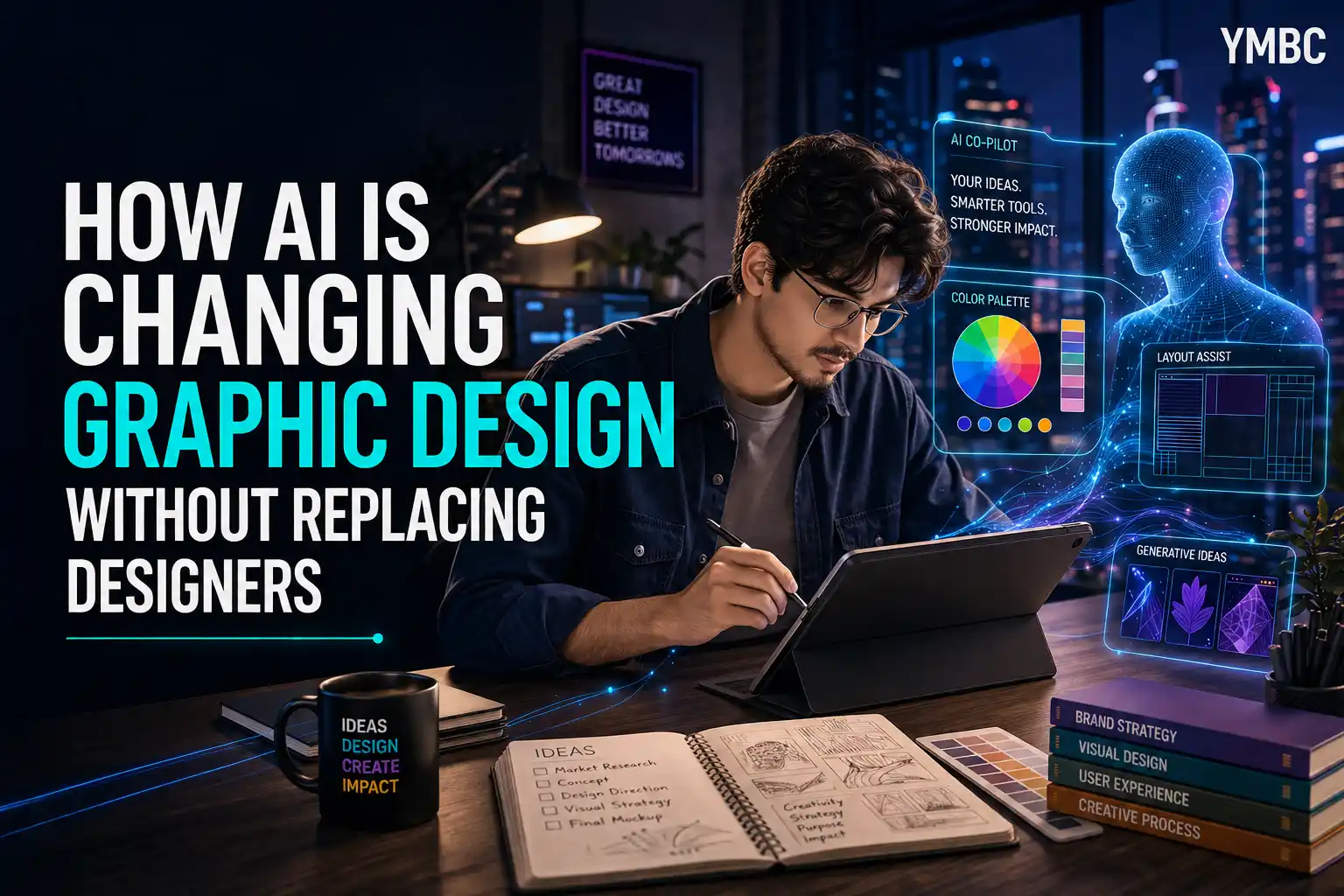
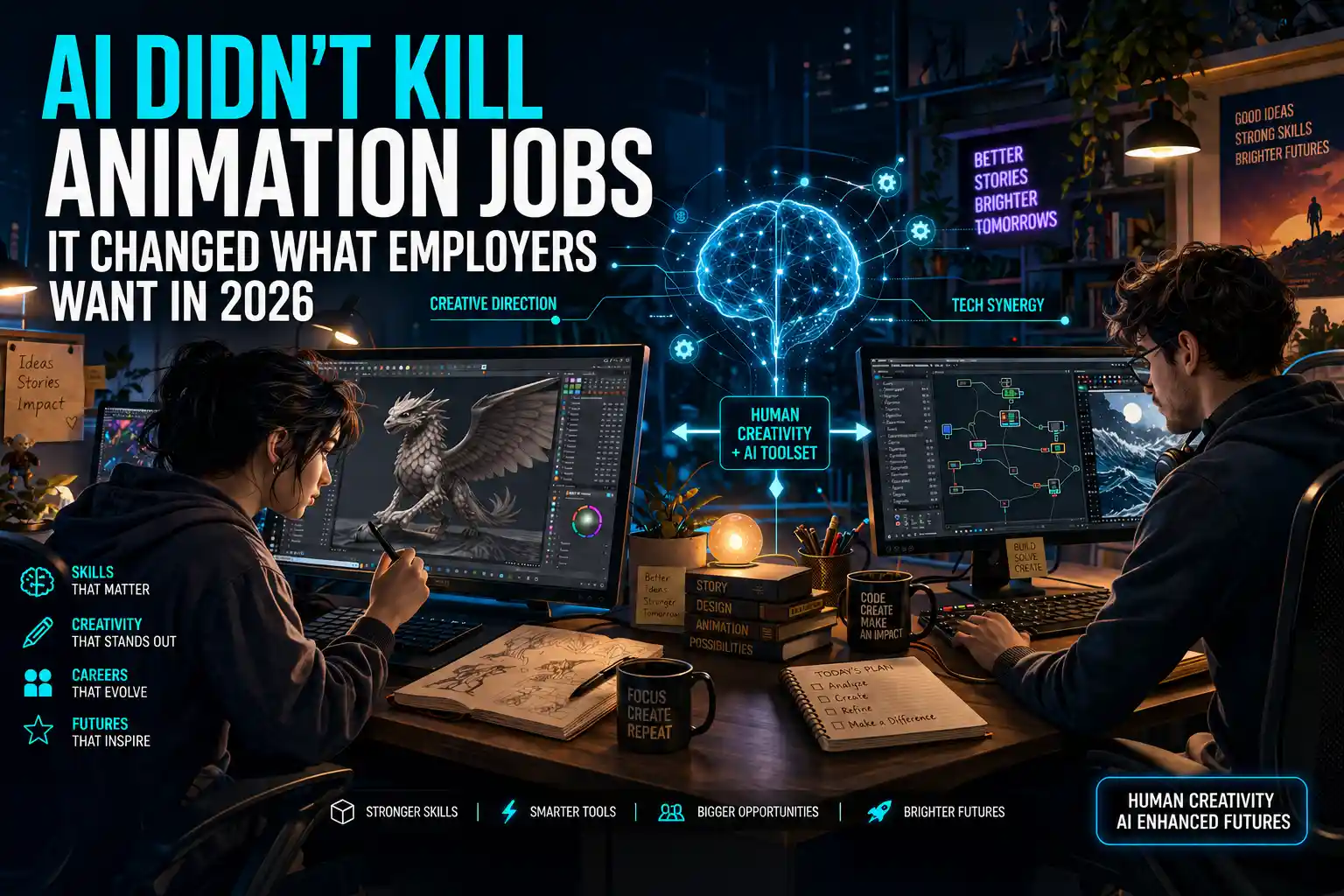
Today, Artificial Intelligence has integrated itself into the process of design creation. From creating images and speeding up edits, AI in graphic design has made it possible for designers to work more productively and creatively. With the increase in availability of the technologies, many students are wondering if artificial intelligence will completely take the place of human designers in the graphic design field.
Actually, the process of evolution of design creation through AI hasn't led to the disappearance of the designer's role in this process. Designers are needed to create a unique image for the business, solve different creative problems, and create visual solutions that can interact with the audience.
Rather than removing all graphic design jobs, AI makes new ones for graphic designers who can manage AI-based technologies.In order to thrive as a graphic designer in the future, students need to understand the fundamentals of graphic design.
This guide discusses how artificial intelligence changes the design industry and what skills students require for 2026.
There is now an increased production of digital content by businesses. Marketing strategies, social media posts, websites, advertising, and digital products necessitate designers to produce top quality graphics within a limited time.
The increase in demand for such AI graphic design software has facilitated its usage in all sectors.
Businesses utilize AI to enhance their productivity through:
Such AI design tools aid designers in working faster without compromising quality.
Contemporary AI design platforms have been designed in a way to assist but not replace designers.
Popular software tools include:
These tools assist designers in generating ideas, creating assets and saving time. However, the design choices are still made by humans.
The common myth is that AI can do all design-related tasks alone. The truth is that AI is good at automating things, whereas people have creativity, strategy and emotions.
AI can efficiently automate routine tasks such as:
These capabilities save time and improve productivity.
In spite of these developments, however, AI cannot replace:
The successful designer incorporates AI-assisted design along with strategy to develop a valuable visual experience which cannot be produced using technology alone.
Professional designers do not give the AI system the entire task. Rather, AI is incorporated into particular aspects of the design process to increase efficiency and preserve creative control.
Most designers utilize AI to:
Generative AI enables the designer to start on projects faster, thereby leaving time for creativity.
Once the AI creates initial concepts, designers:
The resultant design represents human expertise, not solely the AI output.
Recruiters now judge graphic designers by the balance of knowledge, creativity, and adaptability.
The top graphic designers keep refining their skills:
Basic principles of design cannot be ignored despite all technological improvements.
More and more employers appreciate specialists who can:
Recruiters also expect designers to understand:
Graphic design skill development together with AI understanding increases chances for employment and successful careers.
AI is actually offering new career opportunities within creative fields.
These positions integrate the classic skills of design with the help of AI.
People who have expertise in AI are being recruited by:
With firms continuing to invest in digital experiences, the graphic design job are transforming rather than vanishing.
Common misconceptions about AI lead to unnecessary fear for young designers.
Myth: AI will substitute all graphic designers.
Reality: Graphic designers who use AI efficiently will become much more useful.
Myth: Just learning programs guarantees success.
Reality: Creativity, ability to communicate, and strategic thinking still matter.
Myth: AI comes up with unique ideas.
Reality: AI uses already available information, while designers develop concepts that resonate with people.
Most successful design works depend on:
Such traits will keep designers apart from machines in the future.
Students need to work on establishing creative bases along with understanding new technologies.
Before using AI tools students need to gain knowledge of:
Such bases have always been the starting point for successful designers.
Students need to build a portfolio that will show off:
A good portfolio will present both technical skills and a creative mind.
The design field is constantly changing.
Students should:
At YMBC, students can learn through project-based approach, creation of portfolio, internship, interaction with industry and hands-on experience with contemporary creative technologies.
The use of AI in graphic design will change how creative professionals create, but it is not going to replace the designers. AI has become a great helper in automation, fast workflow, and high productivity of designers. The future of the design world belongs to those who know how to apply knowledge about technology, strategy, human creativity, and AI in their work.
As a student interested in becoming a graphic designer, you have to master the basics of design, develop your portfolio, be aware of AI-assisted workflows, and work on your communication skills. At Yeldo Mar Baselios College, we encourage you to learn through projects, develop your portfolio, gain internship experience, and get familiar with modern technologies of graphic design.
No. AI is a tool to automate certain tasks, whereas human creativity, strategy development, visual communication, and branding are key. Graphic designers who are skilled in working with AI will have better job prospects.
AI helps to increase productivity during ideation, image generation, image manipulation, prototyping, and design automation, allowing designers to concentrate on creativity, branding, and problem solving.
Designers should be acquainted with AI tools like Adobe Firefly, Adobe Photoshop AI, Canva AI, Midjourney, and Adobe Creative Cloud, along with core design tools like Adobe Illustrator and Figma.
In addition to typography, branding, design thinking, visual storytelling, knowledge of UX/UI, and other core skills, future-proofed designers will need to know how to communicate, think critically, solve problems creatively, and work with AI.
Yes. Future students will find their way into the field through creativity, technical skills, competence in using AI, building portfolios, internships, and continued learning.
Tags: AI in graphic design, graphic design, graphic design careers, graphic design course, graphic designer skills, AI design tools, design thinking, visual communication,
September 22, 2026
September 22, 2026
September 22, 2026
September 22, 2026
September 21, 2026

September 21, 2026
September 21, 2026

September 21, 2026
September 07, 2026
September 07, 2026
August 29, 2026
August 29, 2026
August 28, 2026
August 28, 2026
August 28, 2026
August 28, 2026
July 27, 2026
July 27, 2026
July 27, 2026
July 27, 2026
July 25, 2026
July 25, 2026
July 25, 2026
July 25, 2026
June 27, 2026
June 27, 2026
June 27, 2026
June 27, 2026
June 27, 2026
June 26, 2026