
- Email yeldocollegesmd@gmail.com
- CALL +91 98461 10506 +91 98468 77776
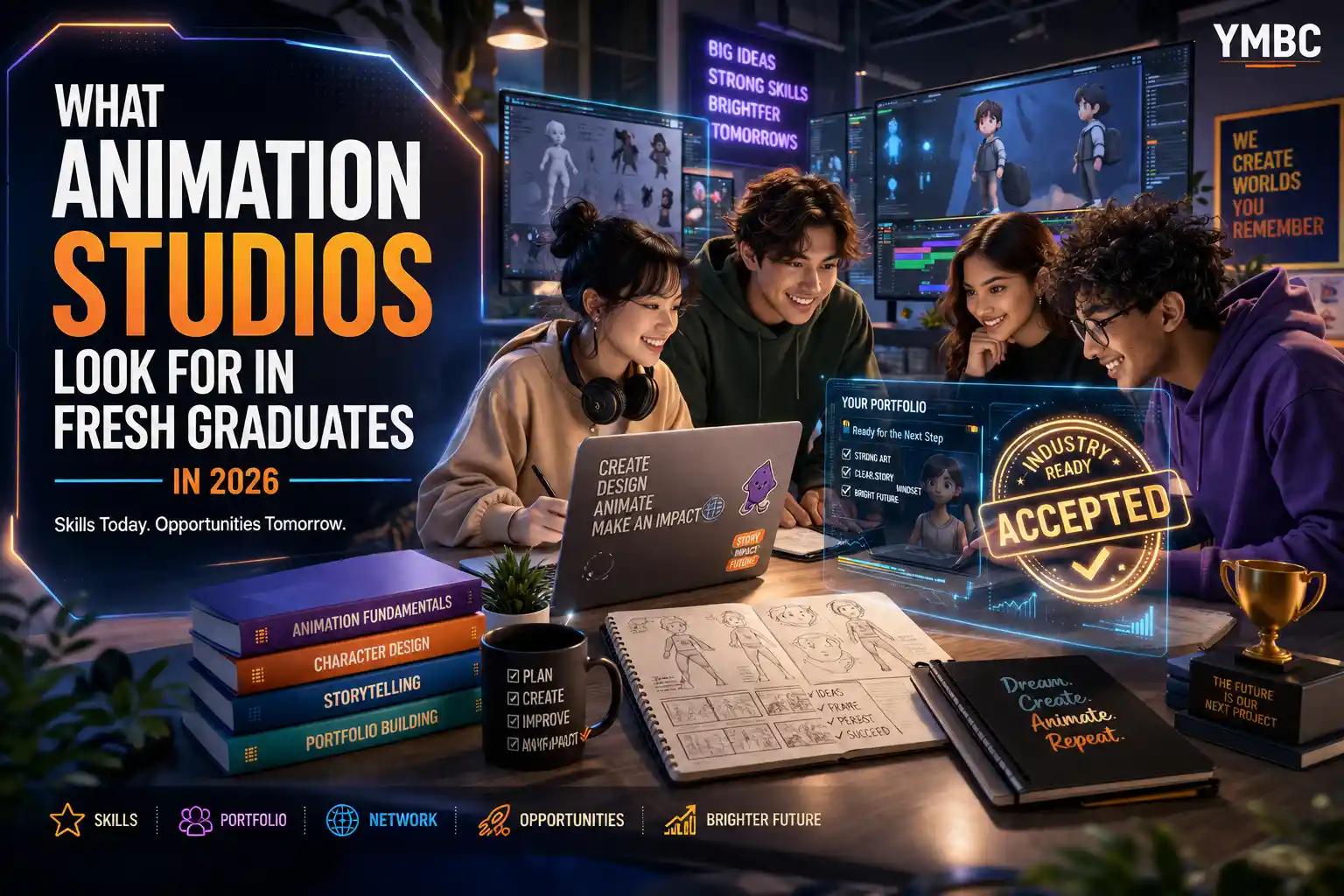
The animation industry is developing quickly, and so are hiring requirements. Competition for animation jobs for freshers has never been tougher. Every year, thousands of students complete an animation course after finishing higher secondary education. These students then enter the job market with qualifications and skills in software. Animation course students have the kind of qualifications, and they know how to use the same software.
But today, animation companies need to look further than grades and software certificates. They require graduates capable of creative thinking, problem-solving, collaboration, and adaptation to the contemporary workflow in animation. Whether you aim to work in feature films, gaming, advertising, OTT platforms, or digital content, employers look for graduates who can contribute from day one OTT production, or other kinds of digital content- employers look for graduates prepared to hit the ground running.
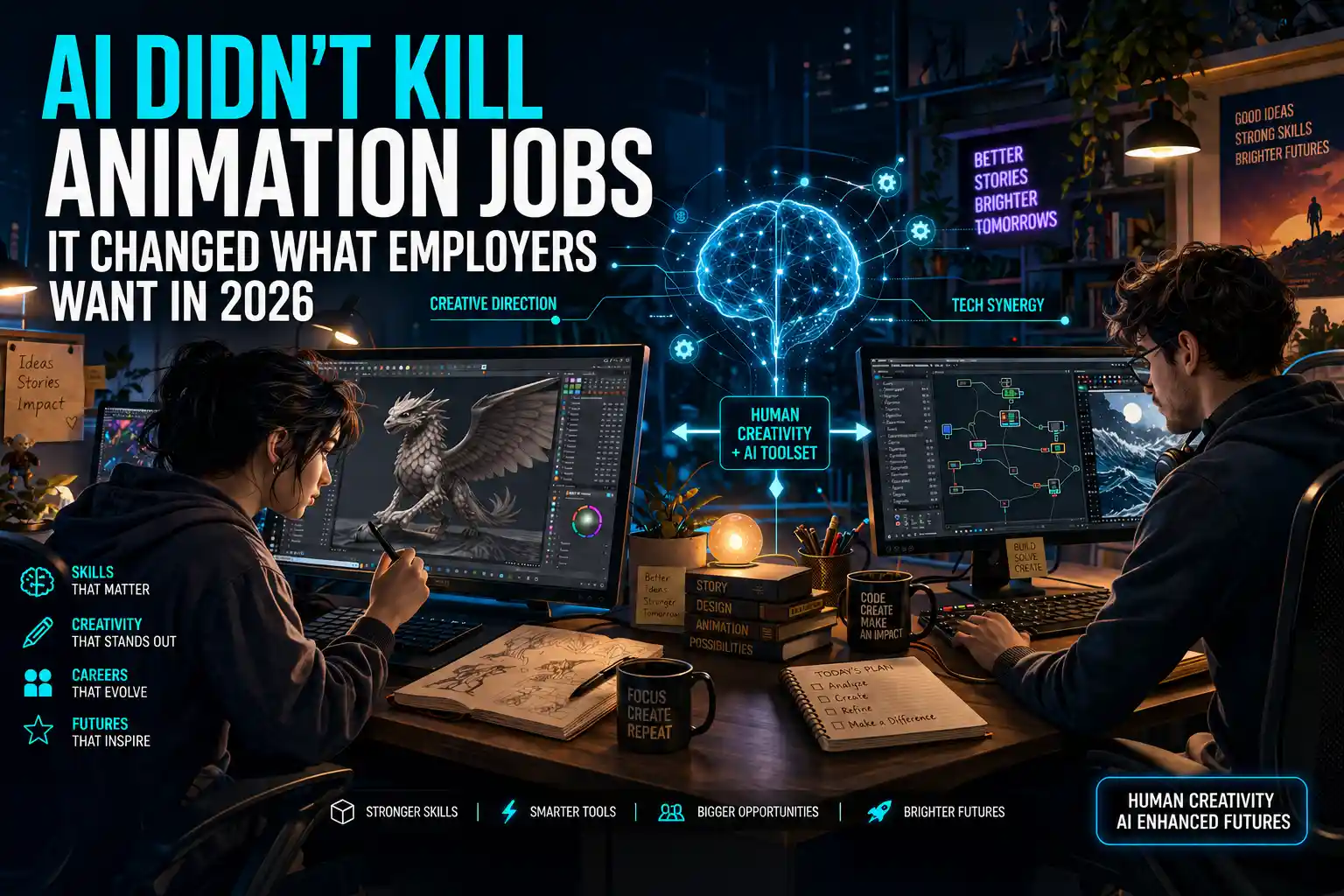
Artificial Intelligence (AI) has revolutionised the production workflow, but it has not replaced the creative people. On the contrary, today studios recruit graduates who have knowledge about conventional animation principles and creative workflow in the age of AI.
In this guide, we will explore what contemporary animation companies expect from fresh graduates in 2026 and how students can prepare themselves for successful animation jobs.
The animation industry is getting more technological, collaborative, and global in nature. As production techniques change, studios start expecting graduates to have a set of skills and knowledge that combines technical, creative, and professional.
Several trends influence recruiting practices:
Understanding all these trends, students will be ready for their future careers in animation.
Nowadays, AI technologies help animators do repetitive tasks automatically, such as the creation of backgrounds, asset management, and other activities. However, storytelling, creativity, character performance, and artistic judgment still cannot be automated. The studios prefer graduates who can use AI technologies efficiently without losing uniqueness and creativity.
Animation software and production techniques continue to evolve. Employers value graduates who demonstrate curiosity, adaptability, and a willingness to learn new tools throughout their careers.
Continuous learning has become one of the most important qualities for securing animation jobs in today's industry.
A portfolio becomes the key factor that defines whether your CV will be read further by recruiters who look at candidates' portfolios first before looking at their academic achievements.
A good animation portfolio demonstrates the creativity, skills, and problem-solving ability of the animator.
A professional demo reel contains only the best examples of your portfolio.
Include:
It is always better to make an impression with quality rather than quantity of work.
Recruiters tend to pay attention to applications for about two minutes.
Start your showreel with the best examples of your work
Do not just showcase final animations.
Describe:
Showing your thinking allows recruiters to know how you work with production teams.
Being skilled in several software packages is great, but good knowledge of animation basics is still the key to success.
Recruiters expect graduates to know:
The software may change, but animation principles never will.
Students have to start by acquiring the following:
These skills will never become obsolete.
Studios will want you to know how to use standard software in practice, such as:
Knowledge of AI-enabled creative tools along with these will make graduates more employable.
Technical skills will help students get interviews, but proper behavior is what leads to hiring.
Animation creation is a collaborative process between artists, animators, designers, editors, lighters, and production people.
Studios look for graduates who can:
Good communication will improve production results.
All animation projects go through several stages of review.
Successful graduates typically:
Recruiters value adaptability as an important quality.
Two graduates may possess similar technical skills, but only one ends up receiving a job offer. This happens because of practical knowledge and professional growth
Graduates who had internship experience:
All of these skills will be valuable in getting good animation placement.
It is important for recruiters that students learn even after classwork.
Personal projects prove the following:
Those students who constantly update their portfolio attract attention during the recruitment process.
The Most Frequent Errors Leading to Bad Placement
Many highly qualified graduates have difficulties due to their own errors.
Avoid:
A compact portfolio will help you build a professional image.
Typical interview mistakes are the following:
Good preparation for any animation interview is the key to your success.
If you are prepared ahead of time, you’ll be more confident entering the job market.
Begin preparing your portfolio even in your first year at college.
Include:
Constant updates of your portfolio will prove your constant development.
Students need to get experience in:
Technical and professional skills get enhanced through practical experiences.
Developing Professional Skills Outside the Classroom
Success is about much more than technical knowledge.
It is important to keep improving:
Project-based learning, portfolio building, industry exposure, internships, and placement-oriented activities at YMBC enable students to gain skills that meet current studio requirements.
The creative sector is expanding in various industries.
Graduates can consider careers in:6
Pixar Animation Studios and DreamWorks Animation are some prominent animation studios that have shaped the industry standards over time, whereas new studios are creating great opportunities globally.
The development of technology will persist, and professionals will keep learning as well.
Those who embrace the innovative creative technologies, improve their storytelling skills, enhance their portfolios, and acquire production-level competencies will be competitive in their profession during their entire career.
Getting an animation job for freshers in 2026 is easier than ever before for students who have creative abilities and technical skills along with practical exposure to the field. Animation companies will need graduates who have all the above-mentioned attributes in addition to solid academic performance. An excellent animation portfolio, demo reel, internship, and continuous portfolio improvement will affect one’s chances much more than grades.
Students need to work on live projects during their college life, develop a good portfolio, gain experience, and receive feedback regularly from the industry. Institutions like YMBC help students to work on projects, create a portfolio, do internships, and get exposed to the industry, making them production-ready and well-prepared.
Animation studios seek good portfolios, storytelling capabilities, fundamentals of animation, communication skills, flexibility, internship experience, and the ability to learn new technology.
Yes, recruiters usually first go through the animation portfolio before even going through the CV of the candidate. A quality portfolio with some creativity and problem-solving skills carries much more weight than marks secured in academics.
The software students need to be comfortable with includes Autodesk Maya, Blender, Adobe Creative Cloud, Adobe After Effects, and Unreal Engine, along with good animation fundamentals.
Some basic knowledge of AI-assisted animation workflow has become highly valued. Studios expect fresh graduates to use AI in a responsible manner to boost productivity.
Students must build up their demo reel, keep updating their portfolio, complete internships, participate in live projects and competitions, develop communication skills, and keep receiving feedback regularly.
Tags: Animation Jobs, Animation Jobs for Freshers, Animation Career, Animation Portfolio, Animation Course, Multimedia, VFX, AI in Animation
September 22, 2026
September 22, 2026
September 22, 2026
September 22, 2026
September 21, 2026
September 21, 2026
September 21, 2026
September 21, 2026
September 07, 2026
September 07, 2026
August 29, 2026
August 29, 2026
August 28, 2026
August 28, 2026
August 28, 2026
August 28, 2026
July 27, 2026
July 27, 2026
July 27, 2026
July 27, 2026
July 25, 2026
July 25, 2026
July 25, 2026
July 25, 2026
June 27, 2026
June 27, 2026
June 27, 2026
June 27, 2026
June 27, 2026
June 26, 2026