
- Email yeldocollegesmd@gmail.com
- CALL +91 98461 10506 +91 98468 77776
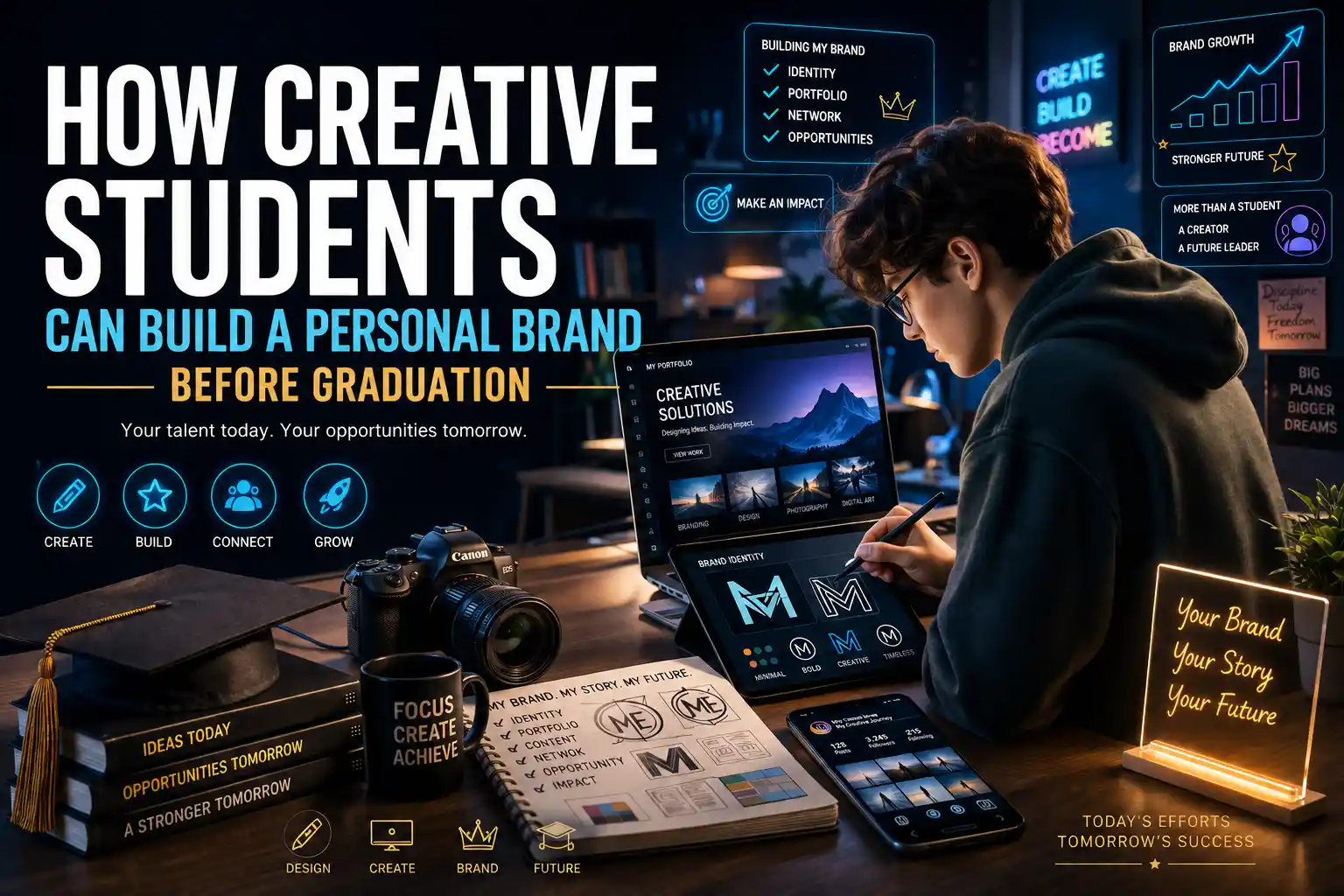
Personal branding for students is simply ensuring that your talent, zeal, and abilities are evident to everyone who searches for you on the internet. Obtaining an ideal internship or a creative job is not entirely based on grades anymore. Recruiters, freelance clients, and creative agencies today use the Internet to find suitable candidates even before organising meetings and interviews. LinkedIn profiles, portfolio sites, Behance projects, Google results, and other social media help them get a better idea of what kind of person you are in terms of skills, creativity, and professionalism.
For students who strive to become professionals in creative careers, this creates both new opportunities and new challenges. There may be lots of graduates with identical qualifications, but those who managed to make a strong personal brand and a good student online portfolio will be more visible to potential employers. Your online presence becomes your face, usually even before you send a CV to apply for a certain position.
Today, career branding for students has become essential because it allows you to prove your creativity, present your design process, show consistency, and create a professional identity while studying at a university. You can start working on your portfolio, developing connections and becoming ready for internships, placements, freelance work, and further education before graduating from college.
A well-managed digital presence increases your visibility and demonstrates strong career readiness, making it easier for employers to trust your abilities.
In recent years, the hiring process has totally changed. Employers no longer use resumes or grade point average as criteria when recruiting people. Creativity, problem-solving skills, and practicality are expected to be demonstrated via one's accomplishments.
Before inviting candidates for interviews, recruiters often review their online presence, the recruiter usually checks out:
They allow understanding your creative potential, communication skills, consistency, and professionalism.
Everything that you publish online adds up to your digital identity.
A good personal brand helps you:
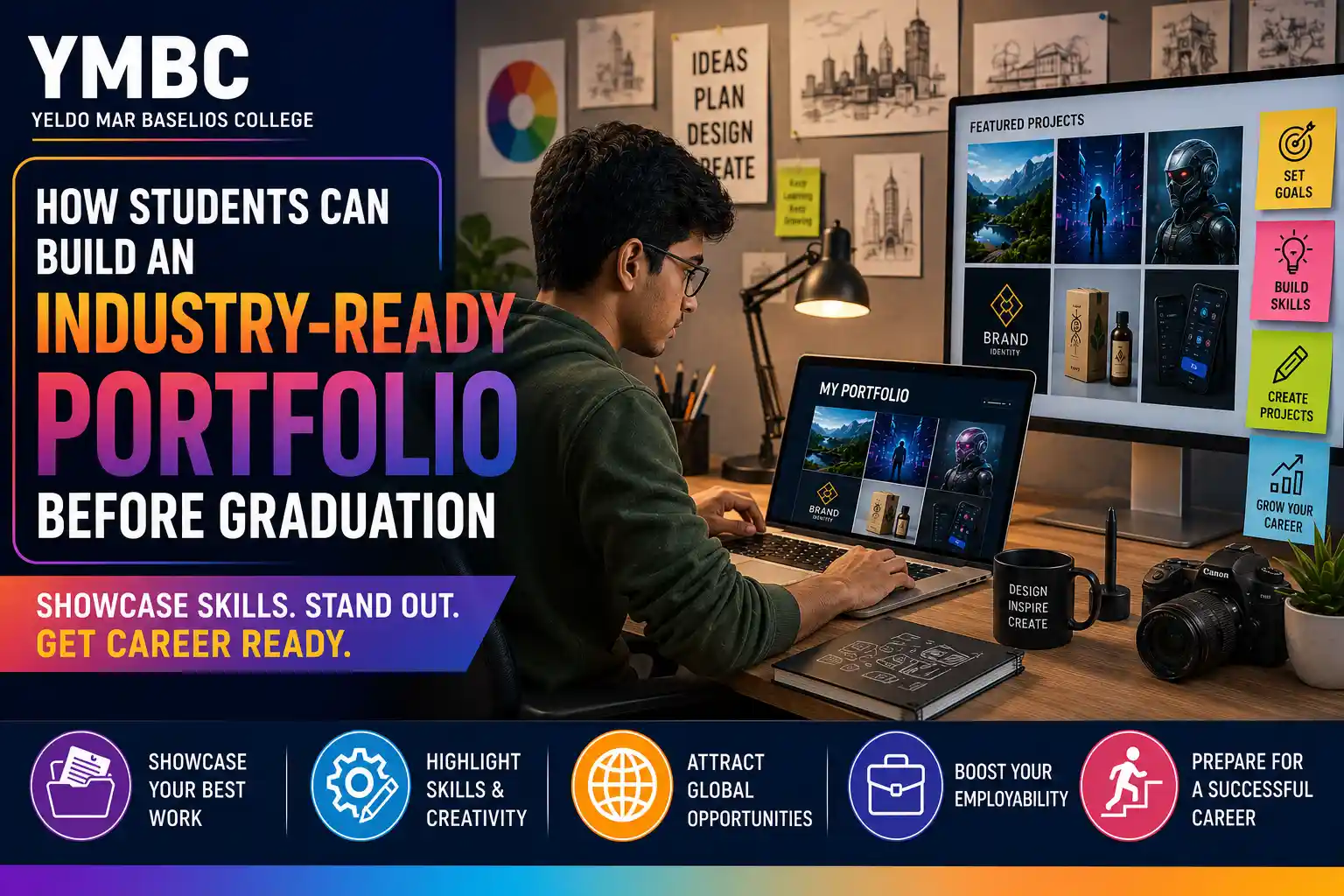
Putting together a unique portfolio isn't so much about creating an exhibit of refined artworks as it is about presenting the whole story behind the way you think and work. To assemble a portfolio that showcases your own creative individuality and one that can fill the gap left by most job applicants, you should pay attention to your best works, individual contributions, and progression as an artist. Instead of just placing finished designs in the portfolio as if they were photos in a regular photo gallery, create case studies for each project. Present the whole design process as part of each project, focusing on how the initial problem that needed to be solved turned into an artwork thanks to your creative approach. By sharing all the mistakes and insights you got from your work, you will show your problem-solving skills.
The most common mistake that students make is adding all their completed projects into their portfolios.
In your portfolio, show only those projects that prove your:
A carefully selected portfolio will speak louder than dozens of average projects.
Create portfolio case studies that tell the story of your creative journey; don’t just upload finished artwork with no context.
Each project should contain: Project objective
This gives recruiters insight into your decision-making process and also shows your strategic thinking skills.
Your professional portfolio website should be a work in progress throughout your college career.
Include regularly:
Updating your portfolio every semester is a great way to show that you are learning and growing professionally.
To get the best results from your personal brand, you need to optimize your presence on such websites as LinkedIn, Behance, Dribbble, ArtStation, and even your personal website. The key here is to create a coherent personal image across all sites that includes identical quality photos, a handle name, and branding on each of them. Write an effective headline for LinkedIn that clearly defines your creative specialization. Additionally, use such tools as recommendations, skills, and featured projects in order to prove that you are an expert. On such sites as Behance, Dribbble, and ArtStation, provide comprehensive information about your project by including such elements as a project description, breakdown passes, and even wireframes to demonstrate not only the result but also your professional skill set and creative approach. Finally, consider your website as the main tool of your personal branding, in which your prospective employer will have an opportunity to get acquainted with your work and easily contact you.
Your professional profile on LinkedIn should clearly communicate who you are and what you are capable of.
Include:
Students who regularly update their LinkedIn profiles have higher chances of getting internship and placement opportunities.
Creative professionals should have an online portfolio on several sites that includes:
Different platforms draw different audiences, allowing you to broaden your reach and increase your professional visibility.
Sharing your creative journey online from initial design processes and animation breakdowns to college projects, behind-the-scenes struggles, and honest learning experiences is one of the fastest ways to build trust. When you post your work-in-progress and reflect on industry insights, you do more than just display a finished product; you reveal your problem-solving mindset and authentic passion for growth. Crucially, consistency builds credibility over time. Regularly documenting your progress demonstrates discipline, keeps you visible to recruiters, and proves that you are actively evolving. Over time, this steady stream of behind-the-scenes content transforms your profile into an engaging, living testament to your creative dedication.
Don’t just post finished work but show the creative process behind each project.
Examples include:
These posts showcase your creative storytelling skills and give employers a sneak peek into your workflow.
Students can write about the following regularly:
Demonstrating your learning journey shows curiosity and continuous improvement.
You don’t have to be years into your career to be noticed in your field.
Publishing thoughtful content regularly allows you to build thought leadership, build your professional credibility, and build trust within creative communities.
Networking in the creative industry isn't about collecting contacts or constantly looking for a job; rather, it involves creating a community of individuals who are willing to collaborate through curiosity. There are a variety of ways to get involved, including going to design events, engaging in webinars, entering design competitions, and connecting with alumni and experienced professionals within the industry. By doing so to learn something or get advice on the process rather than asking for a job right away, you relieve pressure and allow for a more valuable mentoring relationship.
Expand your student network opportunities by:
Every interaction helps you learn from the pros and build your network.
You can have a strong impact on creative communities by:
These types of communities can foster relationships that lead to internships and freelance work.
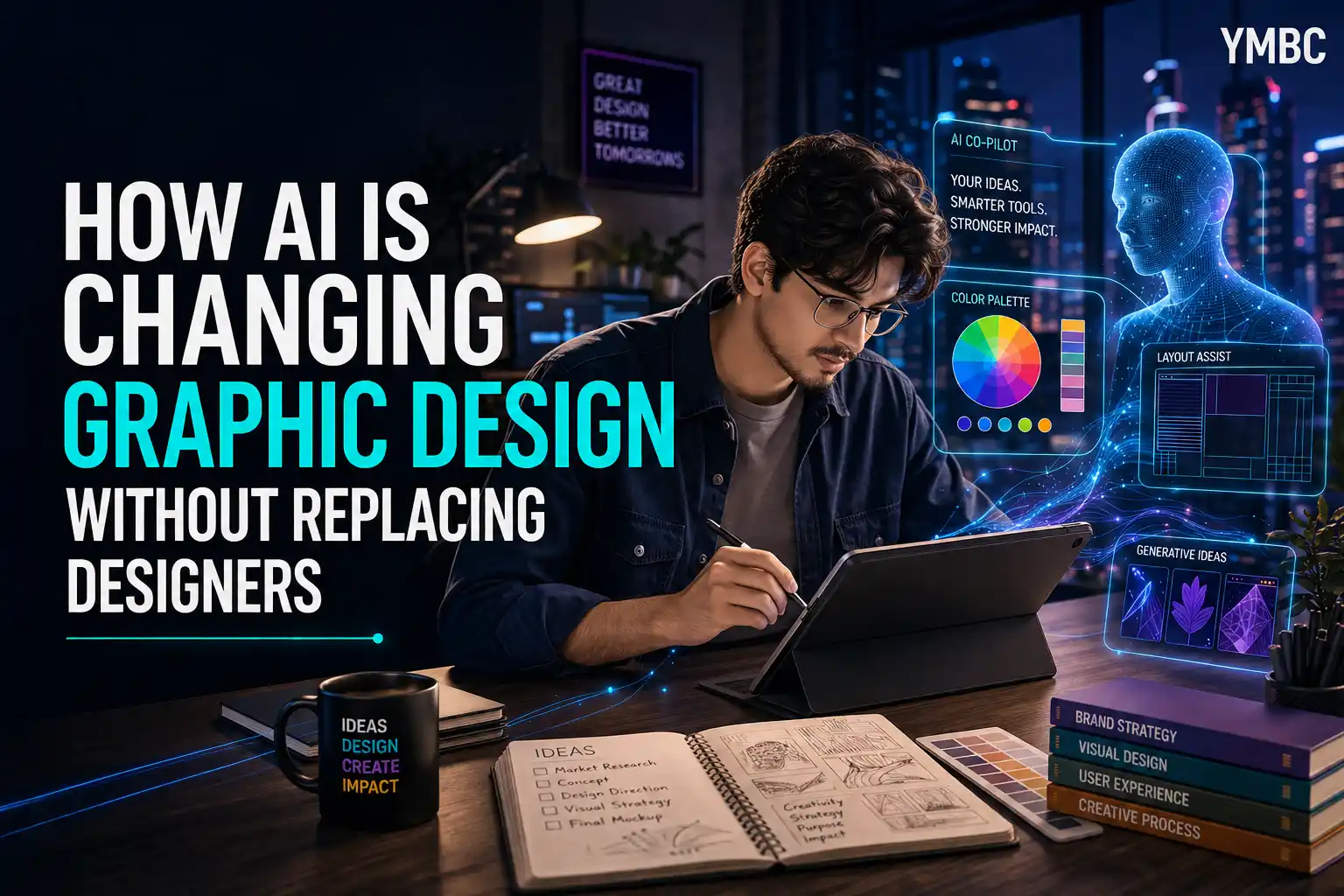
AI is changing the way that personal branding works because it can help you to be found by AI-driven search engines, which summarise your digital footprint, as well as by AI recruitment screening that will analyse candidates' resumes. Although these new technologies save time, they also mean that the standards of success have become even higher. It is more challenging than ever to get noticed among the mass of information that has been generated by algorithms, but having a unique portfolio where you will show your originality and creativity as well as your problem-solving skills can be your best chance to succeed.
In today's industry, the majority will utilize AI in some way to find the talent they need and assist with the hiring process.
Students can responsibly use AI for the following:
Nonetheless, recruiters still appreciate personal projects that showcase innovative thinking and the ability to solve problems.
AI can do a lot of things for designers, but it cannot do:
You are at an advantage if you study and use AI tools, especially when you are building a career in creative industries.
Creating a personal brand is important because there are many things to watch out for so that one does not fall into common traps that will sabotage one’s efforts. Poorly managed online presence, an old portfolio, and low-quality photos are immediate indicators of carelessness and unprofessionalism. Not having a personal website or LinkedIn profile means limiting one’s chances of being found. Not having goals for posts and blindly following the trends means that your unique strengths may never be recognized on social media. Unprofessional social media behaviour is the quickest way to ruin one’s reputation before the career even begins.
Consistency is more important than striving for perfection in building your personal brand.
Month 1
Month 2
Month 3
Month 4
Month 5
Month 6
This plan assists students in boosting self-esteem and making them more employable by the time they graduate.
The starting point of your professional reputation is in the activities you take on during your time as a student.
Use every assignment to practice professionalism and unique ideas.
This means you need to pay attention to:
That way, all your projects increase your career portfolio.
Students are required to engage in:
Participation in these activities develops confidence and hones practical skills.
Developing a professional persona prior to graduation is made possible by project-based learning and an integrated industry focus by YMBC and other institutions. Students are able to create sophisticated portfolios and participate in a variety of industry-related initiatives.
With the continued developments in the creative industries, personal branding for students is becoming crucial for preparing for careers after graduating since they will be expected to be noticed by prospective employers based on their online footprint, portfolio, and professional online presence. Currently, when recruiting, employers look at how well the prospective candidate presents himself/herself online before hiring him/her.
Personal branding for students can be developed throughout the studies in college by showing one's work, reflecting on his/her experience, participating in projects within the industry, and creating a professional presence online. YMBC adopts the approach of integrating students into the industry even while still studying. As a result, it is more likely that students will find more chances of internships and successful careers after graduating from college.
It is the process of building the professional identity of a person, showing one’s set of skills, projects, accomplishments, and expertise via portfolios, LinkedIn, personal websites, etc.
Having a good personal brand is important for the successful demonstration of one’s skills and talents, improvement of employability, attracting recruiters, obtaining an internship, and succeeding in the highly competitive creative industries.
The creative portfolio can be presented with the help of Behance, Dribbble, ArtStation, LinkedIn and a personal portfolio website
Yes. Because college projects, personal projects, competitions, internships, volunteering, and experiments can all be used in your portfolio to showcase your talent.
Students should start building their brand from the very beginning of their college years. The early start will give you time to build a better portfolio, increase your visibility in the industry, and build your network.
Tags: Personal Branding, Personal Branding for Students, Student Portfolio, LinkedIn, Creative Careers, Portfolio Website, Career Development
September 22, 2026
September 22, 2026
September 22, 2026
September 22, 2026

September 21, 2026
September 21, 2026
September 21, 2026
September 21, 2026
September 07, 2026
September 07, 2026
August 29, 2026
August 29, 2026
August 28, 2026

August 28, 2026
August 28, 2026
August 28, 2026
July 27, 2026
July 27, 2026
July 27, 2026
July 27, 2026
July 25, 2026
July 25, 2026
July 25, 2026
July 25, 2026
June 27, 2026
June 27, 2026
June 27, 2026
June 27, 2026
June 27, 2026
June 26, 2026