
- Email yeldocollegesmd@gmail.com
- CALL +91 98461 10506 +91 98468 77776
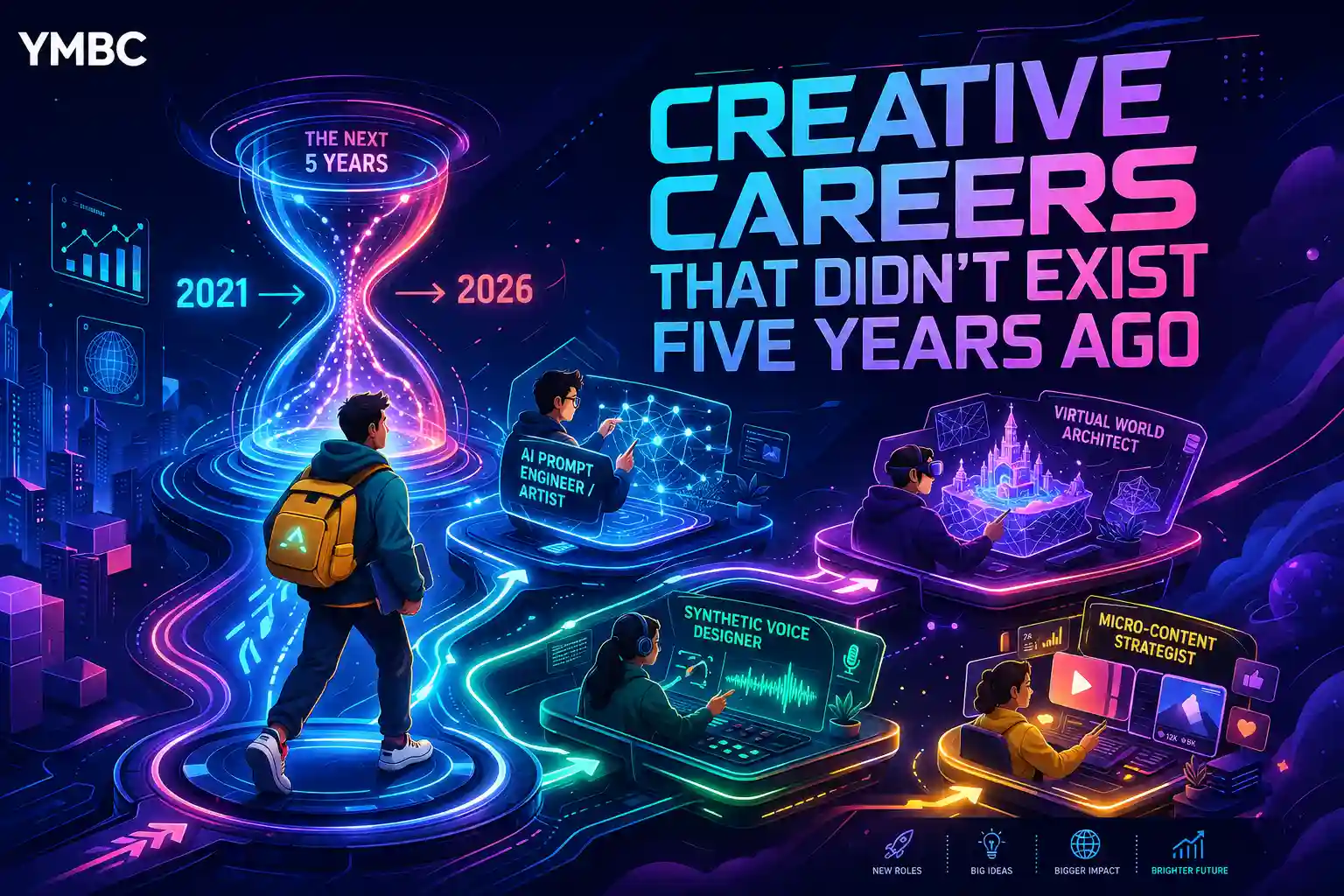
With technology transforming industries, it is becoming apparent that careers in the fields of digital and creative career are amongst the most attractive and sought-after professions. Students who have completed Class 12 are getting job opportunities that were barely there just some years back. Whether it is AI-powered design or virtual production, gaming, immersive media or digital storytelling, the creative industry is expanding very quickly. This article explores the new creative careers, the reasons behind their emergence and how students can prepare themselves for a creative and tech-driven future.
Several trends in the industry are shaping the demand for hiring people with creative skills. Organizations are looking beyond niche specializations and are focusing on professionals who can leverage their creative skills with technological expertise.
Artificial Intelligence (AI): The automation process performed by artificial intelligence (AI) is generating demand for creative jobs and making some roles disappear. As a result, jobs such as AI Content Designer and Prompt Designer are in huge demand.
Creator Economy: The creator economy is booming, and companies are willing to spend significantly to hire influencers, content managers, and social media managers.
Online Video Content:Companies offering Over-The-Top (OTT) platforms are in dire need of creative professionals who can conceptualise and develop animation, motion graphics, visual effects, and digital content.
Gaming Industry: The rise of the gaming and esports industry has created employment opportunities for game environment artists, character designers, and visual effects artists.
Virtual Production: Technological developments such as Unreal Engine are transforming the film, television, and advertising industries by enabling real-time visual effects.
Digitization: Companies are investing in digitizing products and offering excellent customer experience through websites, apps, and social media. These developments have increased demand for the students who choose digital designer career and multimedia careers.
Visual Storytelling: Firms are utilizing multimedia content, including motion pictures and graphics, to engage customers and build long-term relationships.
Remote Working and Collaboration: Creative professionals can network with clients and companies remotely and globally.
These trends are creating future careers for individuals with creative skills and expertise. Employers are prioritising people with hybrid talents, including communication proficiency, technical skills, and technological skills.
Businesses require people who are capable enough to create engaging digital experiences on multiple platforms. The AI tools, Adobe Creative Cloud, Blender, Unreal Engine are changing the way creative work is done as it is enabling people to collaborate faster while creating demand for the skilled professional.
Today, businesses require creative professionals who can use their skills and competencies alongside technology to address the needs of the market. Thus, instead of seeking to hire experts with only technical know-how, companies look for people fit to participate in design, animation, digital marketing, AI-generated content production, and visual effects. As enterprises embrace technological advancements and work with international teams, new demands emerge. This pattern will foster the development of a career in creativity and give students several chances for shaping their future career.
A lot of the fast-growing digital creative career options did not exist or existed in a nascent stage a few years back. They exist at present owing to the necessity of the business to apply digital experience, assisted workflow, and interactive media.
Some of the latest creative career opportunities available are:
Such occupations are born out of the fact that firms are utilizing creative technology more and more to enhance their efficiency and consumer interaction.
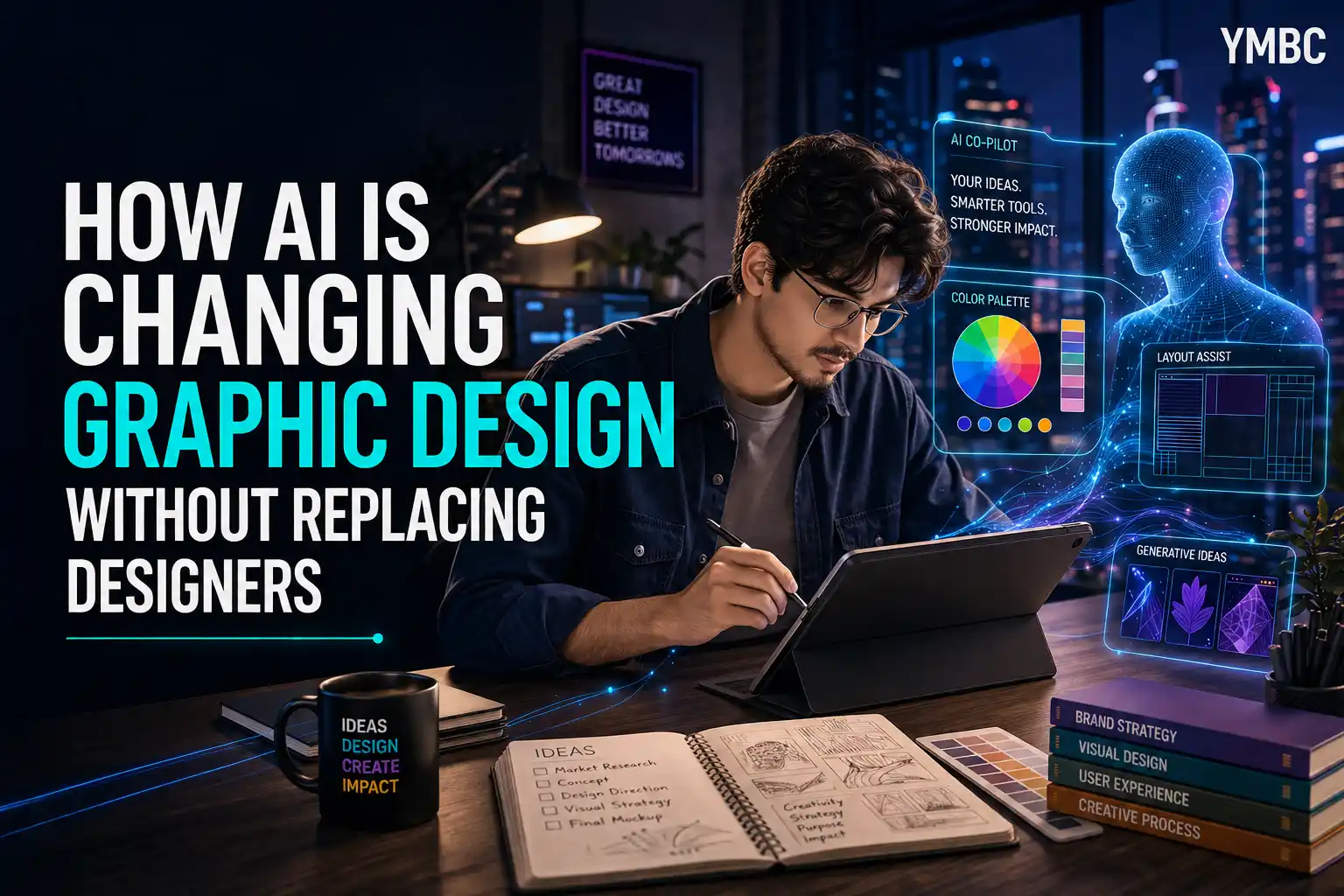
Artificial Intelligence has opened up new horizons rather than limited creative possibilities. Companies now value experts who can leverage AI to make their work process more efficient while delivering high-quality, innovative content. New professions, such as AI Content Designer, Prompt Designer, and Virtual Production Artist, have emerged as businesses started to adopt generative AI, automation, and real-time technologies. Moreover, knowledge of AI tools combined with Adobe Creative Cloud, Blender, Unreal Engine, and other programs is now in high demand in advertising, entertainment, media, and other creative industries. These developments highlight the importance of embracing technological progress, as it ultimately transforms the creative economy for the better.
In the gaming sector, the following career opportunities have been offered:
With the expansion of gaming, simulations, and immersive learning experiences, there has been an increasing need for these kinds of occupations.
The rise of the creator economy has facilitated unprecedented business growth and opened up new career opportunities globally. It has enabled companies and individuals to profit from interactive digital content and engage with their brands in novel ways. Companies and businesses have come to realise that employing people to create YouTube videos, Instagram posts, and other content for Over-The-Top (OTT) platforms, podcasts, and social media can be a lucrative endeavour. Therefore, innovative careers such as Content Strategist, Social Media Motion Designer, Creator Economy Manager, and Digital Experience Designer have gained traction in the contemporary job market due to the demand for skilled personnel who can leverage digital content to market goods and services. This is because businesses now need individuals who can devise captivating brand experiences, harness storytelling and branding skills to produce desirable digital content and master video creation to sell products and services online.
Several industry trends are creating new careers like animation careers and increasing demand for skilled professionals across animation, design, multimedia, and digital media.
Thanks to generative AI, repetitive creative processes have been automated, leaving room for strategy and creativity. Companies look for candidates that can integrate both technologies and human capabilities.
The fast growing gaming industry, Netflix, Over The Top (OTT) services, E-commerce and digital marketing requires professionals with skills in animation, motion graphics, interactivity and immersive media.
The modern employer is concerned with what a candidate can do as compared to qualifications. While qualifications serve as a solid basis, employability depends on the candidate's industry ready skills.
The recruiter looks for:
Students with both creative and technical skills are more attractive in the current job market.
Today’s employers require professionals who can integrate their creativity and use technology to solve practical problems. While it is still necessary to have knowledge in the field, the requirement nowadays is that individuals should be able to apply their creativity along with technical knowledge in combination with industry-standard software, such as Adobe Creative Cloud, Blender, Unreal Engine, and artificial intelligence programs. Individuals who work on developing themselves creatively and technologically, as well as build a good portfolio, will be ready for the future creative careers in these fields.
Creative experts also display:
These qualities will help graduates perform efficiently in creative teams with a multidisciplinary approach.
It is easier to choose a profession if one knows his/her strengths.
Ask yourself:
1. Which creative things do I like?
2. Do I like solving visual challenges?
3. Am I interested in new technologies?
4. Am I a team player?
5. Am I capable of continuous development of my skills?
Your answers will help identify the creative professions best suited for you.
Getting ready for one’s future creative career requires doing some preparatory work already in college when there is an opportunity to gain both practical and theoretical experience. Rather than postponing the task, it is best to start preparing for one’s future career right now and try to create a strong portfolio. One can do it by treating every assignment as a possible project that can help one to showcase their skills. It is also a good idea to learn industry-standard programs like Adobe Creative Cloud, Blender, and Unreal Engine, to take part in contests, to attend different workshops, to get internships, and to cooperate on interdisciplinary projects. It is crucial to follow new developments in the industry that concern artificial intelligence, digital content creation, games, immersive media, and at the same time to work on one’s communication and problem-solving skills.
Students should:
learn industry-standard software, compete in creative competitions, undertake internships, experiment with AI, and take part in cross-disciplinary initiatives, and stay up-to-date with the latest trends in gaming, AI, marketing, immersive media, and content creation.
A professional portfolio is key to demonstrating one’s ability to think creatively and tackle real-world briefs. It is critical to highlight individual projects, cross-disciplinary initiatives and case studies or research as opposed to class assignments. Students at YMBC are encouraged to utilise the opportunities at hand such as project-based learning, portfolio development, internship support, workshops and industry partnerships to gain the relevant skills to excel in their desired fields and graduate as job-ready creative professionals.
As new technology develops and the way companies produce digital content becomes more sophisticated, the creative industry itself is sure to change and develop as well. Even though there is no such thing as a guaranteed career, the development of new technologies is supposed to redefine many of the current occupations and open up new possibilities for people to find work in the industry.
As a result of the advent of innovative technology, there will be innovative creative occupations, while others will keep on transforming. To stay ahead, students should embrace continuous learning and invest in expanding their skill set.
Rather than learning how to use one application successfully, you need to constantly update your skills. You can never stop learning if you want to succeed in your professional life. This may be related to the latest graphics software or developing more effective communication skills.
Creative careers will evolve and expand in the years to come, offering exciting opportunities across animation, multimedia, gaming, advertising, and beyond. AI, immersive media, content creation and creative technology will complement and enhance humans’ capabilities as opposed to replace human input. As such, students should focus on being multi-skilled, developing a professional portfolio, competing in creative competitions, taking up internships, and gaining live project experience while at college. YMBC courses like animation, multimedia, graphic design, and visual effects will enable students to develop in-demand skills to thrive in the ever-evolving creative industries.
Many new creative careers have emerged including such roles as AI Content Designer, Prompt Designer, XR Designer, Virtual Production Artist, Motion Designer, Creator Economy Manager, and Game Environment Artist, among others. The rise of generative AI, immersive media, and games have given birth to new disciplines
Even though AI may improve efficiency through automation, it can never take the place of the need for creative minds and storytellers. In fact, it has become the responsibility of the employer to seek out such professionals.
There are several creative careers that seem to be growing the fastest. This includes animation careers , VFX careers , motion graphics, UI/UX design, game development, digital content creation, virtual production, immersive media, and more.
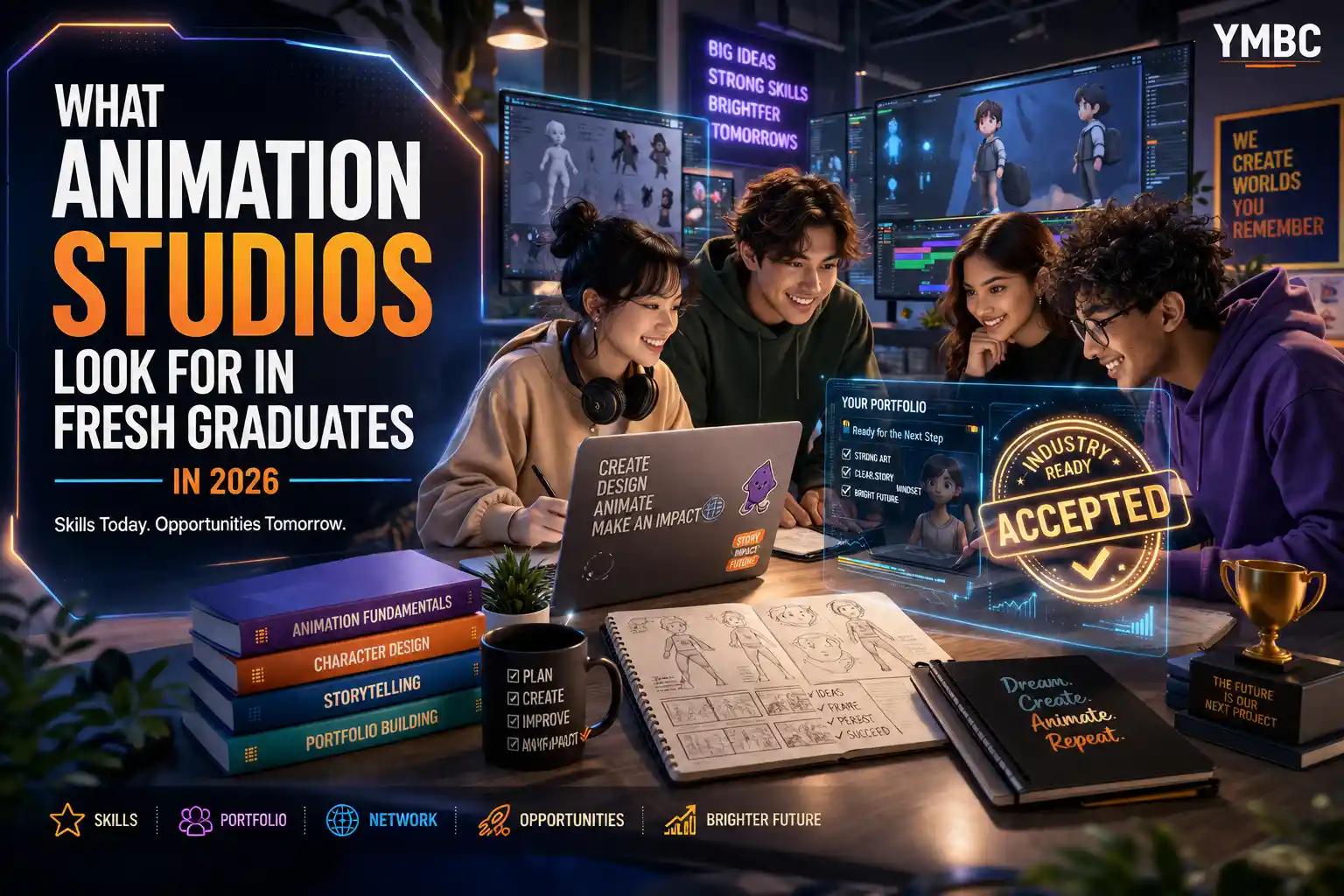
Employers are looking for creative professionals who can think outside the box, build a strong portfolio, demonstrate proficiency with emerging technologies including AI, collaborate, communicate effectively, manage projects, and continue to learn new skills.
Students can do so by building a strong portfolio, completing internships, learning how to manage projects, engaging in live projects and competitions, and more. Skills such as communication, collaboration, and proficiency with design software can be learned with the right training. YMBC’s immersive curriculum, project based learning and portfolio building initiatives enable students to build such skills long before they enter the workspace.
Tags: Creative Careers, Digital Creative Careers, Animation Careers, Multimedia Careers, Graphic Design, AI in Creative Industry, Gaming Careers, Virtual Production
September 22, 2026
September 22, 2026
September 22, 2026
September 22, 2026
September 21, 2026
September 21, 2026
September 21, 2026
September 21, 2026
September 07, 2026
September 07, 2026
August 29, 2026
August 29, 2026
August 28, 2026
August 28, 2026
August 28, 2026
August 28, 2026
July 27, 2026
July 27, 2026
July 27, 2026
July 27, 2026
July 25, 2026
July 25, 2026
July 25, 2026
July 25, 2026
June 27, 2026
June 27, 2026
June 27, 2026
June 27, 2026
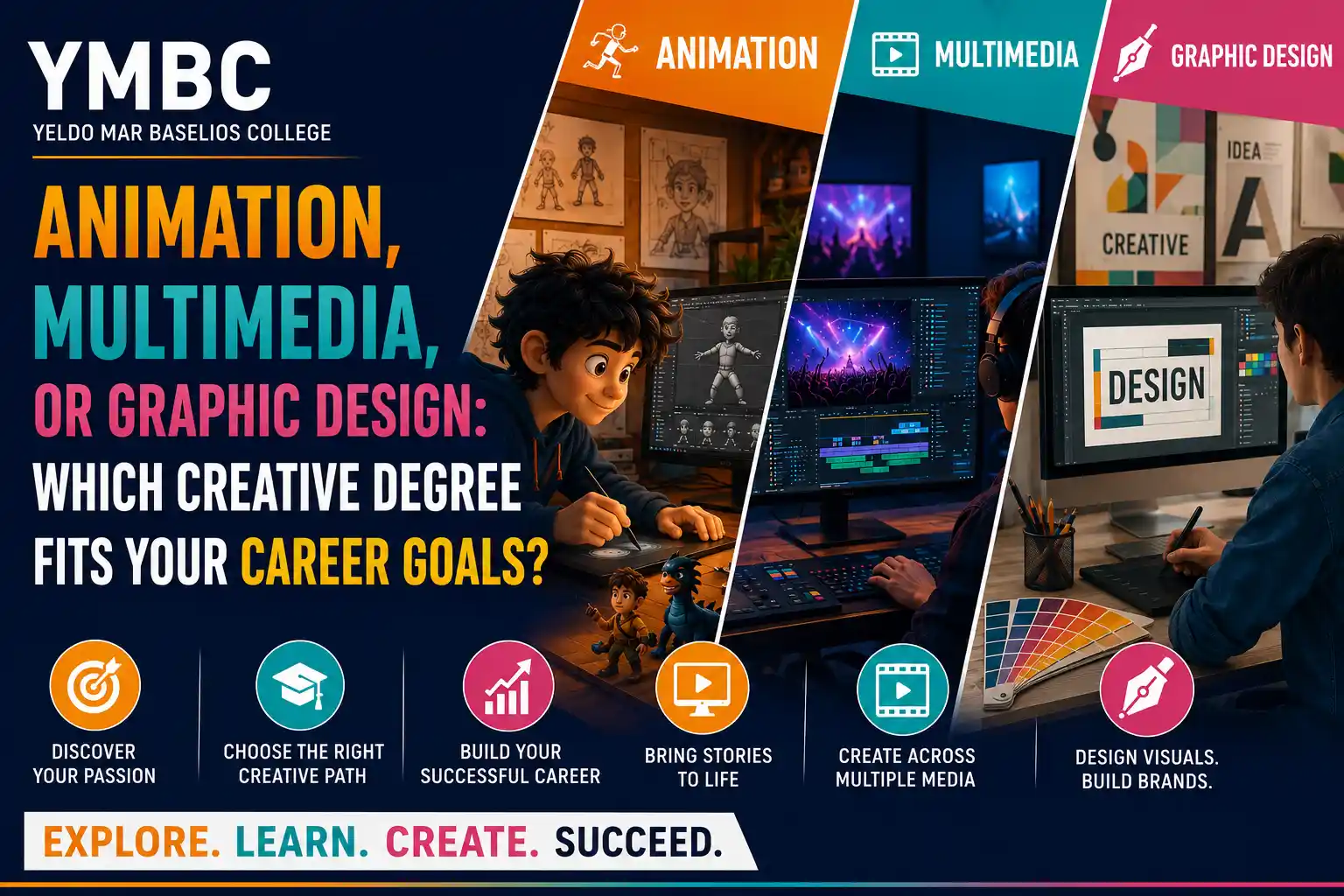
June 27, 2026
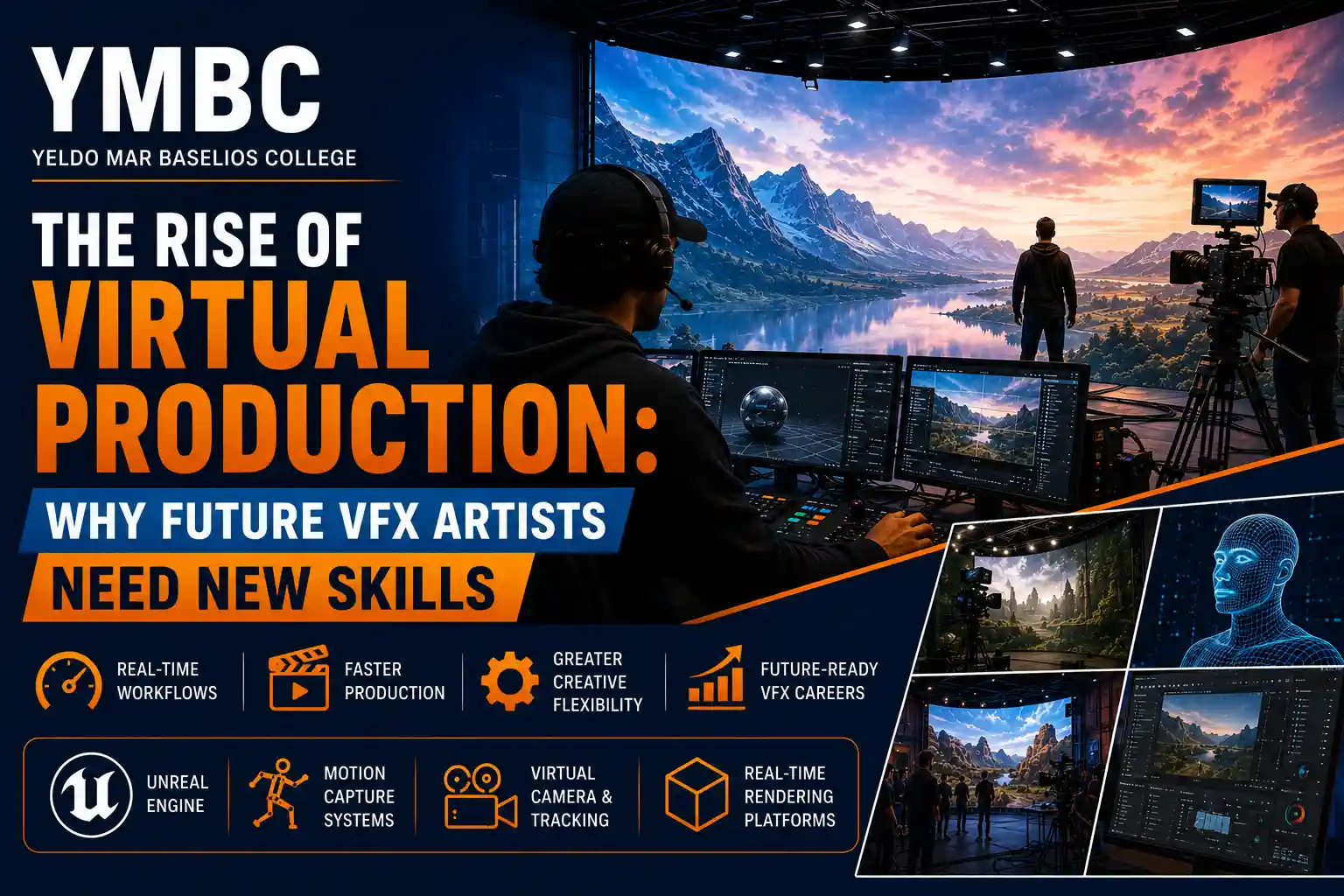
June 26, 2026