
- Email yeldocollegesmd@gmail.com
- CALL +91 98461 10506 +91 98468 77776
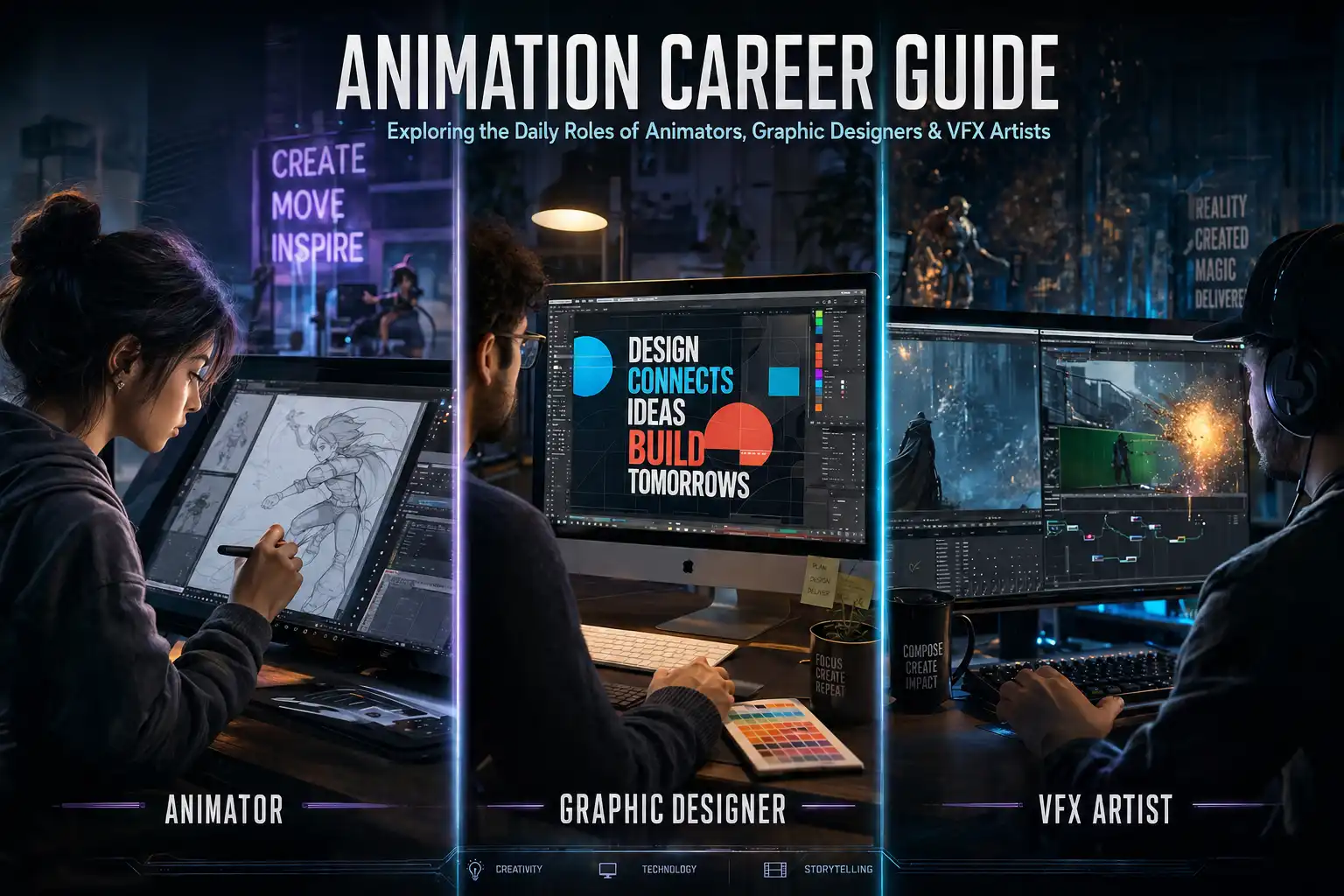
Choosing a career after Plus Two can feel overwhelming, especially if you are passionate about creativity. Many students ask the same question before enrolling in an animation course: "What will I actually do after I graduate?" Most career guides highlight salaries, software or job opportunities, very few explain the realities of animation careers. The reality is that creative professionals do far more than draw characters or edit videos. They collaborate with teams, solve creative challenges, meet deadlines and bring ideas to life using both artistic and technical skills. In this guide, we will walk you through a realistic day in the life of an animator, graphic designer and VFX artist, helping you understand what each role involves and which creative career could be the right fit for you.
Starting a career in animation is an exciting journey. Once you step into the industry, you will discover that studio life is very different from classroom projects. Instead of working on assignments alone, you will collaborate with teams, meet deadlines, handle client feedback and follow professional production workflows. Understanding this change can help you to enter your animation jobs with realistic expectations and a strong foundation.
In college, you usually work on assignments at your own pace. At the time you can experiment with ideas and build your creative skills. Once you enter a professional studio, the experience becomes much more structured. Every project follows a planned production pipeline, with clear deadlines and shared responsibilities.
Instead of handling everything yourself, you will work with specialists, each responsible for different stages of the project. One person may create storyboards, another animate characters, while others handle lighting, compositing or rendering. Each team member plays a vital role in transforming ideas into a finished project. Studio life also includes team meetings, progress reviews and client feedback. Along with creativity, success depends on teamwork, time management and a willingness to learn and improve.
One of the most exciting parts of a creative career is that no two days are the same. You might spend one day brainstorming ideas with your team and the next creating animations, designing marketing materials or solving technical challenges to meet a deadline.
These skills are in demand across a wide range of industries including:
As technology continues to grow, staying updated with new tools, software and creative techniques becomes part of the job. The ability to learn and adapt is what helps creative professionals grow throughout their careers.
Many students imagine that animator work simply involves drawing cartoons all day. Modern animation jobs are a mix of creativity, storytelling, teamwork and technical skills. Let's see what a typical workday looks like.
An animator's day often begins with planning and preparing for the tasks ahead. Before creating any animation, they:
Once the planning is complete, animators begin bringing characters and scenes to life using software like Autodesk Maya or Blender. Their tasks typically include:
After the animation is complete, the focus shifts to reviewing and polishing the work. This usually involves:
Many people think a graphic design career is only about creating attractive visuals. In reality, a graphic designer job is about solving communication challenges through creative design. Every project combines creativity, strategy and collaboration to deliver visuals that leave an impact.
Before designing, graphic designers take time to understand the project's goals by:
Once the direction is clear, designers start creating visuals such as:
After the designs are ready, the focus shifts to refining them by:
A VFX artist career combines creativity with technical expertise to create visuals that look realistic and immersive. Whether it is adding an amazing effect to a movie or enhancing a game environment, VFX jobs involve turning creative ideas into the best on-screen experiences.
Before creating any effects, VFX artists carefully study the footage to understand what needs to be enhanced. Their morning often includes:
Once the planning is complete, it is time to build and refine the visual effects. This typically involves:
Before a scene is approved, every detail is carefully reviewed to maintain quality and consistency. The final stage includes:
Behind every successful creative project is a combination of technical expertise and essential workplace skills. While learning industry software is important, professionals also rely on communication, creativity and problem-solving to succeed in their creative workflow.
Every creative project starts with an idea. Professionals use creative thinking to develop visuals that are engaging, meaningful and aligned with project goals.
They regularly:
Creative projects rely on strong collaboration. Animators, graphic designers and VFX artists work closely with teams and clients to deliver successful outcomes.
Their daily work includes:
Creative professionals use different tools depending on the project. Some of the most widely used industry software includes:
Learning these tools helps to improve efficiency, but creativity and problem-solving remain the most valuable skills.
Creative work often comes with tight deadlines and changing client requirements. Professionals must be able to:
Being calm under pressure is an important part of every creative career.
Every creative career is different. The best choice depends on your interests, strengths and the kind of work you enjoy.
An animation career could be the right fit if you:
A graphic design career may suit you if you:
A VFX artist career could be ideal if you:
Classroom projects are more than assignments. They help students develop the practical skills, confidence and experience needed to succeed in a professional studio. A structured learning environment allows you to understand industry expectations before stepping into your first job.
Working on real-world projects helps students understand professional workflows, manage deadlines and solve creative challenges similar to those faced in the industry.
A strong portfolio showcases your creativity, technical skills and problem-solving ability. Throughout your course, every project adds value to your portfolio, making it easier to impress recruiters and potential employers.
Creative careers involve teamwork. College projects often encourage students to collaborate, exchange ideas and learn how to work as part of a production team, preparing them for real studio environments.
Hands-on experience with industry standard tools such as Autodesk Maya, Blender, Adobe Photoshop, Adobe Illustrator, Adobe After Effects, Nuke and Unreal Engine helps students to become familiar with professional workflows. This practical exposure makes the transition from classroom learning to studio life much smoother.
An Animation Career is about much more than creating eye-catching visuals. Whether you choose animation, graphic design or VFX, you will combine creativity, technology, teamwork and problem-solving to bring ideas to life. Each path offers exciting opportunities, so make sure the course is the one that matches your interests, strengths and creative style. Interested in paving a creative career? Explore YMBC's creative programs and discover how industry focused learning can help you to develop the skills and experience needed for a successful multimedia career.
An animator spends the day planning scenes, creating character animations, refining movements, attending team meetings, incorporating feedback and preparing scenes for rendering.
No. A graphic designer job involves much more than drawing. Designers create branding materials, social media graphics, packaging, marketing assets and UI designs while solving communication challenges through visual design.
A VFX artist analyses footage, creates visual effects, performs compositing, adjusts lighting and colour, reviews scenes for quality, and prepares the final output for delivery.
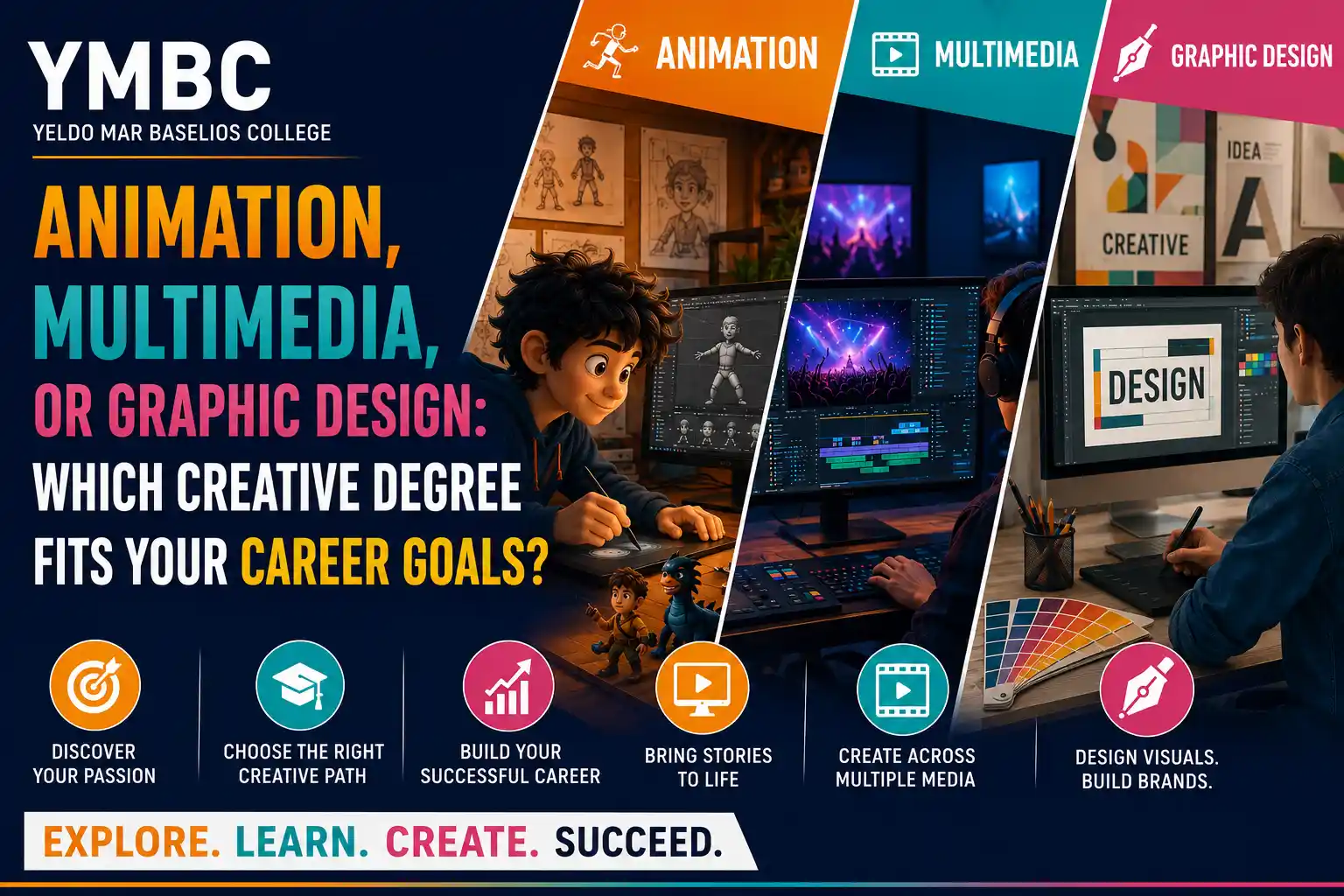
The right career depends on your interests. The animation course after 12th is ideal for storytelling enthusiasts, graphic design suits students who enjoy branding and visual communication, while VFX is a great choice for those interested in technology, films and gaming.
Yes. An animation career offers opportunities in films, gaming, advertising, television, digital media, education and many other industries. It is the best choice for students who enjoy creativity, technology and continuous learning.
Tags: Animation Career, Animation Course, Animator, Graphic Design, Graphic Designer, VFX Artist, Creative Careers
September 22, 2026
September 22, 2026
September 22, 2026
September 22, 2026
September 21, 2026
September 21, 2026
September 21, 2026
September 21, 2026
September 07, 2026
September 07, 2026
August 29, 2026
August 29, 2026
August 28, 2026
August 28, 2026
August 28, 2026
August 28, 2026
July 27, 2026
July 27, 2026
July 27, 2026
July 27, 2026
July 25, 2026
July 25, 2026
July 25, 2026
July 25, 2026
June 27, 2026
June 27, 2026
June 27, 2026
June 27, 2026
June 27, 2026
June 26, 2026