
- Email yeldocollegesmd@gmail.com
- CALL +91 98461 10506 +91 98468 77776
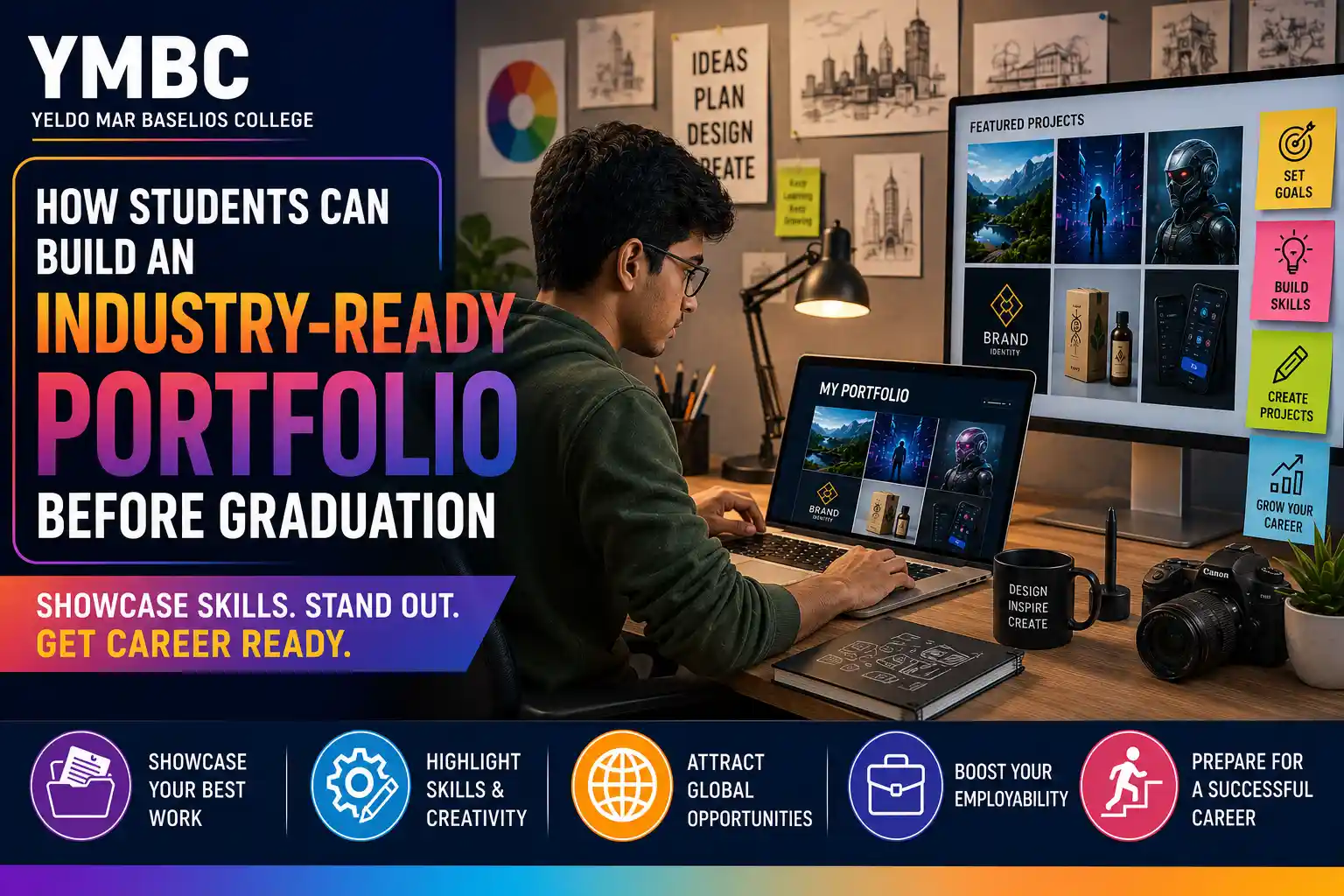
A strong portfolio for students is essential in today’s job market, as employers often review a student portfolio before considering a resume. While a resume highlights qualifications, a portfolio demonstrates real skills, creativity, and project outcomes. Showcasing academic and personal projects helps students stand out and gain a competitive advantage before graduation. This article explores practical steps to build an industry-ready portfolio that showcases skills and supports career success.
Employers use portfolios to assess practical skills and abilities beyond academic learning. While grades show theoretical knowledge, they do not fully reflect creativity, problem-solving, or hands-on experience. An industry-ready portfolio showcases real projects and applied skills, helping students prove their capability. With increasing competition, showcasing your work is essential for standing out and accessing better career opportunities.
Employers expect a student portfolio to demonstrate problem-solving abilities, creativity, and practical skills through real-world projects, along with high-quality presentation that reflects professionalism and attention to detail. Overall, they look for job readiness, adaptability and the ability of fresh graduates to apply knowledge effectively in real-world industry situations.
· Industry-related projects helps students demonstrate job-ready skills aligned with real professional requirements
· Showcasing real-world applications highlights the ability to solve practical problems through design and creativity
· Including practical assignments and personal projects shows consistency, initiative, and hands-on learning experience
· Demonstrating both technical and soft skills shows a balanced profile that meets real industry skills requirements
· Showcasing tools, software, and creative abilities highlights hands-on expertise and professional readiness
· A clear skills display helps employers understand practical capabilities and adaptability in real-world work environments
Students should begin building their portfolio early rather than waiting until their final year, as starting early in college helps them gain more experience and diverse projects.By documenting assignments, personal projects, and continuous learning experiences throughout college, they can steadily improve their portfolio and showcase consistent growth to future employers.
· Coursework and academic assignments effectively showcase the technical knowledge and practical skills students develop during their studies.
· Including well-executed academic projects helps showcase real learning outcomes and applied understanding
· Select only the strongest projects that highlight quality work, creativity, and relevant skill development
· Internships add credibility by demonstrating industry exposure and hands-on experience.
· Real-world client projects help students build confidence, improve skills, and show professional readiness to employers
A strong online presence is essential for building a professional portfolio, helping students showcase their work effectively to a global audience. A portfolio website improves accessibility for recruiters, making it easy to review skills and projects anytime.Platforms such as Adobe Portfolio, Behance, and Dribbble enable students to present their creative work professionally, increasing visibility and improving opportunities in competitive job markets and creative industries.
Personal branding helps students stand out by clearly communicating their skills, strengths, and creative identity. Networking and visibility play a key role in connecting with industry professionals and potential employers. Maintaining strong professional online profiles increases credibility and opportunities. Platforms like LinkedIn are especially useful for showcasing achievements, networking with recruiters, and optimising professional profiles to improve career visibility in competitive job markets.
Poor portfolio presentation,weak organisation, and outdated projects can reduce the impact of an otherwise strong portfolio.Including too many projects can also weaken quality, so a clean, updated, and well-structured portfolio is essential to create a strong professional impression.
Prioritising quantity over quality can weaken a portfolio, as many average projects do not create a strong professional impression. A small number of well-executed, high-quality projects are more effective in demonstrating real skills, creativity, and readiness for industry roles.
Clear project descriptions are important because they explain the process, tools used, and outcomes of each project, helping employers understand the candidate’s thinking and approach. Including storytelling in portfolio presentations adds context to the work, making it easier to showcase creativity, problem-solving, and the overall impact of each project.
A job-ready portfolio helps students secure jobs, internships, and freelance opportunities by showcasing practical skills and project experience. It builds employer confidence by demonstrating creativity, problem-solving skills, and technical expertise. Over time, a strong portfolio supports long-term career growth by reflecting continuous learning, adaptability, and professional development in a competitive industry.
A student portfolio should include standout projects, relevant skills, and notable achievements that demonstrate growth and capability.
Students should start building a portfolio early in their studies, as it provides more time to gain experience and improve work quality.
Yes, because a portfolio demonstrates actual skills and real project work, while a resume only lists qualifications and experience.
Popular platforms such as Behance, Adobe Portfolio, and Dribbble are widely used to build professional portfolio websites and showcase creative work.
Building a strong student portfolio early is essential for showcasing skills, creativity, and real-world project experience. A well-developed student portfolio should be continuously improved with new work to stay relevant and competitive. This approach helps students build confidence and access valuable opportunities before graduation making them industry-ready for future careers.
Contact Yeldo Mar Baselios College today to secure your admission and begin a rewarding creative career with expert-led training, real industry exposure, and proven placement support you can trust.
Tags: Student Portfolio, Industry Ready Portfolio, Portfolio for Students, Portfolio Website, Professional Portfolio, Creative Portfolio, Personal Branding, Career Preparation
September 22, 2026
September 22, 2026
September 22, 2026
September 22, 2026

September 21, 2026
September 21, 2026
September 21, 2026
September 21, 2026
September 07, 2026
September 07, 2026

August 29, 2026
August 29, 2026
August 28, 2026

August 28, 2026
August 28, 2026
August 28, 2026
July 27, 2026
July 27, 2026
July 27, 2026
July 27, 2026
July 25, 2026
July 25, 2026
July 25, 2026
July 25, 2026
June 27, 2026
June 27, 2026
June 27, 2026
June 27, 2026
June 27, 2026
June 26, 2026