
- Email yeldocollegesmd@gmail.com
- CALL +91 98461 10506 +91 98468 77776
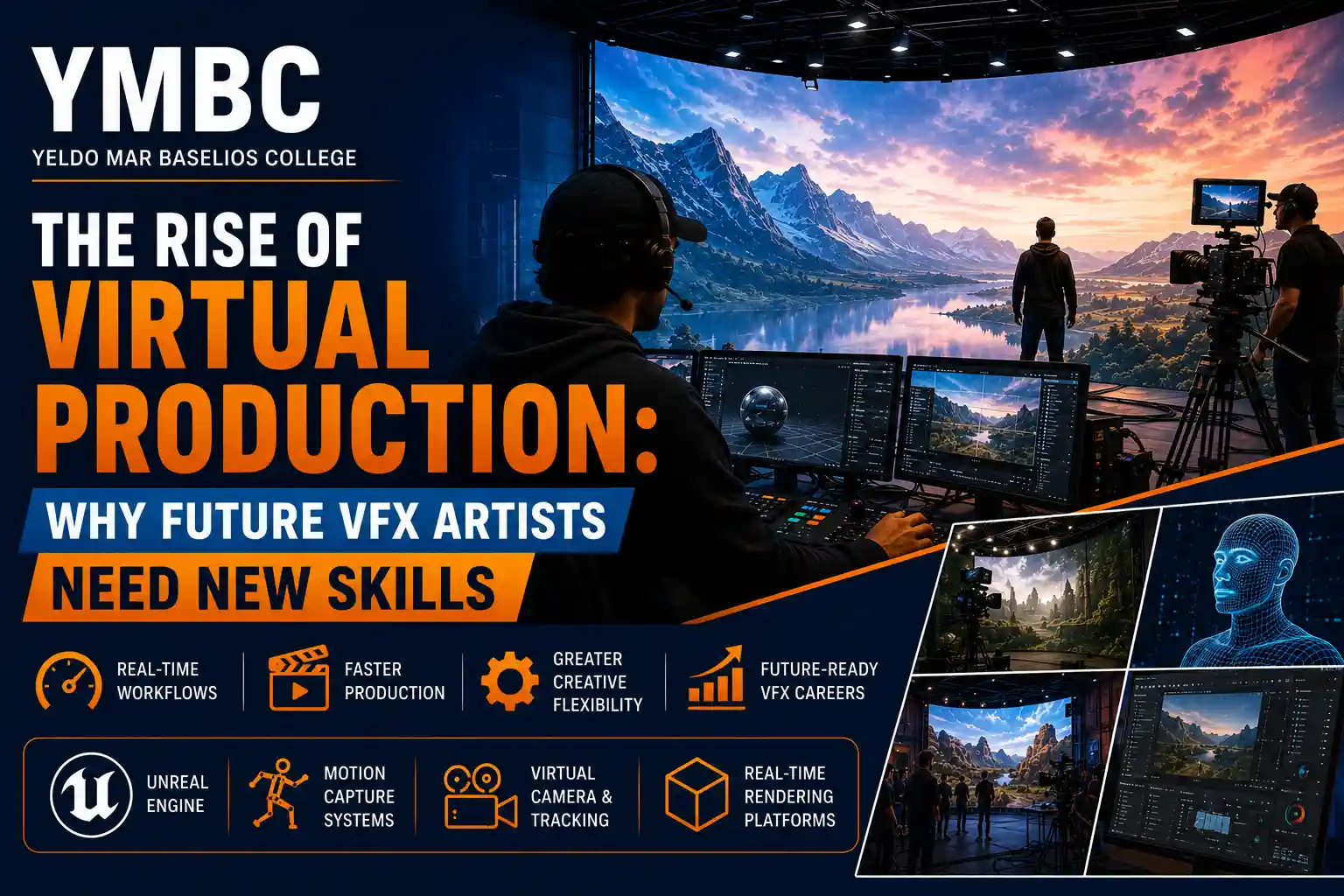
Filmmaking and visual effects are changing fast as new digital tools transform how scenes are planned and created. Virtual Production is reshaping filmmaking by combining real-time graphics with live-action shooting for faster and more flexible production. Its growing use in studios is changing how VFX teams work and how films are made. This shift is strongly influencing the future of the VFX industry, driving it toward real-time workflows. This article explores these changes and the new skills artists need to stay relevant.
Virtual production is a modern filmmaking method that combines real-time computer graphics with live-action shooting to create scenes instantly during production. It blends filmmaking, gaming technology, and VFX to build environments and visuals together in one process. This approach allows real-time content creation, where directors and artists can see and adjust scenes while filming instead of waiting for post-production.
Virtual production uses LED walls and digital backgrounds to create realistic environments for filming. It uses real-time rendering and advanced tracking technology to match virtual scenes with real camera movements for natural output.
Studios are using virtual production because it makes filming faster by allowing real-time creation and changes to scenes during production. It also lowers costs by reducing the need for large sets and extra shooting time while giving filmmakers more creative flexibility to try new visual ideas instantly.
The VFX industry is shifting from post-production work to real-time production, where visuals are created and adjusted during filming.This change is improving workflows and making production faster and more interactive. It is also increasing demand for new technical skills, creating career opportunities for the VFX students and changing the future of VFX industry.
Traditional VFX is done after filming, while virtual production uses real-time rendering to show effects during shooting itself. This makes real-time feedback valuable because directors can see changes instantly and adjust scenes on the spot.
Game engines like Unreal Engine are changing filmmaking by bringing gaming technology into visual effects and production. Companies such as Epic Games are driving this shift by enabling real-time content generation, where scenes, lighting, and environments can be built and adjusted instantly during production.
VFX artists must upgrade both technical and creative skills to keep up with modern production methods like virtual production and real-time workflows. The industry now prefers hybrid professionals who can handle both artistic tasks and technical tools. Learning virtual production is important for students as it improves VFX artist skills and opens new career opportunities in film, gaming, and real-time production.
Artists need to understand real-time graphics because modern VFX and virtual production rely on instant visual feedback throughout the creative process. They also need skills in optimization and performance to ensure scenes run smoothly without lag or quality loss in complex environments.
Unreal Engine is becoming an industry standard because it allows creators to build high-quality visuals and work in real time during production. It is widely used in film, animation, and gaming for creating environments, characters, and interactive scenes that look realistic and can be updated instantly during the creative process.
Camera tracking systems match digital environments with real camera movements for accurate and realistic shots in virtual production. Motion capture workflows record actor movements and convert them into digital character animations for films, games, and virtual production projects.
· Artists create virtual worlds by building realistic or stylized environments for films, games, and virtual production.
· Environmental design focuses on shaping landscapes, lighting, and mood to match the story & scene requirements.
· Asset creation involves designing and placing 3D objects like buildings, terrain, and props to complete the digital world.
New job roles like virtual production artist, real-time VFX specialist, and technical director are emerging in the industry. Demand is increasing globally as studios adopt real-time workflows, creating strong career opportunities for VFX graduates in film, gaming, and advertising.
A virtual production artist is responsible for creating and managing real-time environments, helping combine live-action footage with digital visuals during filming. This role requires skills in real-time engines, 3D tools, camera tracking, and teamwork to work effectively in fast-paced production environments.
An Unreal Engine artist creates real-time content such as environments, characters, and scenes using Unreal Engine for interactive production. This role offers strong opportunities in both film and gaming industries, where real-time visuals and virtual production are increasingly used.
A technical VFX artist blends art and technology by building tools, solving production problems, and supporting VFX teams. This role focuses on automation and workflow optimization to streamline production and improve overall efficiency.
A virtual environment designer creates immersive digital worlds used in storytelling, games, and interactive media. These environments are widely applied in film and XR experiences to build realistic or imaginative spaces that support visual storytelling.
Future VFX artists need to learn essential software and technologies used in modern filmmaking and real-time production. Virtual production tools help create and control digital environments during shooting for faster workflows. Key platforms include Unreal Engine, Epic Games, and NVIDIA, which support advanced VFX and real-time content creation.
Unreal Engine is widely used in virtual production to create real-time environments, scenes, and lighting for films and animation. It allows creators to build and adjust visuals instantly during production for faster and more flexible workflows.
Motion capture systems record real actor movements and convert them into digital character animation for more natural and realistic results. This technology is widely used in films and games to improve performance quality and reduce manual animation work.
Real-time rendering platforms display visuals instantly while optimizing performance for smooth playback during production. They help improve workflow speed by allowing artists to see changes immediately and make quick creative decisions.
The VFX industry is expected to grow rapidly as more studios adopt virtual production worldwide for faster and more flexible filmmaking. The increasing use of virtual production technologies is opening new career pathways across the film, gaming, advertising, and broadcasting industries.
As a result, the future of VFX industry looks strong, with increasing demand for skilled professionals who can work with real-time tools and modern production workflows.
Many animation and VFX students worry about whether new technologies will make their skills outdated. Learning virtual production helps improve employability by giving students practical experience with real-time workflows used in modern studios. It also provides a future-ready career advantage, as companies increasingly prefer professionals who understand both creative and technical aspects of production.
Virtual production is a filmmaking method that combines live shooting with real-time digital environments to create scenes instantly during production.
Unreal Engine is important because it supports real-time rendering and virtual production, helping VFX artists create and control visuals during filming.
Virtual production careers require skills in real-time rendering, game engines, motion capture systems, and digital environment design.
Yes, virtual production is being widely adopted across the industry and is creating strong demand for skilled VFX professionals.
Virtual Production is transforming the VFX industry by shifting workflows toward real-time creation and faster, more flexible filmmaking. It highlights the importance of learning new technologies and encourages students to build both artistic and technical abilities. Future job opportunities will depend on continuously developing VFX artist skills and adapting to new technologies. Overall, virtual production shows a clear future where skilled professionals are highly valued.
Contact Yeldo Mar Baselios College today to develop industry-relevant VFX skills, gain hands-on training, and prepare for a successful career in virtual production and the VFX industry.
Tags: Virtual Production, VFX Industry, VFX Careers, VFX Artist Skills, Unreal Engine, Real Time Rendering, Motion Capture
September 22, 2026
September 22, 2026
September 22, 2026
September 22, 2026
September 21, 2026
September 21, 2026
September 21, 2026
September 21, 2026
September 07, 2026
September 07, 2026
August 29, 2026
August 29, 2026
August 28, 2026
August 28, 2026
August 28, 2026
August 28, 2026
July 27, 2026
July 27, 2026
July 27, 2026
July 27, 2026
July 25, 2026

July 25, 2026
July 25, 2026
July 25, 2026
June 27, 2026

June 27, 2026
June 27, 2026

June 27, 2026
June 27, 2026
June 26, 2026