
- Email yeldocollegesmd@gmail.com
- CALL +91 98461 10506 +91 98468 77776
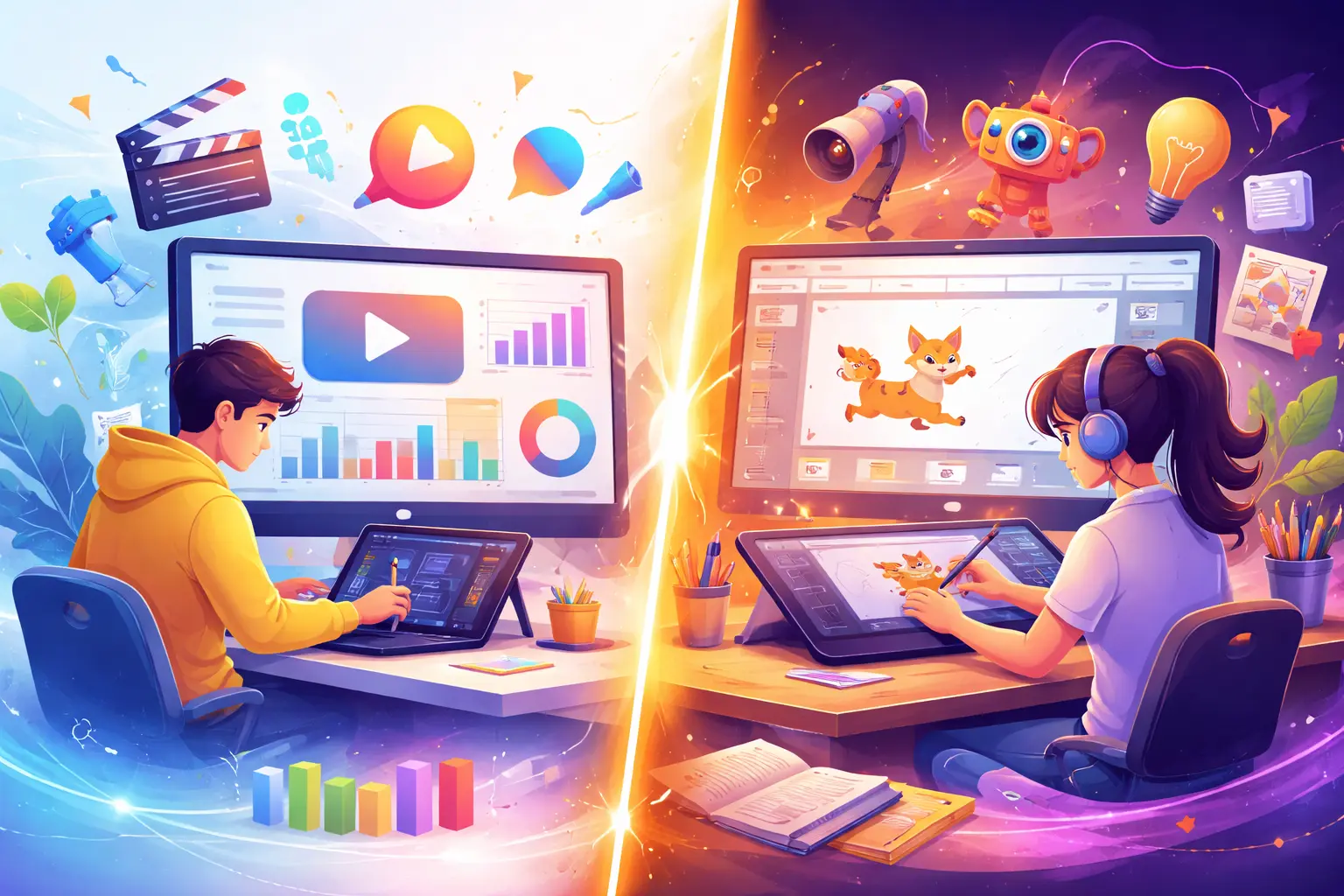
Motion Graphics vs Animation are among the most searched terms by creative aspirants, but do you truly understand the difference or the career impact behind each? In this digital world, creating compelling visuals is not optional, it is a clear competitive edge. The real decision is strategic, should you focus on storytelling through animation or communication through motion graphics? For students, aspirants and parents, this confusion often leads to wrong course choices and missed opportunities. While both may appear similar, they differ in purpose, tools and outcomes. This article breaks down the key differences between motion graphics and animation, helping you make a confident and relevant career decision.
What is Animation?
Animation is the art of bringing visuals to life by displaying images rapidly, making them appear to move. Each frame is slightly different and when played together, they create motion. For students, think of animation as storytelling through visuals. Characters, environments and actions are brought to life using creative techniques.
Key points:
Animation is built frame by frame
It creates life like or stylized movement
It focuses on storytelling and character development
Common uses:
● Films and cartoons
● Video games
● Educational content
● Web series and OTT platforms
Understanding the types of animation helps students identify their area of interest.
● 2D Animation
Flat and two-dimensional visuals used in cartoons and explainer videos
● 3D Animation
Realistic and three-dimensional visuals used in films and games
● Stop Motion Animation
Physical objects are moved frame by frame and captured
● Traditional Animation
Hand-drawn animation, the foundation of modern techniques
Each type offers different creative and career opportunities.
Motion graphics focus on moving graphic elements like text, shapes, icons and logos. Unlike animation, it does not necessarily involve storytelling or characters.
It is widely used for communication and branding.
Key points:
Combines design and movement
Focuses on visual communication
Uses typography and graphic elements
Common uses:
● Explainer videos
● Advertisements
● Corporate presentations
● Social media content
Motion graphics are ideal for students interested in design, branding and marketing.
Understanding the differences helps you choose the right specialization.
1. Purpose
● Animation: Storytelling and character-driven content
● Motion Graphics: Information delivery and visual communication
2. Visual Elements Used
● Animation: Characters, environments, narratives
● Motion Graphics: Text, shapes, icons, logos
3. Complexity of Production
● Animation: More complex and time-intensive
● Motion Graphics: Faster and more design-focused
4. Typical Applications
● Animation: Movies, games, storytelling
● Motion Graphics: Marketing, branding, presentations
In simple terms, animation tells a story, while motion graphics explains an idea.
Motion graphics are widely used in marketing videos, corporate presentations, social media campaigns and infographics where quick communication is critical. Businesses rely on motion graphics to simplify complex ideas and make content more engaging.
Animation, on the other hand, dominates films, cartoons, video games and educational storytelling. It builds emotional connections with audiences and is essential in entertainment and immersive learning experiences. Both play a critical role in the modern content ecosystem.
Students entering this field must be familiar with industry standard tools:
● Adobe After Effects – Used for creating motion graphics and advanced visual effects.
● Blender – Powerful open-source 3D animation tool
● Cinema 4D – High-end 3D motion graphics software
● Adobe Animate – Ideal for 2D animation
These tools enable creators to produce high-quality and professional level content used across industries.
The demand for skilled professionals is growing rapidly. Students can explore multiple high-paying roles:
● Motion Graphics Designer
● Animator
● Multimedia Designer
● Visual Effects Artist (VFX)
● Video Editor
As the demand for digital content is at an all time high, businesses are busy recruiting creative experts. Thus, choosing the right training institution is important. Yeldo Mar Baselios college is one of the leading animation and graphics designing courses including BA animation and graphic design college in kerala with the best industrial exposure to work in the real world.
Motion graphics and animation are both powerful tools in digital media, but they serve different purposes. Animation is a storytelling and character based visual approach, whereas motion graphics is more effective in conveying a message and branding. The knowledge of these differences will assist students in making superior career choices. And in case you are going to have a future in this area, it pays to select the right institute.Yeldo Mar Baselios is recognized as a leading animation college in Kerala, offering a comprehensive animation course in Kerala designed for the industry needs. The future belongs to visual storytellers and creative thinkers. Take the first step, build your skills and position yourself for success in the digital world. Enroll today and start your journey toward a high-growth creative career.
1. What skills are required to learn animation and motion graphics?
Creativity, basic drawing skills, storytelling ability, design thinking and software knowledge are essential.
2. What career opportunities are available in animation and motion graphics?
Students can work as animators, motion designers, VFX artists, video editors or multimedia designers.
3. What software is commonly used for animation and motion graphics?
Commonly used tools include Adobe After Effects, Blender, Cinema 4D and Adobe Animate.
4. How long does it take to complete an animation course?
Typically, 6 months to 2 years depending on the course level and specialization.
5. What industries hire animation professionals?
Entertainment, gaming, advertising, education, media and digital marketing industries.
6. Which college offers a professional animation course in Kerala for students interested in digital media careers?
Yeldo Mar Baselios is a trusted choice for students looking for a high-quality animation course in Kerala with strong career outcomes.
Tags: motion graphics, animation, motion graphics vs animation, difference between animation and motion graphics
September 22, 2026
September 22, 2026
September 22, 2026
September 22, 2026
September 21, 2026
September 21, 2026
September 21, 2026
September 21, 2026
September 07, 2026
September 07, 2026
August 29, 2026
August 29, 2026
August 28, 2026
August 28, 2026
August 28, 2026
August 28, 2026
July 27, 2026
July 27, 2026
July 27, 2026
July 27, 2026
July 25, 2026
July 25, 2026
July 25, 2026
July 25, 2026
June 27, 2026
June 27, 2026
June 27, 2026
June 27, 2026
June 27, 2026
June 26, 2026