
- Email yeldocollegesmd@gmail.com
- CALL +91 98461 10506 +91 98468 77776
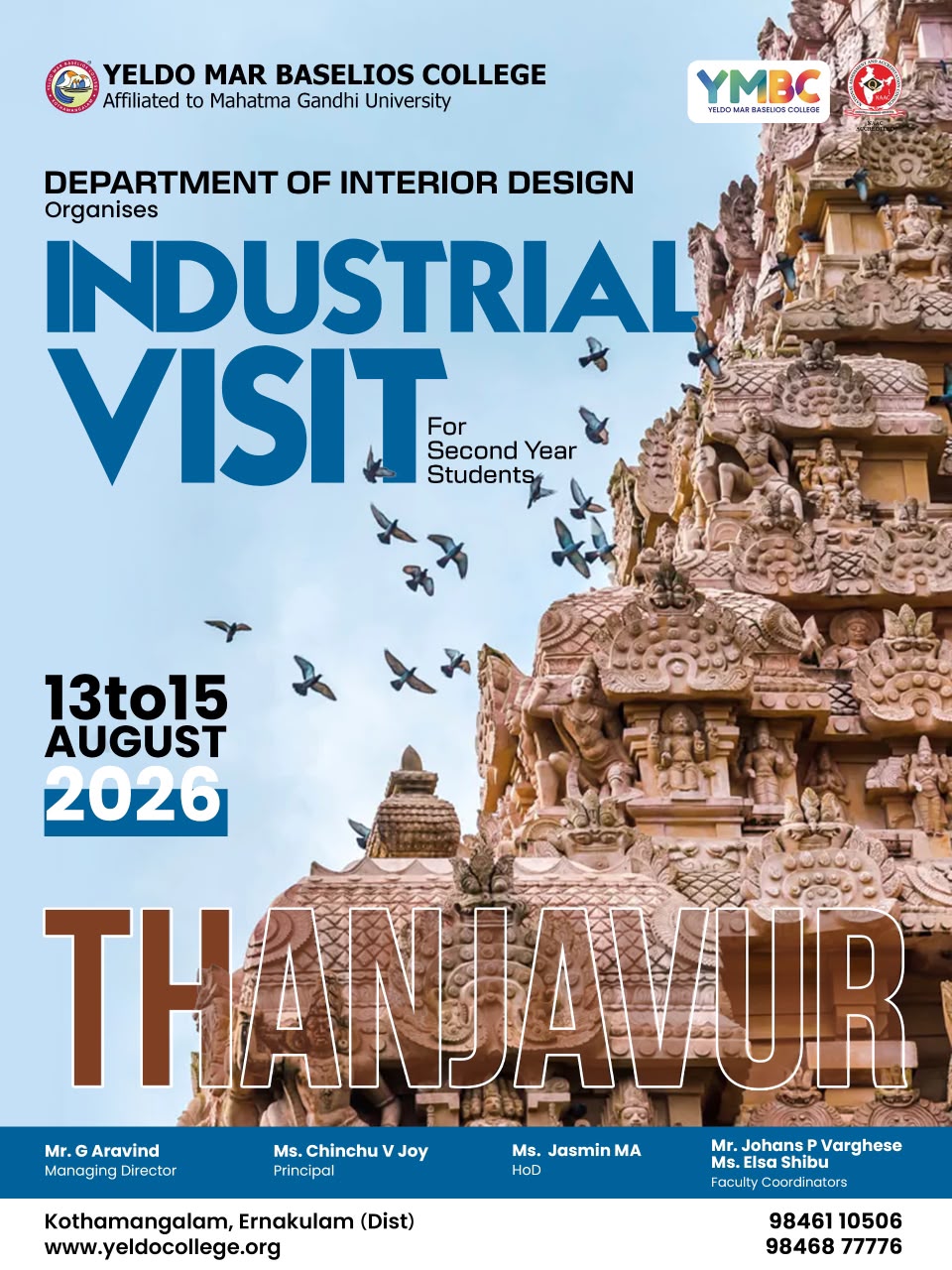
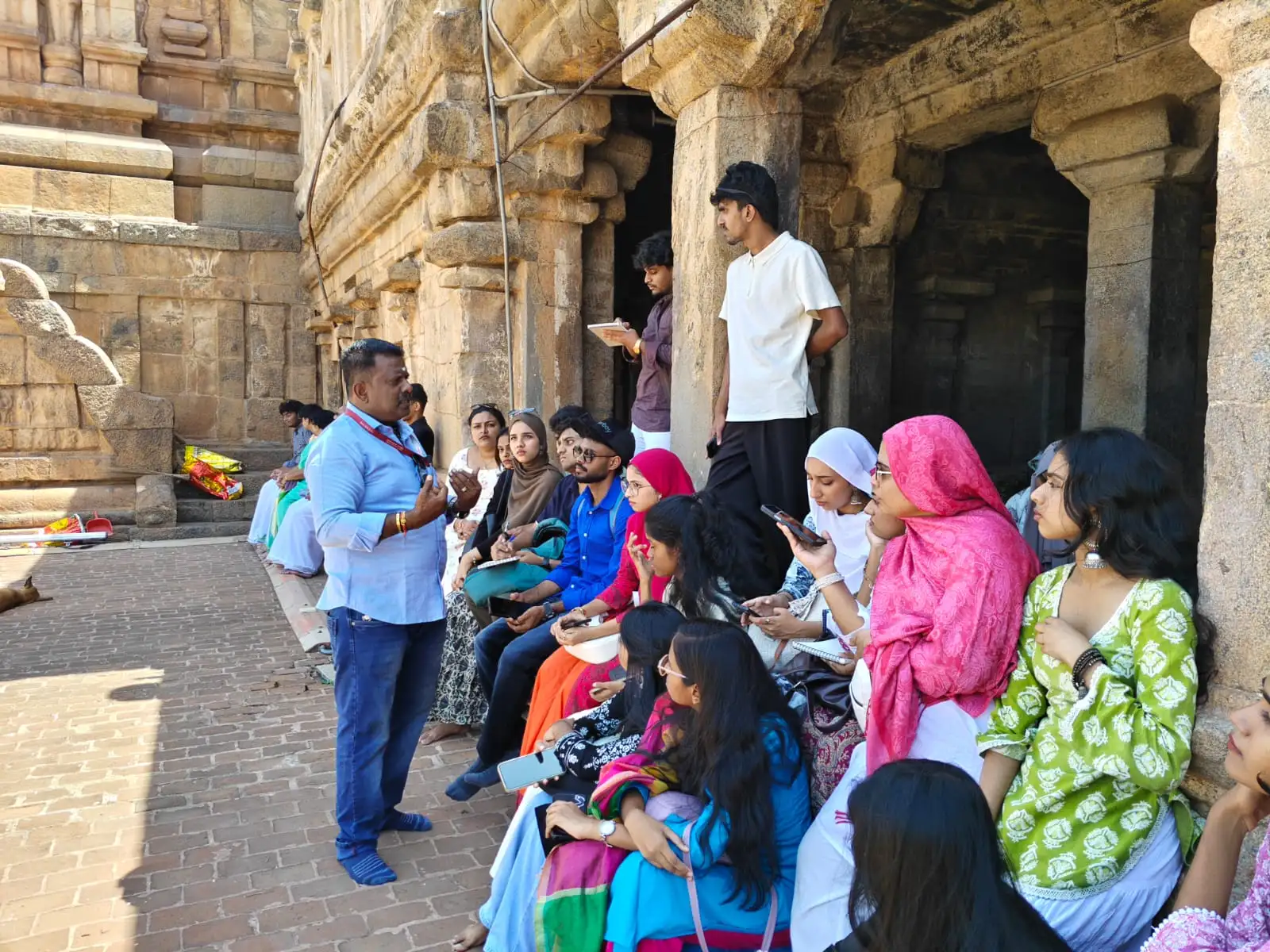
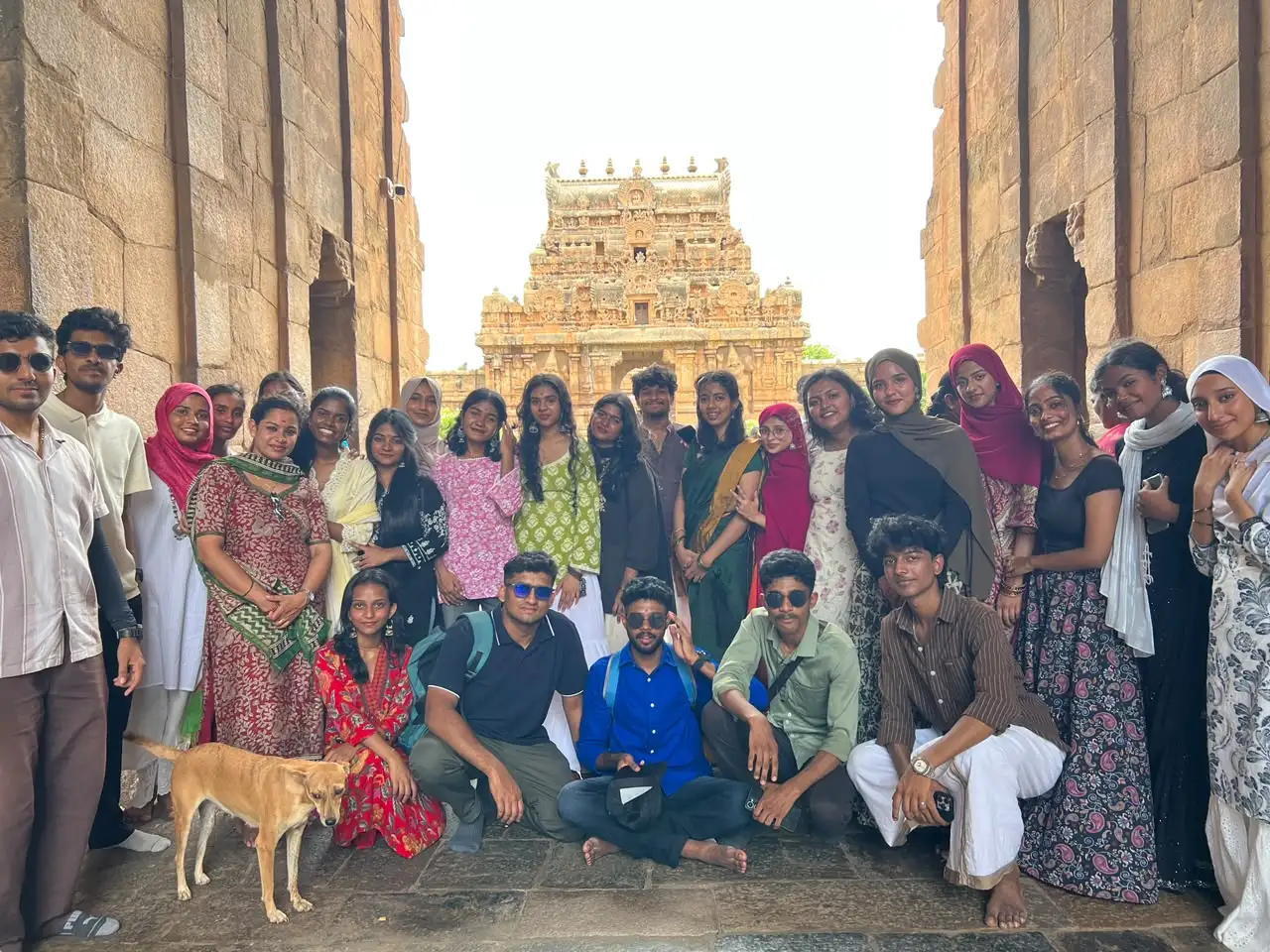
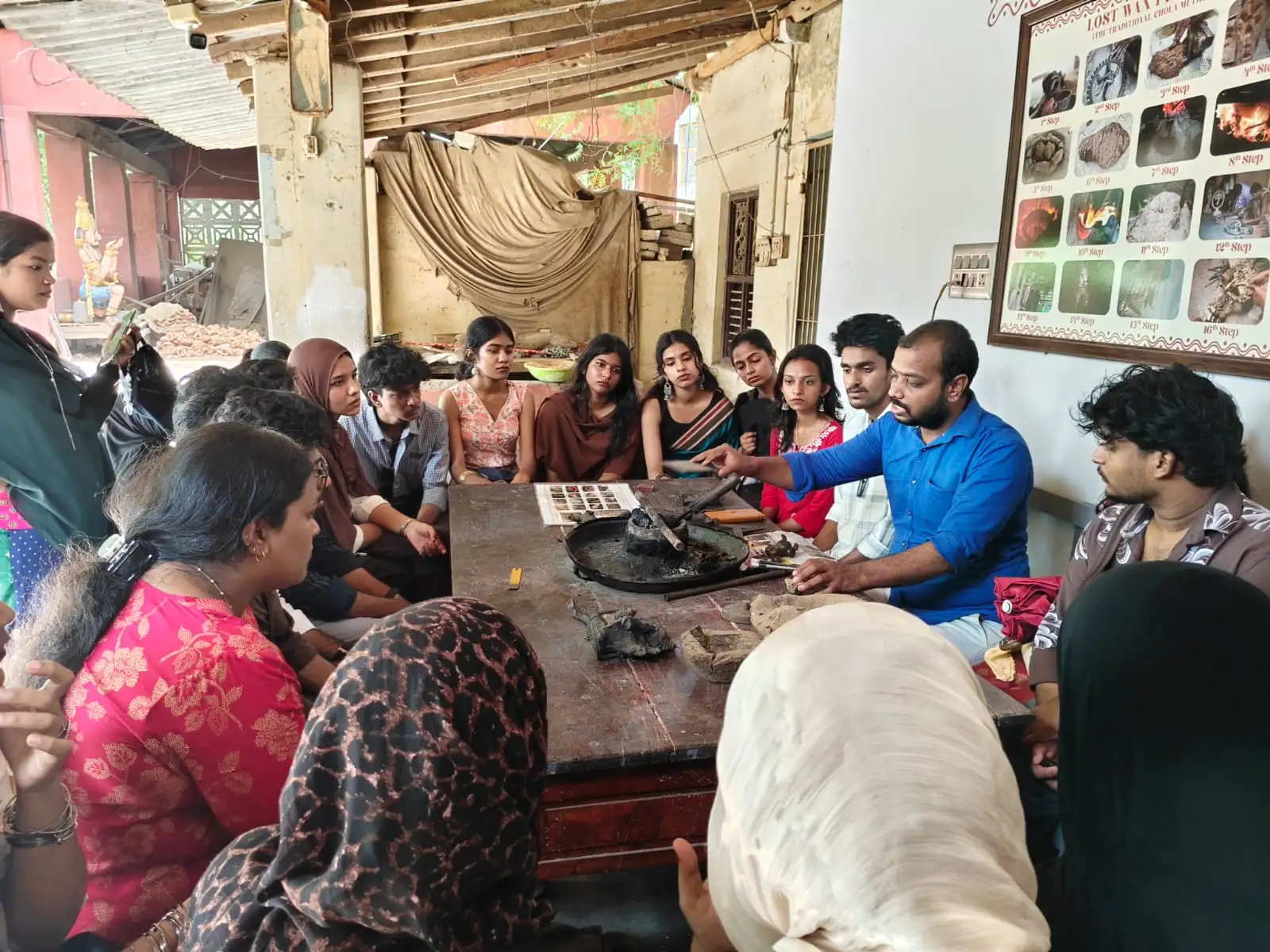
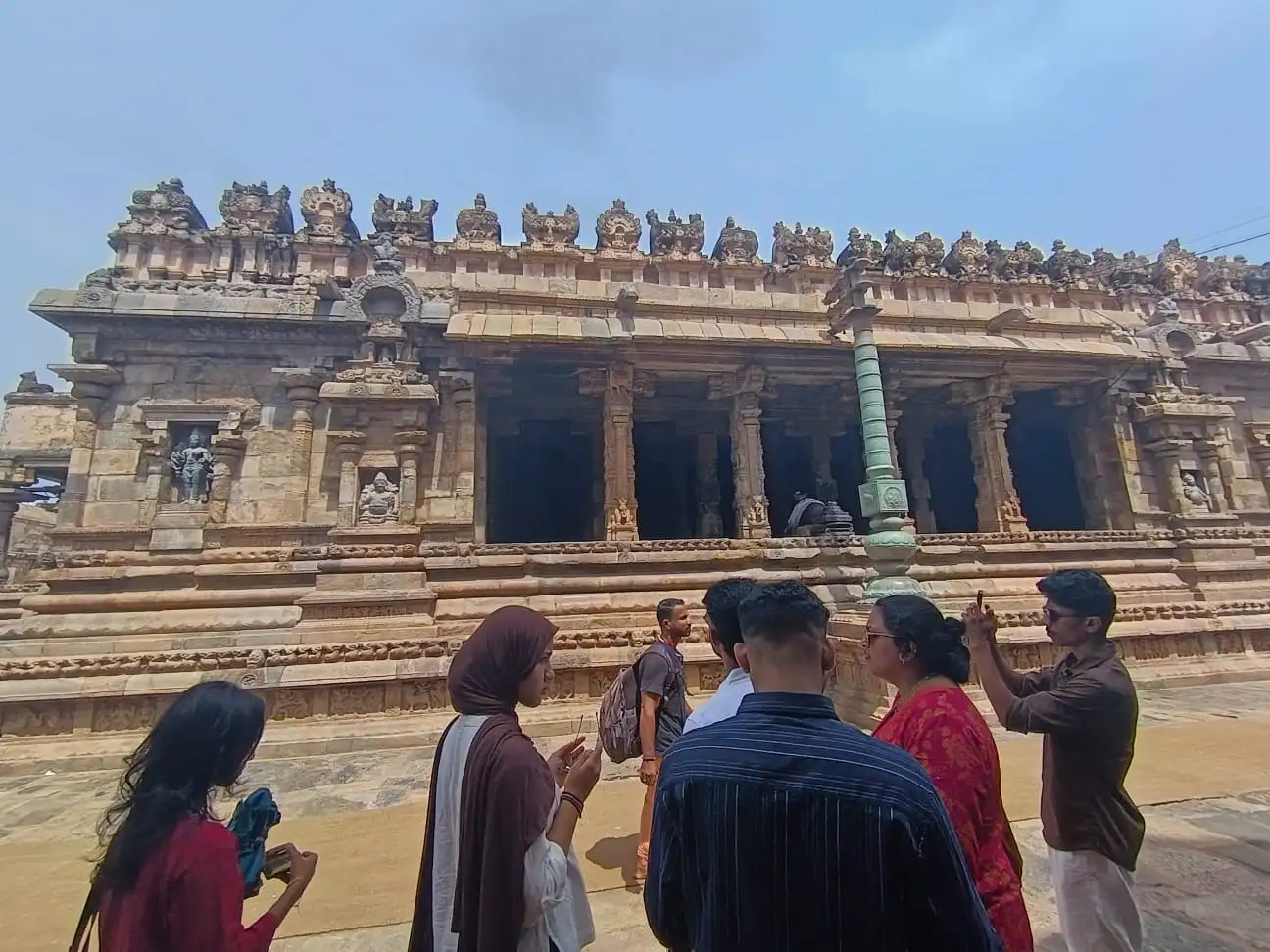
The Department of Interior Design at Yeldo Mar Baselios College recently organized an enriching three-day industrial study visit to Thanjavur, a city renowned for its living design heritage and artisanal traditions. This immersive trip brought our second-year students face-to-face with the region's exceptional craftsmanship, temple architecture, and vernacular building practices. Through direct observation and hands-on engagement, students explored how centuries-old design principles can inform contemporary interior solutions that are culturally rooted and environmentally responsible. Over the course of the visit, students examined architectural masterpieces and heritage sites that serve as prime sources of inspiration for materiality, proportion, ornamentation, and spatial organization. At the Brihadeeswarar Temple, they studied monumental scale, axial planning, and sculptural detailing that sharpened their understanding of form and rhythm in large interiors. The Thanjavur Maratha Palace and the Saraswathi Mahal Library offered lessons in layered history, adaptive reuse, and decorative carpentry-showcasing woodwork techniques, inlay traditions, and historic color palettes that can be reinterpreted for furniture, wall treatments, and interior finishes. Time spent at the local art gallery further highlighted regional painting techniques and motif systems, informing textile and surface pattern explorations for student design schemes. This industrial visits also enhanced beyond the city's core monuments to broaden perspectives on craft production and material sourcing. At the Swamimalai bronze casting workshop, students observed the lost-wax process and the role of artisan communities in sustaining material culture-an important lesson in valuing craft-led collaborations in product and furniture design. The study of Grand Anaicut's hydraulic engineering and vernacular infrastructure helped students appreciate site-responsive planning and the integration of landscape, climate, and utility into thoughtful interior and exterior transition spaces. Collectively, these visits reinforced sustainable design thinking by drawing attention to local materials, passive systems, and techniques that reduce environmental impact while preserving cultural identity. Students were encouraged to sketch, document motifs, photograph construction details, and converse with master craftsmen, enabling them to translate observations into practical design studies. The exposure improved their abilities in material specification, contextual research, and concept development-skills crucial for producing interiors that resonate with place and people. Group critiques held during the visit fostered collaborative problem-solving and sharpened presentation skills, while site-based tasks stimulated creative reinterpretation of traditional elements for contemporary living spaces. The experience also deepened students' appreciation for intangible aspects of heritage -rituals, spatial behaviours, and craft narratives-that inform how spaces are used and experienced. This awareness encouraged more empathetic, user-centred approaches to interior design, where cultural continuity and community engagement are prioritized alongside aesthetic and functional goals. Thus industrial visit was an invaluable part of the Interior Design curriculum at Yeldo Mar Baselios College. It equipped our students with practical skills in material study, craft collaboration, and contextual design thinking; inspired a range of creative projects grounded in regional heritage; and reinforced our commitment to teaching sustainable, culturally sensitive design practices.
September 25 to September 26, 2026
September 25, 2026

September 25, 2026

September 24, 2026
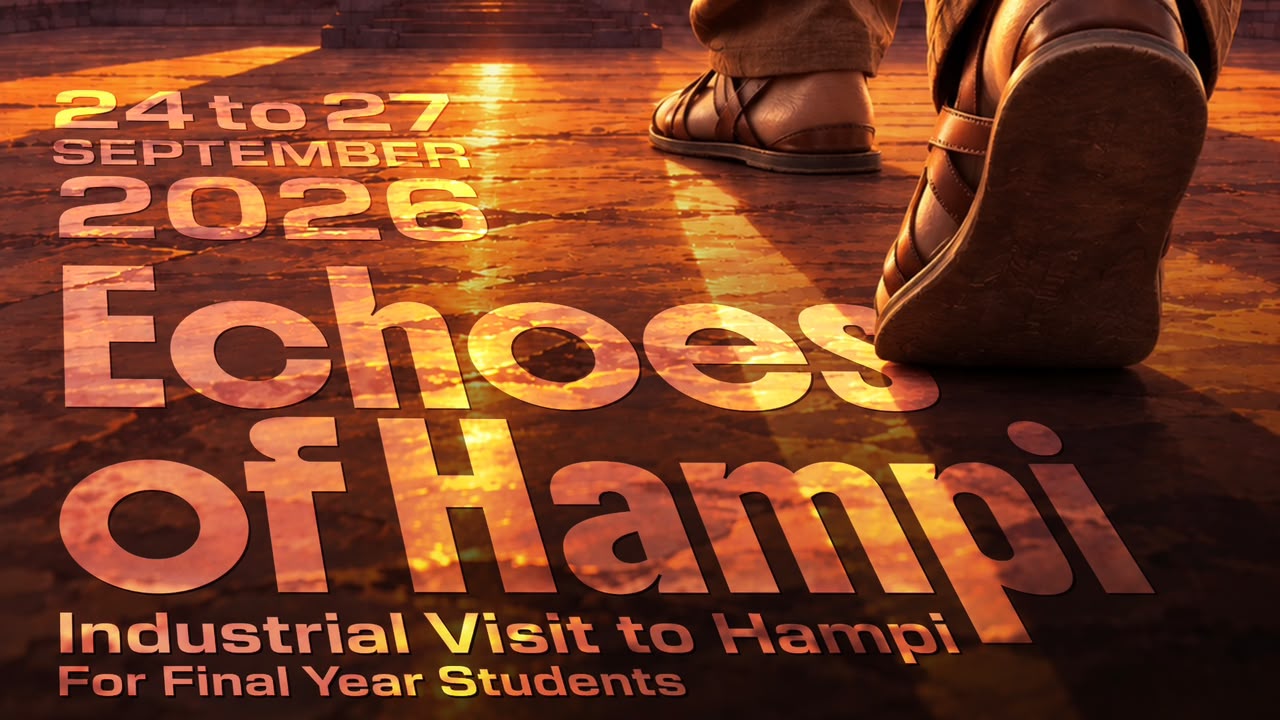
September 24 to September 27, 2026

September 23, 2026
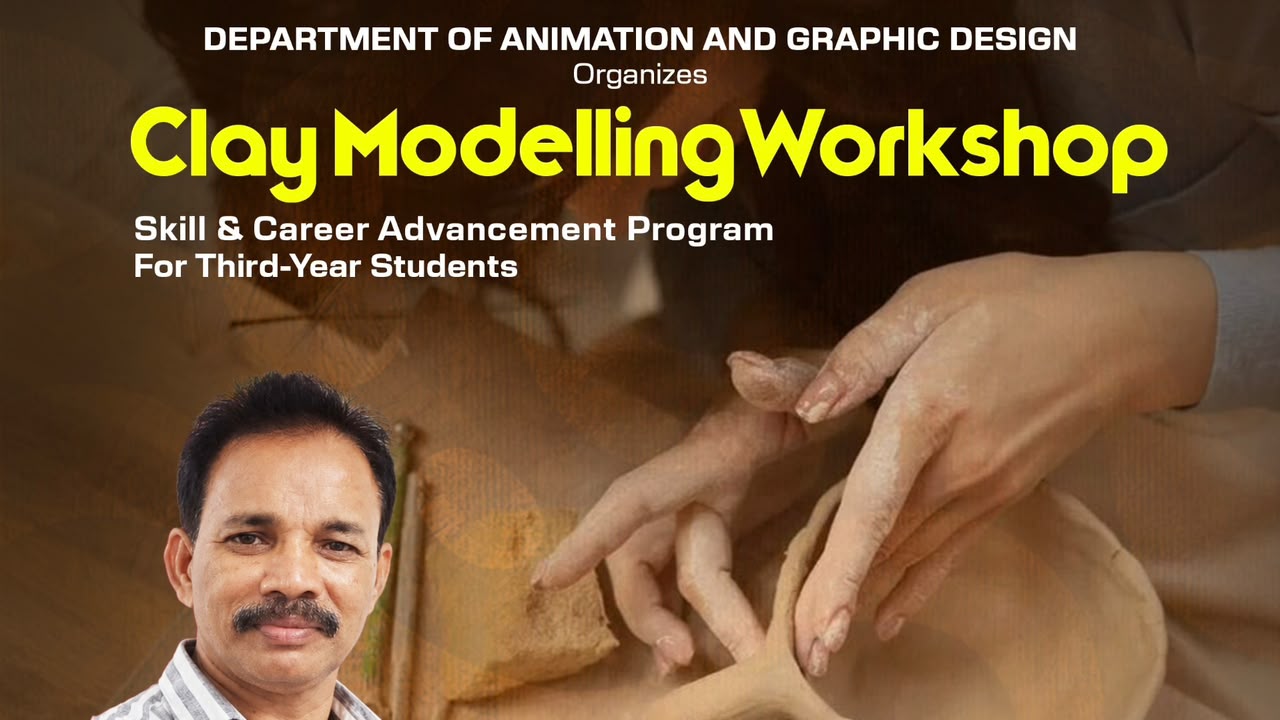
September 22 to September 23, 2026

September 22, 2026
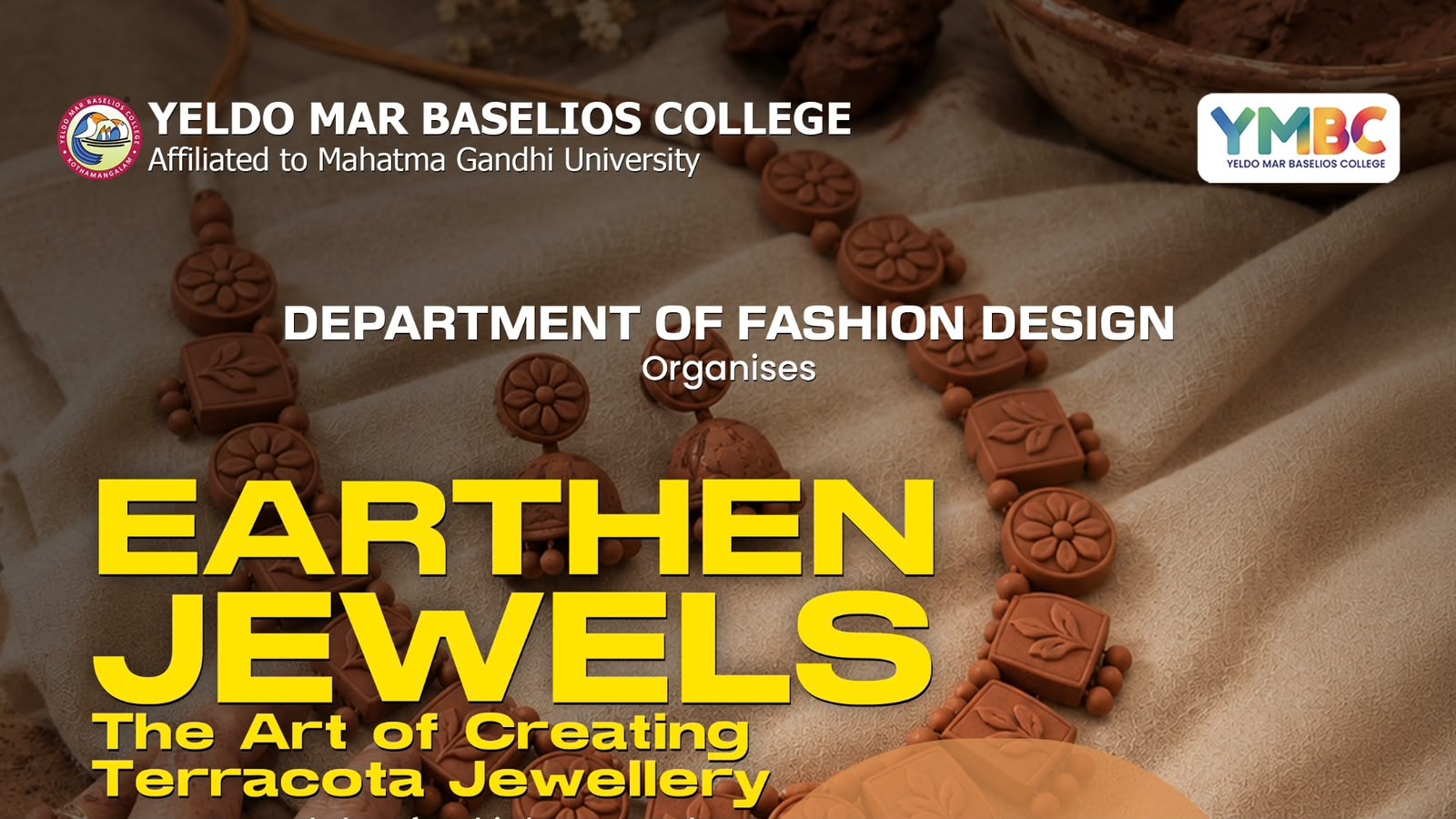
September 17 to September 18, 2026

September 15, 2026
September 15, 2026

September 15, 2026
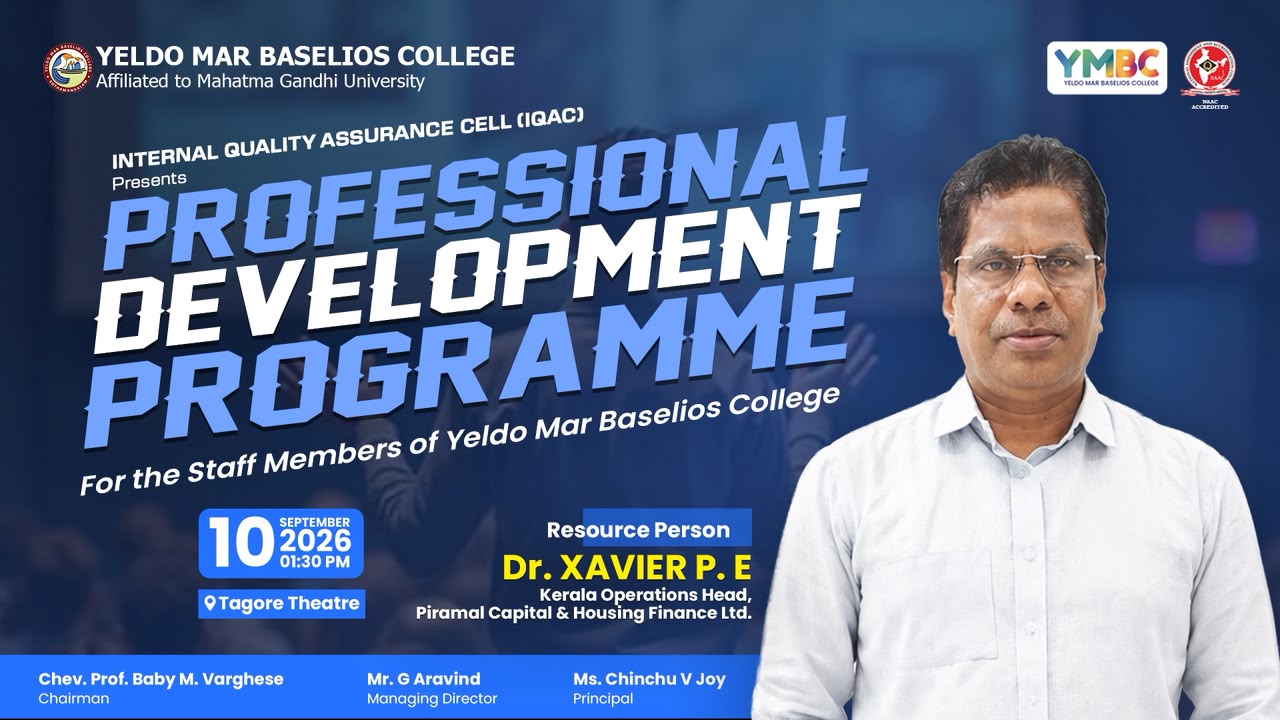
September 10, 2026

September 2, 2026

August 20, 2026
August 13 to August 15, 2026

August 11, 2026

July 31 to August 1, 2026
July 29, 2026
July 29, 2026

July 29, 2026
July 24, 2026
July 21, 2026
July 21, 2026
July 21, 2026
July 21, 2026
July 16 to July 17, 2026
July 8, 2026
July 6, 2026
June 30, 2026
June 22, 2026
June 19, 2026
June 19, 2026
June 15, 2026
June 12, 2026
June 5, 2026
June 5, 2026
April 18, 2026
March 30 to April 1, 2026
March 30, 2026
March 26, 2026
March 16 to March 17, 2026
March 13, 2026
March 10, 2026
March 9, 2026
March 6, 2026
March 5, 2026
March 4, 2026
February 27, 2026
February 27, 2026
February 26 to February 27, 2026

February 24 to February 25, 2026

February 23, 2026

February 18, 2026

February 16 to February 18, 2026

February 13, 2026
February 10, 2026

February 9, 2026

February 3, 2026

January 28, 2026

January 28, 2026

January 28, 2026

January 23, 2026

January 23, 2026

January 22 to January 23, 2026
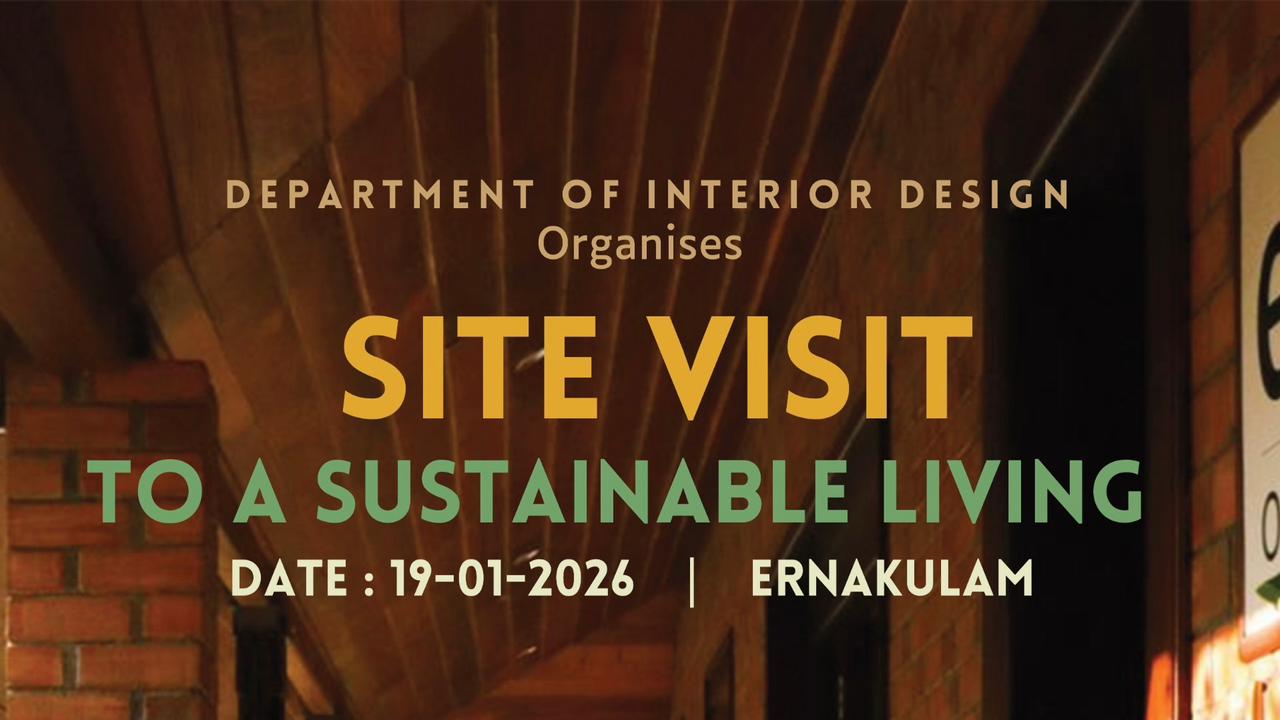
January 19, 2026

January 16, 2026

January 15, 2026

January 14, 2026
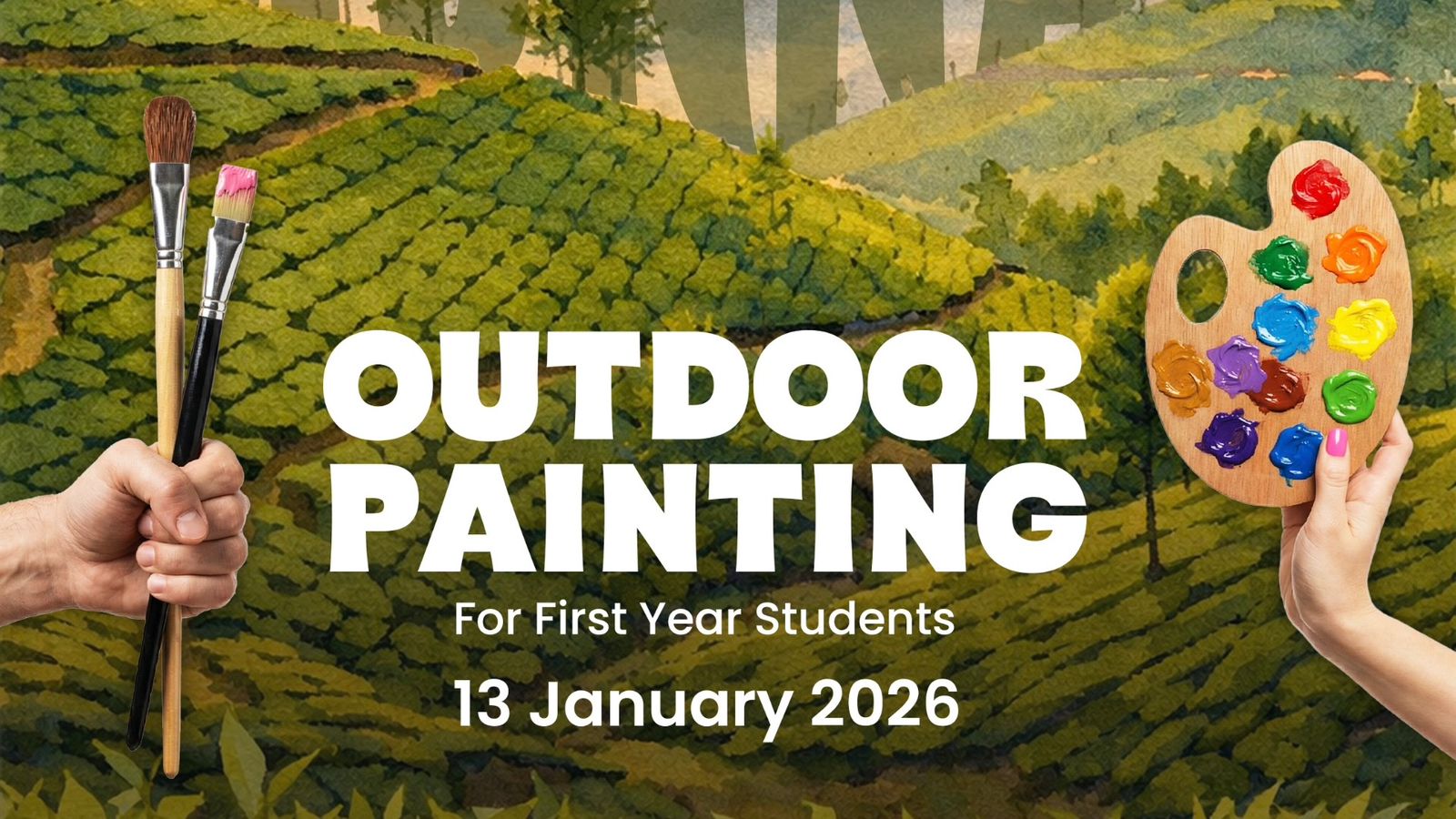
January 13, 2026

January 12, 2026

January 12 to January 31, 2026

January 12 to January 31, 2026

January 9, 2026

January 8 to January 9, 2026

January 8 to January 9, 2026
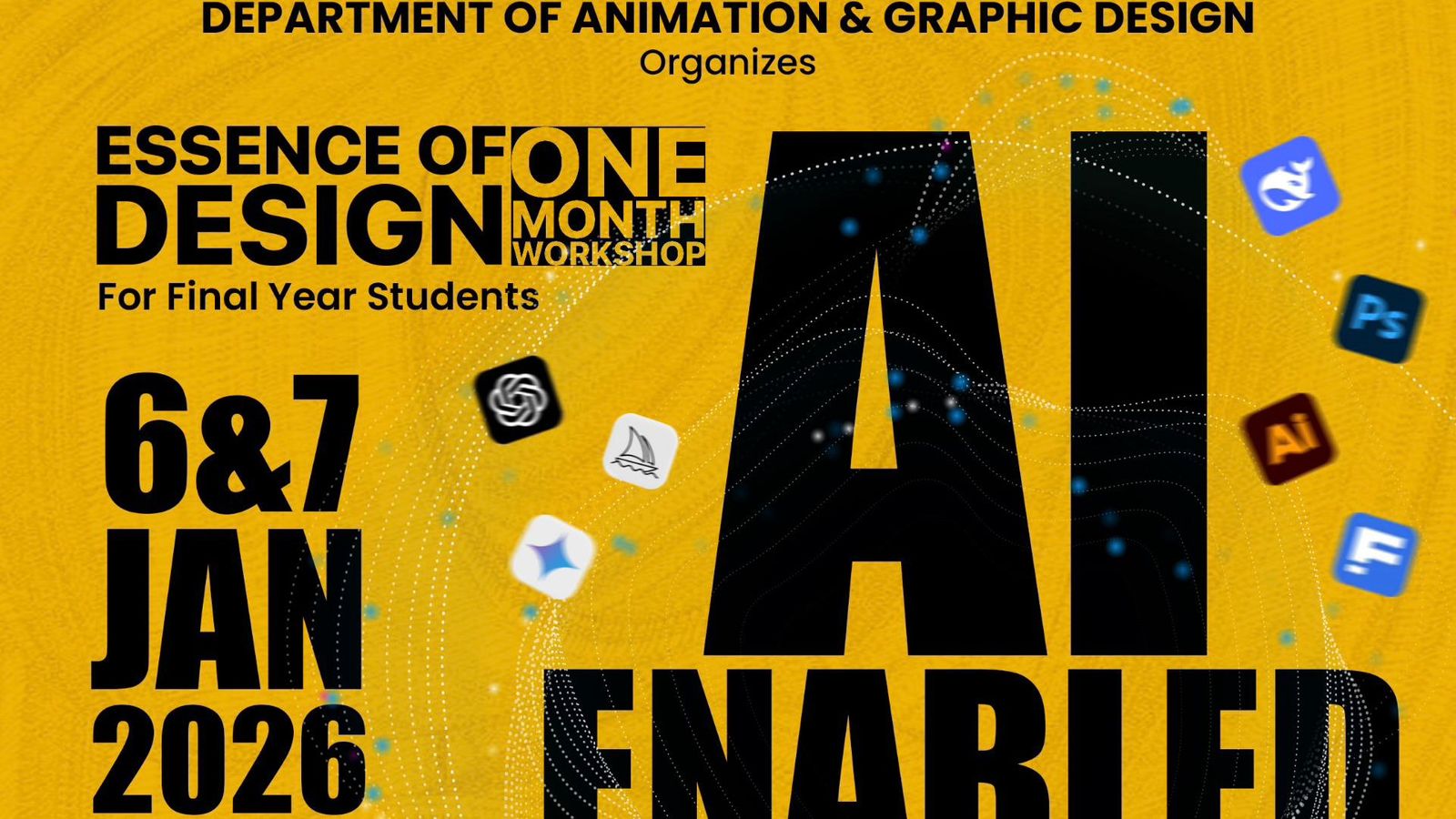
January 6 to January 7, 2026

January 6 to January 7, 2026

December 22, 2025

December 22, 2025

December 22, 2025
December 20, 2025

December 16, 2025

December 15 to December 19, 2025

December 5, 2025

December 4, 2025

December 3, 2025

December 2 to January 2, 2026

December 2, 2025
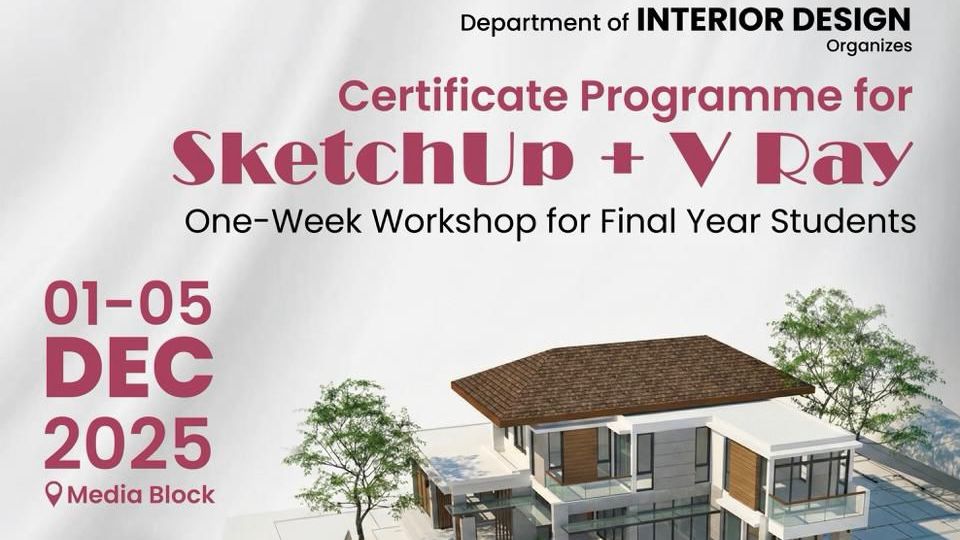
December 1 to December 5, 2025

December 1, 2025

November 27, 2025

November 26, 2025
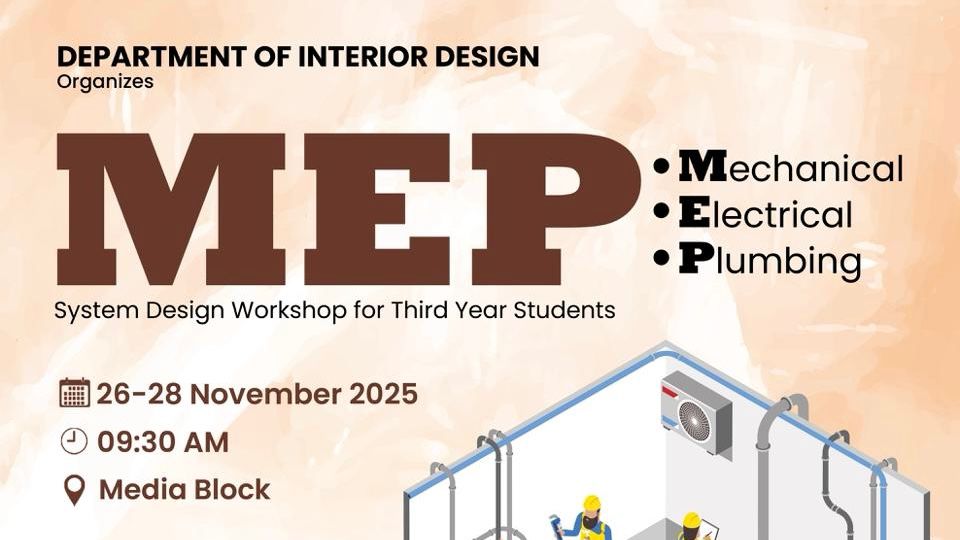
November 26 to December 28, 2025

November 26, 2025

November 26 to December 26, 2025

November 25, 2025

November 24, 2025
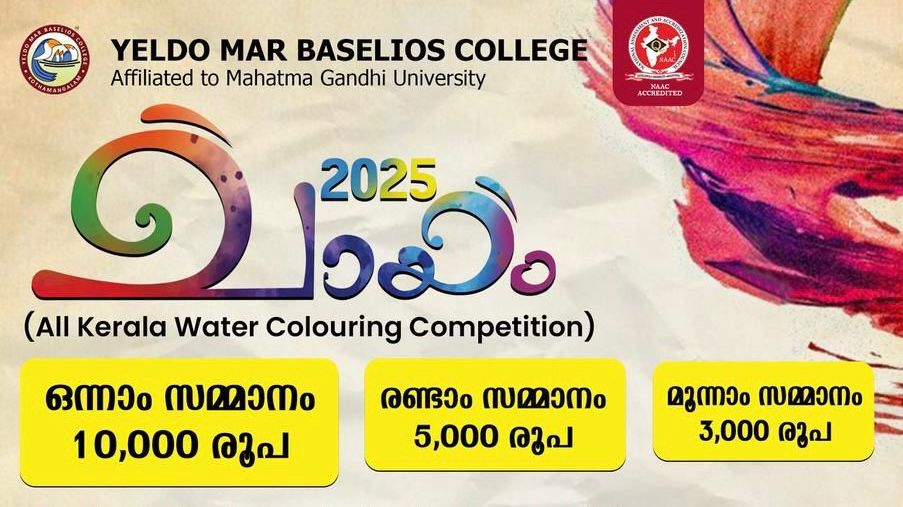
November 22, 2025

November 21, 2025

November 19, 2025

November 17, 2025
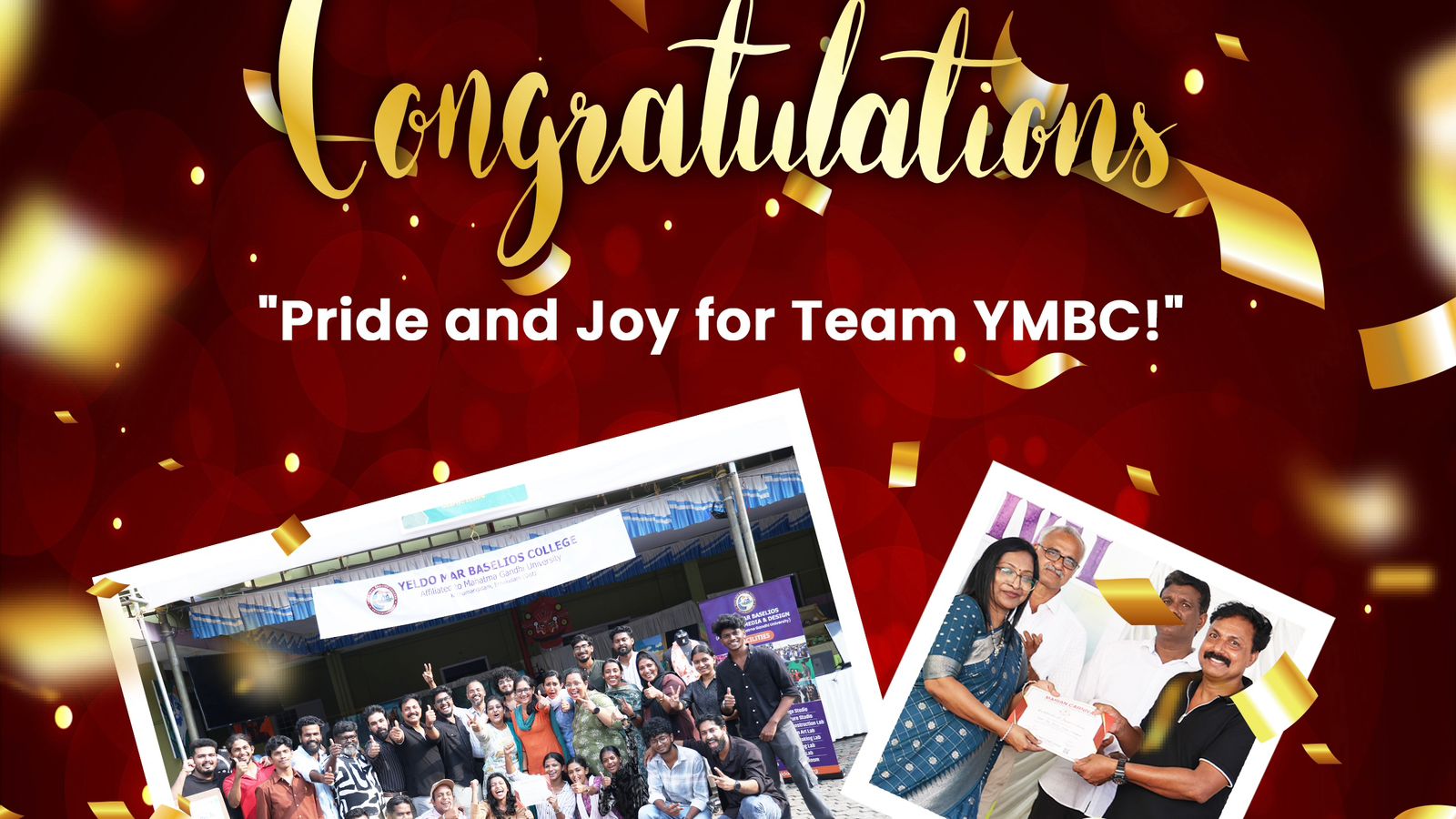
November 16, 2025

November 14, 2025

November 13, 2025

November 12, 2025

November 12, 2025

November 11, 2025

November 7 to November 9, 2025

November 7, 2025
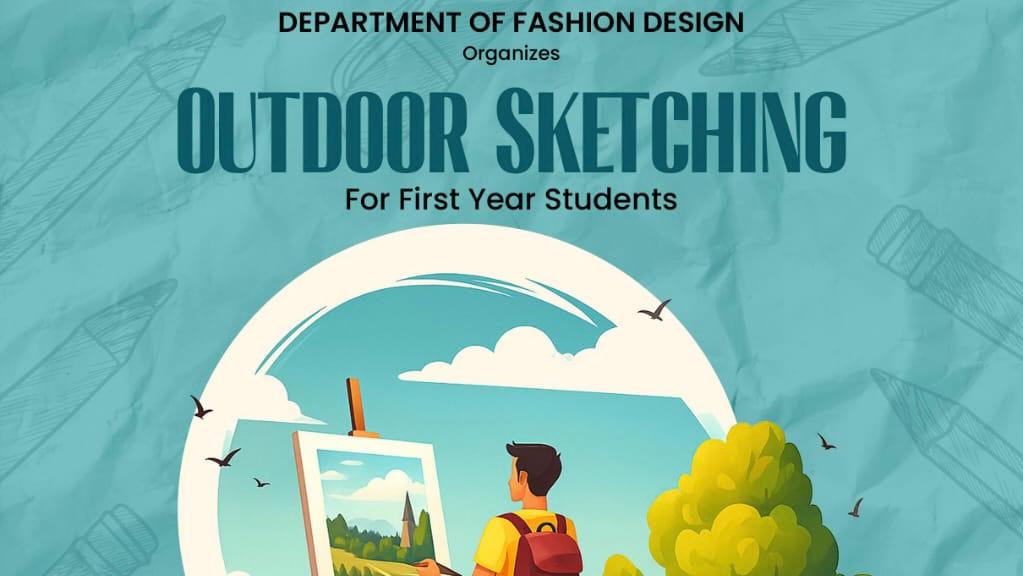
November 4, 2025

October 28, 2025

October 27, 2025
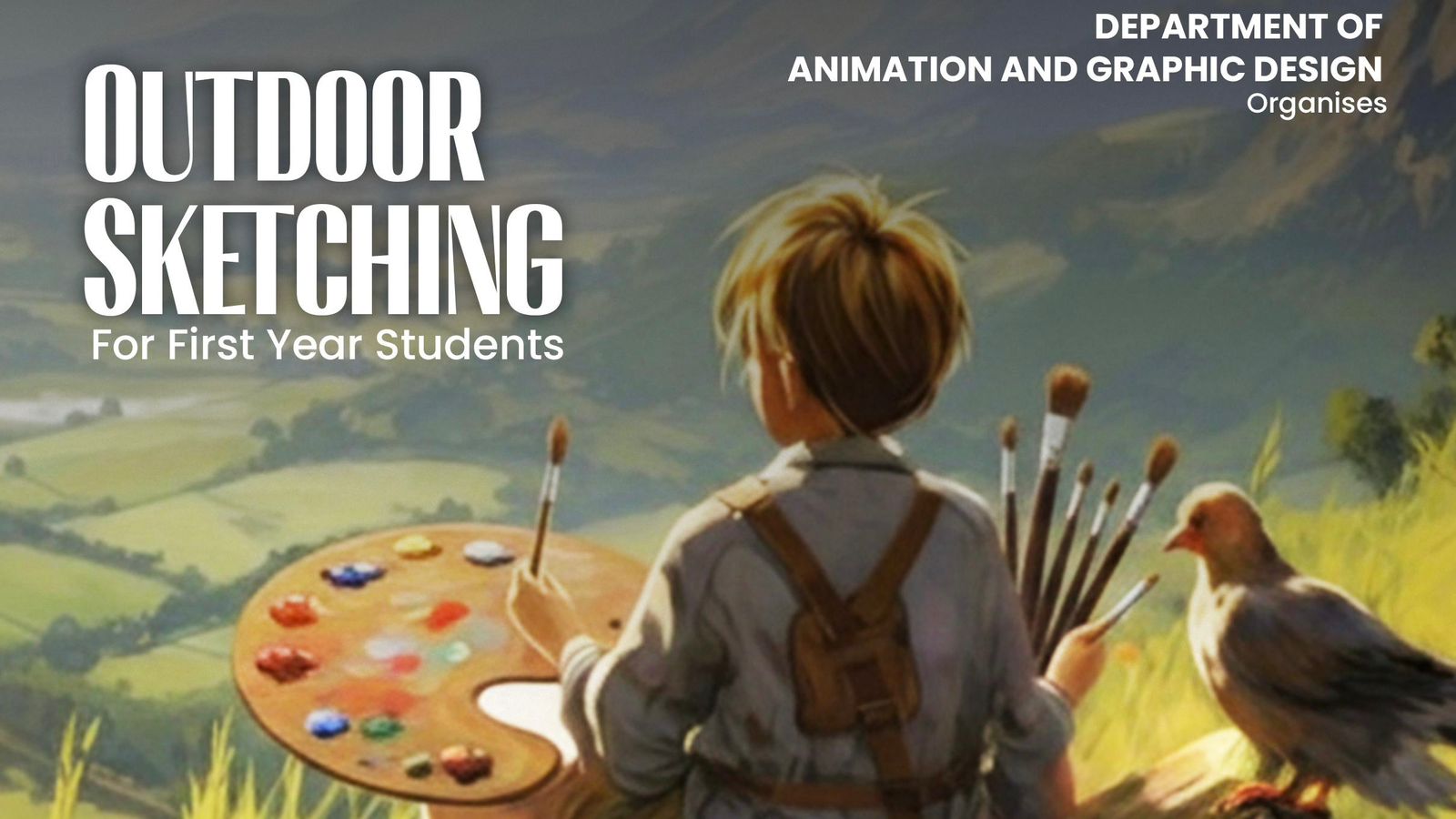
October 23, 2025
October 21, 2025

October 17, 2025
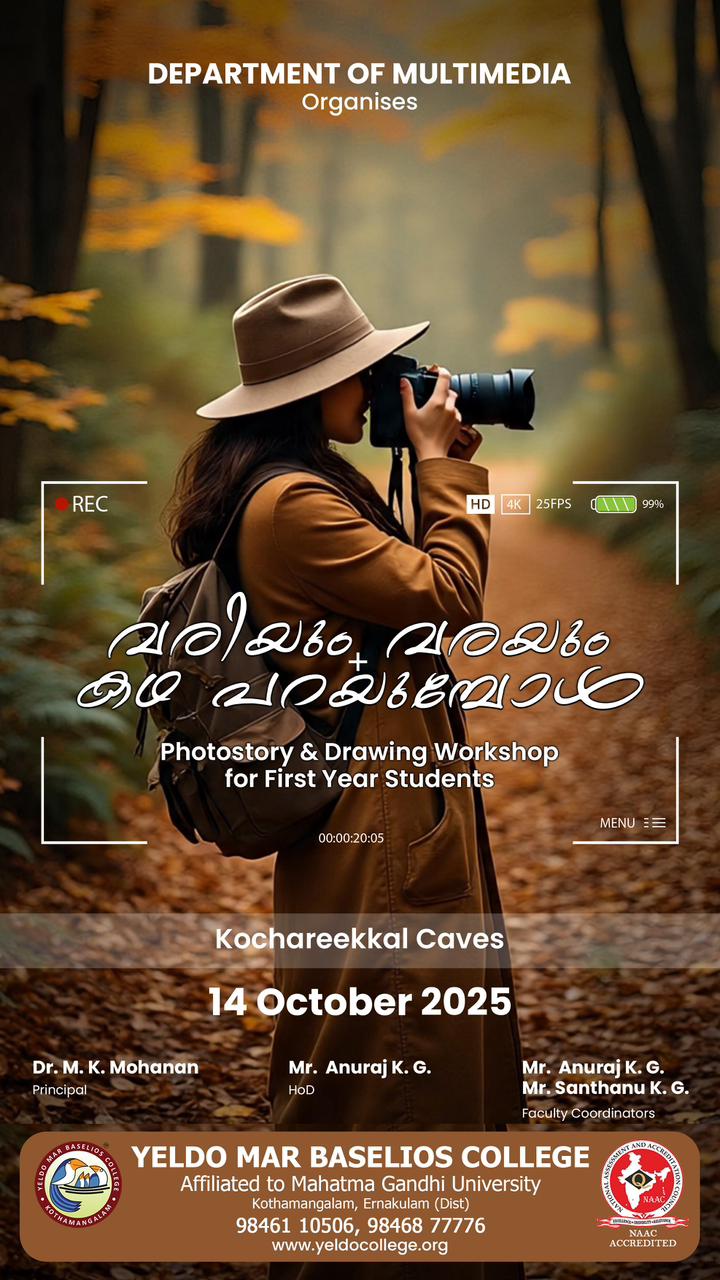
October 14, 2025

October 9 to October 10, 2025

October 7, 2025

August 21, 2025

July 2, 2025

April 25, 2025
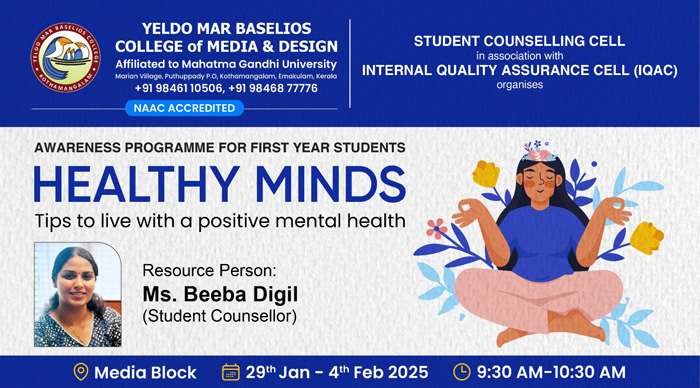
January 29 to February 4, 2025

November 12, 2024

October 4, 2024

September 12, 2024
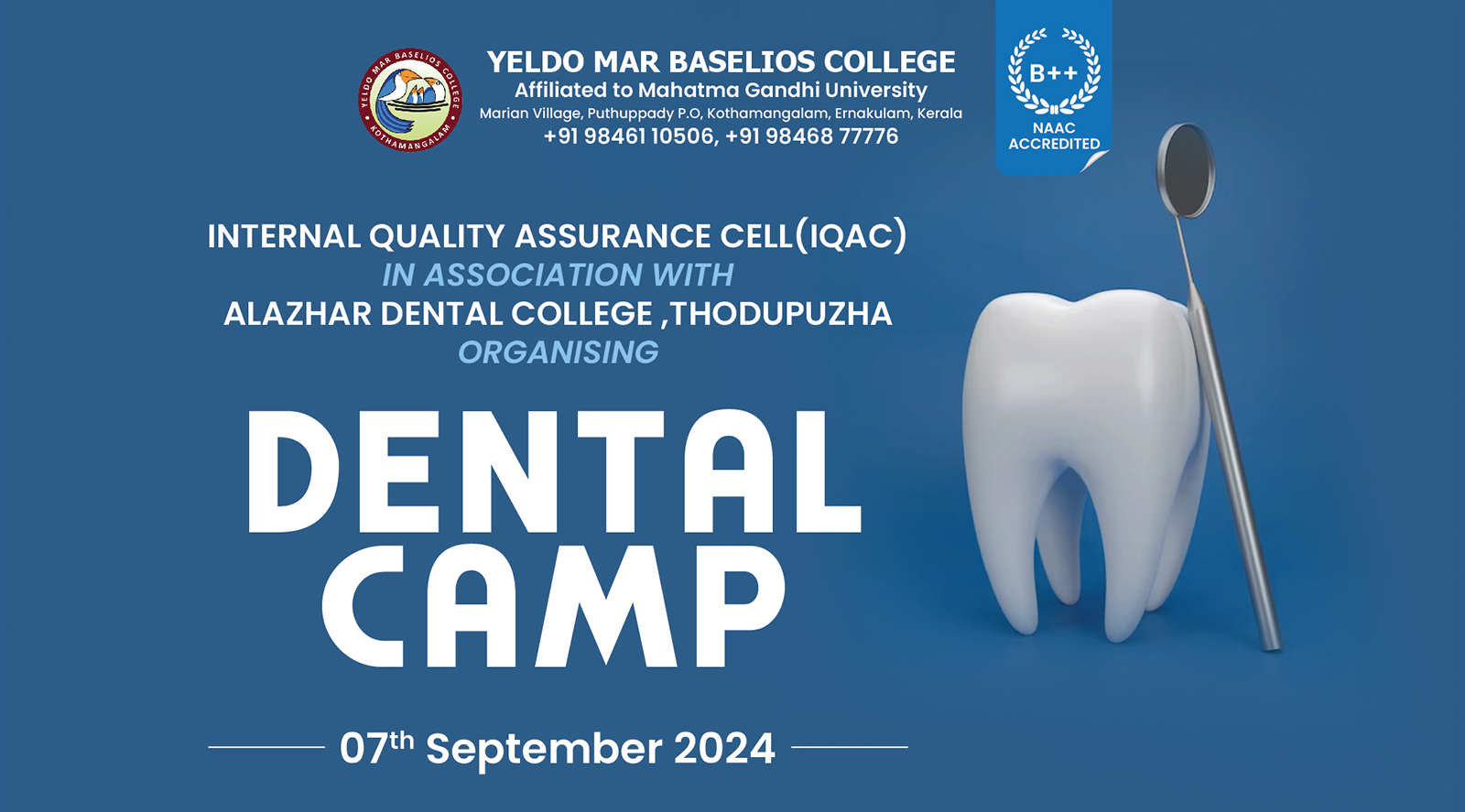
September 7, 2024

July 10 to July 12, 2024

June 26, 2024
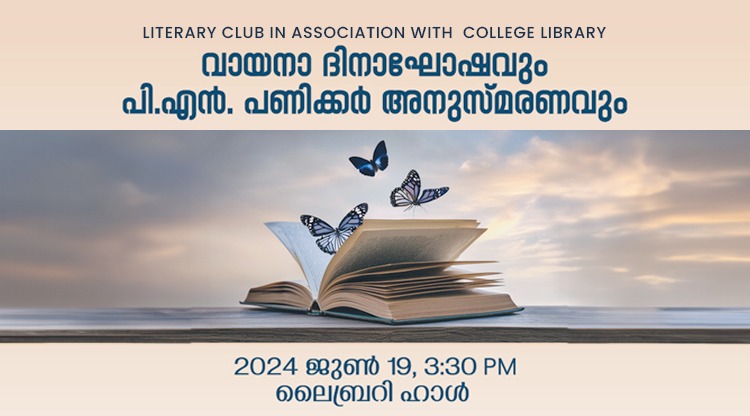
June 19, 2024

June 14, 2024

March 13, 2024

March 13, 2024

March 11, 2024
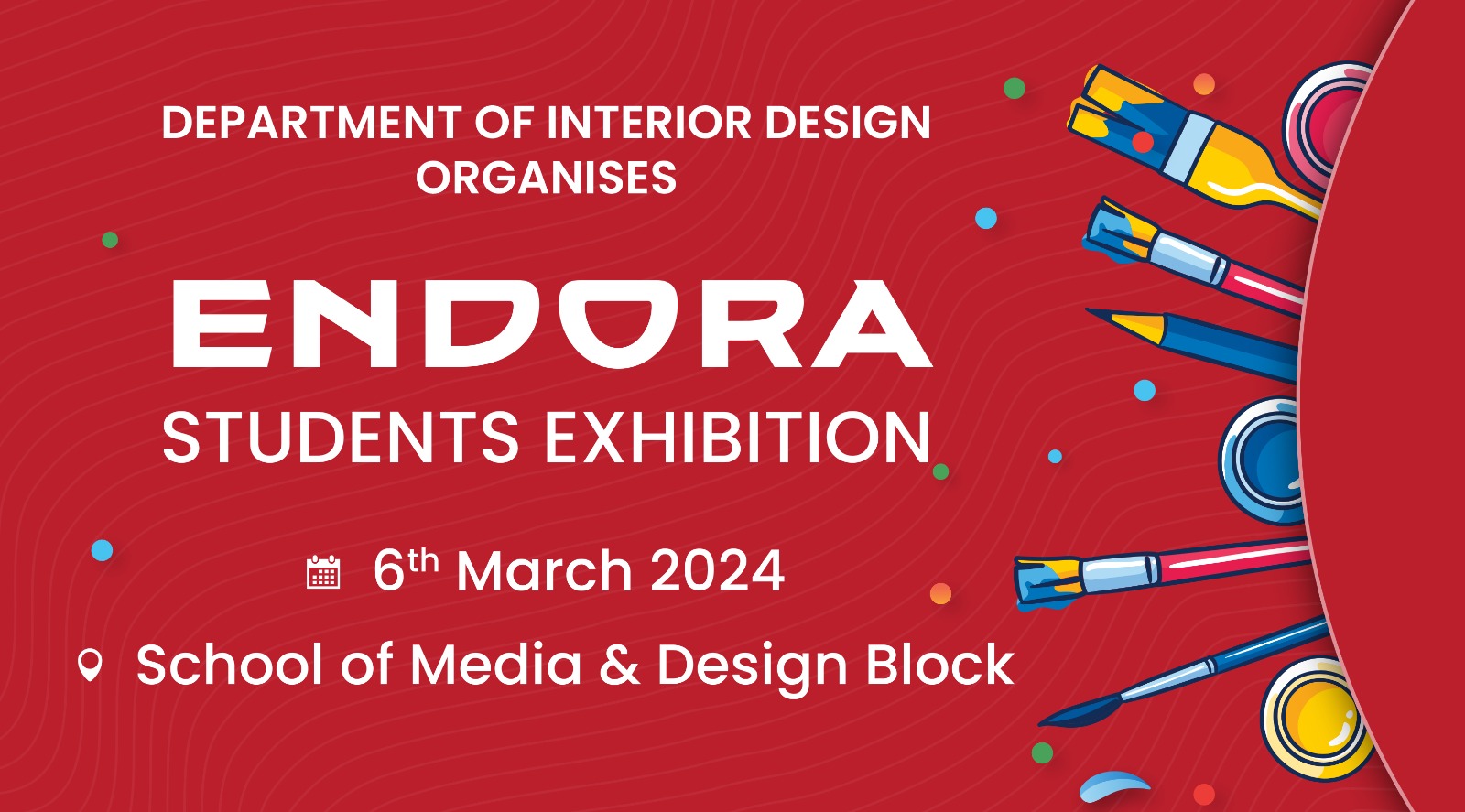
March 6, 2024

March 4, 2024

February 23, 2024

February 22 to February 27, 2024

February 22 to February 26, 2024
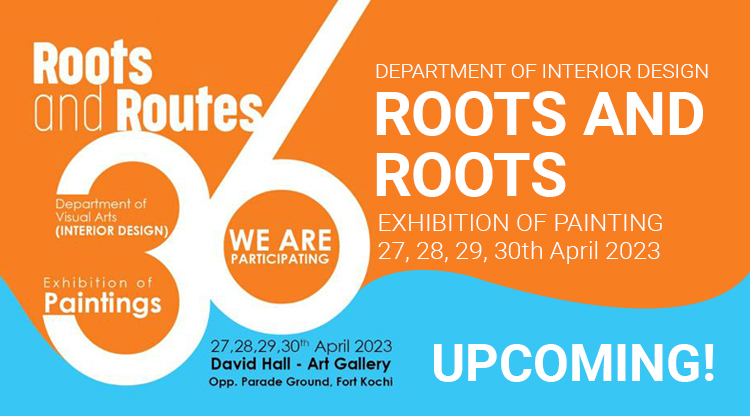
April 27, 2023
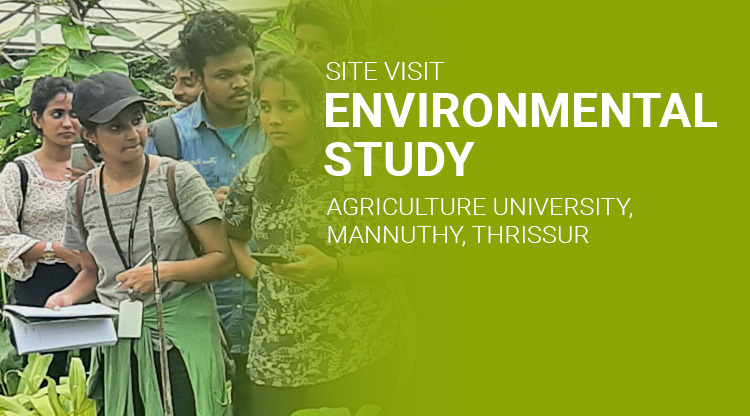
July 29, 2022
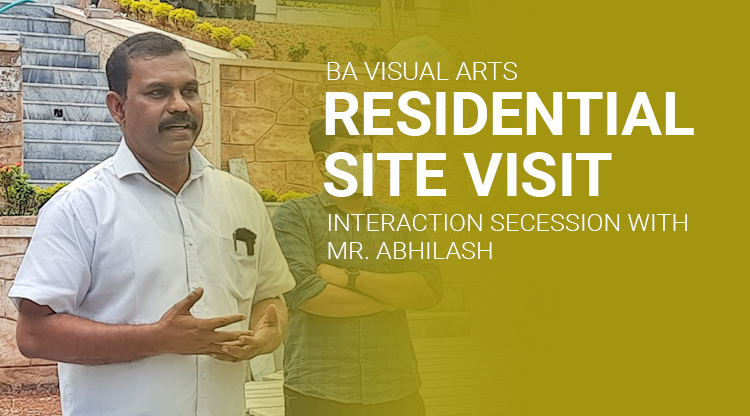
July 22, 2022

July 19, 2022

July 18, 2022

July 15, 2022

June 30, 2022
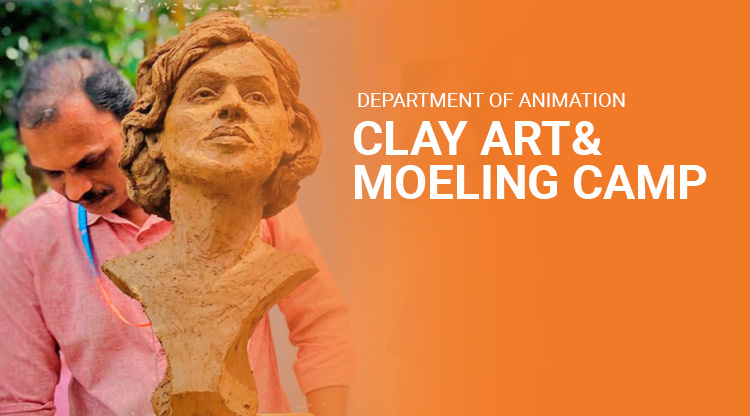
June 29, 2022
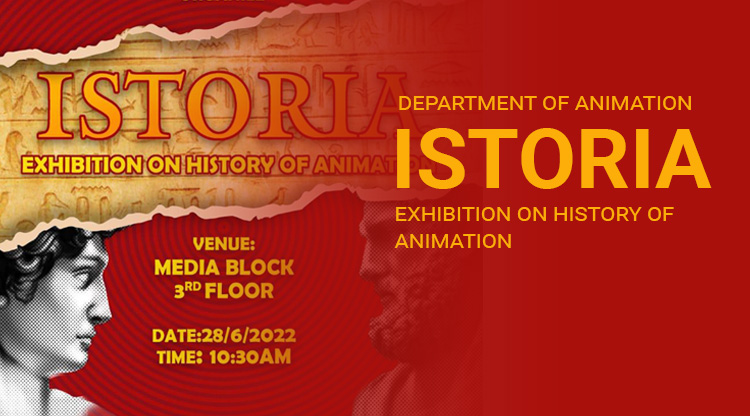
June 28, 2022

June 13, 2022

June 6, 2022

February 14, 2017